Senator Russell Alexander Alger
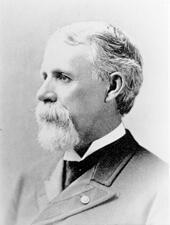
Here you will find contact information for Senator Russell Alexander Alger, including email address, phone number, and mailing address.
| Name | Russell Alexander Alger |
| Position | Senator |
| State | Michigan |
| Party | Republican |
| Status | Former Representative |
| Term Start | September 27, 1902 |
| Term End | January 24, 1907 |
| Terms Served | 1 |
| Born | February 27, 1836 |
| Gender | Male |
| Bioguide ID | A000107 |
About Senator Russell Alexander Alger
Russell Alexander Alger (February 27, 1836 – January 24, 1907) was an American politician, businessman, and military officer who rose from poverty to become a lumber baron, railroad owner, the twentieth governor of Michigan, U.S. Secretary of War, and a United States Senator from Michigan. A member of the Republican Party, he served one term in the U.S. Senate from 1902 until his death in 1907. Alger’s life was widely regarded as a classic “rags-to-riches” success story, and he was supposedly a distant relation of author Horatio Alger, whose popular fiction often celebrated such narratives.
Alger was born on February 27, 1836, in Lafayette Township, Medina County, Ohio, to Russell and Caroline (Moulton) Alger. His family was of New England origin, with ancestors who had emigrated from England to Massachusetts in 1759. His parents were very poor, and from an early age he worked for neighboring farmers for small quantities of provisions or a few pennies a day. In 1848, both of his parents died, leaving him, at age twelve, the eldest of three orphaned children. He arranged homes for his younger brother and sister and secured work for himself on a farm, receiving only his board, clothing, and the opportunity to attend school for three months each year. Despite these hardships, he pursued his education, attending Richfield Academy in Summit County, Ohio, and later teaching country school for two winters to support himself and his siblings.
Determined to enter the professions, Alger studied law in Akron, Ohio, and was admitted to the bar in March 1859. He began the practice of law in Cleveland, but soon turned to business opportunities in the developing Midwest. In 1860, he moved to Grand Rapids, Michigan, where he engaged in the lumber business, an industry that would form the foundation of his later wealth and influence. His success in lumber and related enterprises eventually made him a prominent financier, lumber baron, and railroad owner, and established him as one of Michigan’s leading businessmen in the decades following the Civil War.
Alger’s public career was closely tied to his military and political service. During the Civil War he entered the Union Army, rising to the rank of brevet major general and earning recognition for his service, which later enhanced his standing in Republican politics. Building on his military reputation and business prominence, Alger was elected governor of Michigan in 1884 and served from January 1, 1885, to January 1, 1887. His administration saw the creation of the state board of pardons, the founding of a veterans’ home in Grand Rapids, the establishment of the Michigan College of Mines, and the creation of two new counties, Alger and Iron. He declined renomination in 1886. In 1888, his name was placed in nomination for president at the Republican National Convention; he rose in the balloting to 142 votes, though 416 were necessary to secure the nomination, which ultimately went to Benjamin Harrison. After Harrison’s election, Alger served as a presidential elector from Michigan.
Alger later entered national executive office as U.S. Secretary of War under President William McKinley, a role in which he oversaw the War Department during the Spanish–American War. His tenure was marked by intense public scrutiny of the Army’s mobilization and camp conditions. An early motion picture, General Wheeler and Secretary of War Alger at Camp Wikoff, documented his official visit to Camp Wikoff, New York, and was produced in part to influence New York newspaper opinion in favor of the department’s conduct. In May 1898, the War Department established Camp Russell A. Alger on a farm near Falls Church and Dunn Loring, Virginia, as a major training site; in its brief existence, 23,000 men trained there for service. The camp was plagued by a typhoid fever epidemic, was abandoned at the war’s end in August 1898, and sold the following month. It is commemorated today by an official Virginia historical marker.
Following his cabinet service, Alger continued his political career in the legislative branch. He was elected as a Republican to the United States Senate from Michigan and served from 1902 until his death in 1907. During this single term in office, he participated in the legislative process at a time of significant change in American economic and foreign policy, representing the interests of his Michigan constituents and contributing to the work of the Senate in the early twentieth century. His senatorial service capped a long trajectory through state and national politics that had included high office in both the executive and legislative branches.
Russell Alexander Alger died in office on January 24, 1907. In memorial addresses delivered in Congress, colleagues emphasized the breadth of his achievements and the character that underlay his rise from poverty. Senator John Spooner of Wisconsin observed that “no man without noble purpose, well-justified ambitions, strong fiber, and splendid qualities in abundance could have carved out and left behind him such a career.” His life and public service have been documented in numerous contemporary and later accounts, and his name endures in the county of Alger, Michigan, in historical markers such as that at Camp Russell A. Alger, and in various memorials and collections preserving the record of his contributions to Michigan and the nation.