Representative Russell Sage
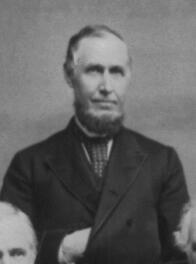
Here you will find contact information for Representative Russell Sage, including email address, phone number, and mailing address.
| Name | Russell Sage |
| Position | Representative |
| State | New York |
| District | 13 |
| Party | Independent |
| Status | Former Representative |
| Term Start | December 5, 1853 |
| Term End | March 3, 1857 |
| Terms Served | 2 |
| Born | August 4, 1816 |
| Gender | Male |
| Bioguide ID | S000013 |
About Representative Russell Sage
Russell Risley Sage (August 4, 1816 – July 22, 1906) was an American financier, railroad executive, and Whig politician from New York who became one of the richest Americans of his era. He was born in Verona, Oneida County, New York, to Elisha Sage Jr. and Prudence (Risley) Sage. His family was connected to a broad network of New York and New England families active in business and public life. His grandfather, Elisha Yale Sr., was a construction contractor, and his uncle Barzillai Sage was the grandfather of railroad magnate Col. Ira Yale Sage of the Yale family. Through his granduncles Capt. William Sage and Capt. Nathan Sage, he was distantly related to figures such as Princess Kay Sage, Admiral Francis M. Bunce, Cornell benefactor Henry W. Sage, and New York State Senators Henry M. Sage and Josiah B. Williams. These extended kinship ties linked him, by marriage, to prominent European and American families, including the Agnelli family of Fiat S.p.A. and Ferrari fame.
Sage received a public school education in upstate New York and worked as a farmhand until about age fifteen. He then moved to Troy, Rensselaer County, New York, where he began his business career as an errand boy in his brother Henry’s grocery store. Demonstrating early aptitude for commerce, he acquired a part interest in a retail grocery in Troy between 1837 and 1839, and by 1839 had become a partner in a wholesale grocery enterprise in the same city. He remained involved in the wholesale grocery trade in Troy until 1857, building the commercial foundation and local prominence that would later support both his political and financial careers.
Sage’s entry into public life began at the municipal and county levels. In 1841 he was elected an alderman in Troy, New York, and he was re-elected to that office continuously until 1848. During this period he also served for seven years as treasurer of Rensselaer County, New York, gaining experience in public finance and administration. These local offices established his reputation as a capable manager of public funds and a figure of influence in Troy’s civic affairs, setting the stage for his election to national office.
In national politics, Sage was elected to the United States House of Representatives from New York and served two consecutive terms in Congress from March 4, 1853, to March 3, 1857. He was first elected as a member of the Whig Party and was re-elected as an Oppositionist during a period of realignment in American party politics. Existing accounts also describe him as a member of the Independent Party, reflecting the fluid partisan labels of the mid-1850s. Representing his New York constituents in the House of Representatives, Sage participated in the legislative process during a significant and turbulent period in American history, just prior to the Civil War. He served on the influential Committee on Ways and Means and is credited as the first person in Congress to advocate that the federal government purchase George Washington’s plantation, Mount Vernon, as a national historic site. Through his committee work and floor participation, he contributed to the democratic process and to the representation of his district’s interests during his two terms in office.
After leaving Congress in 1857, Sage retired from elective politics and settled in New York City, where he embarked on a career in high finance that would make him nationally famous. He became active in the business of selling puts and calls and short-term options then known as “privileges,” and he is widely credited with developing the American market for stock options. He is often described as the “Father of Puts and Calls” and was nicknamed “Old Straddle” for his innovative use of spread and straddle strategies. Sage used option structures to synthesize loans at interest rates above those permitted by state usury laws, a practice that led to his conviction in 1869 and a $500 fine, with a suspended jail sentence. In 1874 he purchased a seat on the New York Stock Exchange and increasingly focused on railroad securities, acquiring substantial holdings in western lines such as the Chicago, Milwaukee and St. Paul Railway, where he served as president and vice president for twelve years. As smaller railroads were absorbed by major trunk lines, Sage realized large profits and became one of the country’s leading financiers.
In the later decades of the nineteenth century, Sage’s financial activities expanded across multiple sectors. He was closely associated with Jay Gould in the management of several major railroads, including the Wabash Railway, St. Louis and Pacific, the Missouri Pacific Railroad, the Missouri-Kansas-Texas Railroad, the Delaware, Lackawanna and Western Railroad, and the St. Louis–San Francisco Railway, serving as a director of these corporations. He also sat on the boards of the American Cable Company, the Western Union Telegraph Company, and the Manhattan consolidated system of elevated railroads in New York City. Sage was a director of the Union Pacific Railroad during the era of the transcontinental railroad’s development and held long-term positions in banking as director and vice president of the Importers and Traders’ National Bank for twenty years, as well as director of the Merchants’ Trust Company and the Fifth Avenue Bank of New York City. Following the collapse of the Grant & Ward scheme in 1884, he faced a run from holders of put options he had sold; he honored all demands but soon withdrew from the options business. On December 4, 1891, his career and public image were further marked by a dramatic incident when Henry L. Norcross entered his office at 71 Broadway in Manhattan with a dynamite bomb, demanding $1,200,000. When Sage refused, the bomb exploded, killing Norcross, wounding Sage, and severely injuring William R. Laidlaw Jr., a visiting clerk. Laidlaw later sued Sage, alleging that Sage had used him as a human shield; although Laidlaw initially won damages after multiple trials, the award was reversed on appeal, and Sage never paid a settlement, reinforcing his public reputation as a hard, even miserly, man of great wealth.
Sage’s personal life intersected with his financial success but was also the subject of controversy. On January 23, 1840, he married Marie-Henrie (“Maria”) Winne; the couple had no children, and she died of stomach cancer on May 7, 1867. In 1869, at age 53, he married Olivia Slocum (1828–1918), who was ten years his junior. Contemporary accounts and later biographers, including Paul Sarnoff, reported that Sage had affairs both before and after the death of his first wife and suggested that his second marriage may have been one of convenience and possibly never consummated; he was also alleged to have fathered a child with a young chambermaid. Sage was a member of East Presbyterian Church on West 42nd Street between Fifth and Sixth Avenues in New York City, a congregation that later merged with Park Presbyterian to form West-Park Presbyterian Church. Despite his vast fortune, he was widely criticized for personal stinginess and limited direct philanthropy during his lifetime.
Russell Sage died in New York on July 22, 1906, leaving an estate estimated at about $70 million (approximately $1.83 billion in 2024 dollars), which he bequeathed in its entirety, without restriction, to his widow, Olivia Slocum Sage. He was buried in a deliberately anonymous Greek-style mausoleum in Oakwood Cemetery in Troy, New York; the structure bears no name, and a nearby bench features a relief of Medusa with snakes for hair. Olivia Sage devoted a major portion of the fortune she inherited to philanthropy, much of it in his memory. She commissioned architect Ralph Adams Cram to design the Russell Sage Memorial Church in Far Rockaway, Queens, with a large memorial stained-glass window by Louis Tiffany; the church, completed in 1908, stood near the family’s summer home. In 1907 she established the Russell Sage Foundation, and in 1916 she founded Russell Sage College for women in Troy. She also gave extensively to the Emma Willard School and Rensselaer Polytechnic Institute in Troy. Additional honors to Sage’s name included the Russell Sage Dormitory at Lawrence University in Appleton, Wisconsin, established in 1917, and the Liberty ship SS Russell Sage, built during World War II in Panama City, Florida. Through his congressional service from 1853 to 1857 and his later prominence in American finance and railroads, Russell Sage left a complex legacy of political engagement, financial innovation, and posthumous philanthropy that significantly influenced both public policy and American institutional life.