Representative Sam Farr
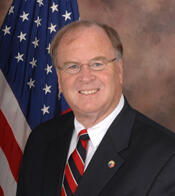
Here you will find contact information for Representative Sam Farr, including email address, phone number, and mailing address.
| Name | Sam Farr |
| Position | Representative |
| State | California |
| District | 20 |
| Party | Democratic |
| Status | Former Representative |
| Term Start | June 8, 1993 |
| Term End | January 3, 2017 |
| Terms Served | 12 |
| Born | July 4, 1941 |
| Gender | Male |
| Bioguide ID | F000030 |
About Representative Sam Farr
Samuel Sharon Farr (born July 4, 1941) is an American politician and former member of the United States House of Representatives who served as a Representative from California from 1993 to 2017. A member of the Democratic Party, he represented California’s 17th congressional district from 1993 to 2013 and the 20th congressional district from 2013 to 2017, contributing to the legislative process during 12 terms in office. He was first elected in a 1993 special election following the resignation of Representative Leon Panetta, who left Congress to become Director of the Office of Management and Budget under President Bill Clinton. Farr retired from Congress following the 2016 elections.
Farr was born in San Francisco, California, the son of Janet Emerson (née Haskins) and Frederick Sharon “Fred” Farr. His family had deep political and civic roots in California. His father served as a California state senator from 1955 to 1967, representing the Monterey Peninsula and surrounding areas. Through his mother’s family, Farr is a great-grandson of William Hartshorn Bonsall, who served as acting mayor of Los Angeles, and on his father’s side he is a great-great-grandson of a brother of Nevada Senator William Sharon. Farr grew up in Carmel, California, where he developed a lasting connection to the Central Coast region that he would later represent in Congress, and he has continued to make his home there.
Farr attended Willamette University in Salem, Oregon, where he became a member of the Sigma Chi fraternity. He later studied at Santa Clara University and the Monterey Institute of International Studies (now the Middlebury Institute of International Studies at Monterey), focusing on international and regional issues that would shape his later public service. In 1964 he joined the Peace Corps and served for two years as a volunteer in Colombia. Stationed in a poor barrio near Medellín, he taught community development skills and worked closely with local residents, an experience that profoundly influenced his views on international development and U.S.–Latin American relations. During his Peace Corps service, his mother died of cancer, and shortly thereafter his sister Nancy was fatally injured in a riding accident in Colombia, dying on the operating table in a local hospital. These personal tragedies, occurring while he was engaged in overseas service, further deepened his commitment to public and humanitarian work.
After returning from Colombia, Farr remained closely connected to that country, visiting frequently for both personal and official purposes. He traveled there for his honeymoon and made numerous subsequent trips in his capacity as a public official. In 2007 he addressed the Colombian Congress and was awarded the Orden del Congreso de Colombia, one of that nation’s highest legislative honors, in recognition of his longstanding engagement with Colombian affairs and his advocacy for a more balanced U.S. policy toward the country, including support for economic redevelopment within the framework of Plan Colombia.
Farr’s public service career began at the state and local levels in California. He initially worked for about a decade as a staffer in the California State Assembly, specializing in budget issues. In 1975 he successfully ran for a seat on the Monterey County Board of Supervisors, marking his first elected office and giving him direct responsibility for local land use, environmental, and economic issues on the Central Coast. In 1980 he was elected to the California State Assembly, where he served until 1993. As an assemblyman, Farr became a prominent advocate for environmental protection and sustainable agriculture. He championed the organics industry and authored one of the nation’s strictest oil-spill liability laws, reflecting his long-standing concern for coastal and marine environments.
Farr was elected to the U.S. House of Representatives in a special election in 1993 to succeed Leon Panetta, who had been appointed President Clinton’s budget director. In that race he defeated Republican Bill McCampbell with 52 percent of the vote, and he again defeated McCampbell with 52 percent in the 1994 general election. These contests were the closest in the district since Panetta first won the seat for the Democrats in 1977, and they remain the only times since then that a Republican candidate in the district crossed the 40 percent threshold. After these early competitive races, the district reverted to its traditionally Democratic orientation, and Farr was re-elected ten more times with no substantive opposition, never receiving less than 64 percent of the vote. Over the course of his 12 terms, he served during a period of significant change in American politics and policy, participating actively in the democratic process and representing the interests of his Central Coast constituents.
In Congress, Farr became particularly known for his work on appropriations, environmental protection, ocean policy, human rights, and international development. He served on the powerful House Committee on Appropriations, including the Subcommittee on Agriculture, Rural Development, Food and Drug Administration, and Related Agencies, where he rose to the position of Ranking Member, and the Subcommittee on Military Construction, Veterans Affairs, and Related Agencies. He was a leading proponent of ocean protection and conservation. In January 2007 he introduced the “Oceans Conservation, Education, and National Strategy for the 21st Century Act” (H.R. 21), which sought to consolidate national ocean management, establish a system of regional governance, designate the National Oceanic and Atmospheric Administration as the chief federal oceans agency, create a presidential ocean advisor and regional and national ocean advisory committees, and establish an Oceans and Great Lakes Conservation Trust Fund. The bill received a subcommittee markup in April 2008 and passed by a vote of 11–3. He also introduced the Southern Sea Otter Recovery and Research Act (H.R. 3639) and the Clean Cruise Ship Act (H.R. 6434), and he consistently opposed opening new areas to offshore oil drilling. Instead, he advocated development of already-leased federal lands, including tens of millions of acres on the Outer Continental Shelf, and supported ending subsidies for oil companies.
Farr’s legislative interests extended to foreign policy and post-conflict stabilization. He authored the “Reconstruction and Stabilization Civilian Management Act of 2008” (H.R. 1084), which was approved by the House but stalled in the Senate. The bill aimed to build capacity within the U.S. Department of State to rapidly deploy civilian experts and coordinate the federal government’s response to crises abroad. The concept received support from President George W. Bush, who approved the initial creation of the civilian response capability. Farr joined Secretary of State Condoleezza Rice in July 2008 for the rollout of the group. Drawing on his Peace Corps background, he became a congressional leader on Colombian affairs, advocating a rebalancing of Plan Colombia funding to emphasize economic development and social programs alongside counternarcotics efforts. He hosted numerous Colombian political leaders in his Washington office, including President Álvaro Uribe and former President Andrés Pastrana.
Within the House, Farr was active in a wide range of caucuses and intra-party leadership roles. He served on the House Democracy Assistance Commission, a body established to work with emerging democracies through peer-to-peer legislative cooperation to strengthen accountability, transparency, legislative independence, access to information, and government oversight in partner parliaments. He was also chairman of the California Democratic congressional delegation, the largest state delegation in Congress, helping to coordinate policy and strategy among Democratic members from California. Farr co-chaired the Congressional Travel and Tourism Caucus with Representative Gus Bilirakis of Florida, expanding its membership to more than 100 members and organizing events such as the June 2008 “Economic Roundtable: Travel’s Significance to the U.S. Economy,” which brought together travel industry executives and congressional leaders. He also co-chaired the House Oceans Caucus, which helped sponsor the annual Capitol Hill Oceans Week (CHOW), drawing ocean experts from across the country, and he co-chaired both the Congressional Organic Caucus and the Unexploded Ordnance Caucus. In addition, he was active in the Congressional Bike Caucus, the International Conservation Caucus, and other issue-based groups.
Farr’s voting record and public positions placed him among the more progressive members of the House. He opposed the USA PATRIOT Act and consistently supported abortion rights. Progressive Punch gave him a 91 percent progressive rating, ranking him as the 42nd most progressive member of Congress. He was one of 31 House members who voted in 2005 not to count Ohio’s electoral votes from the 2004 presidential election. On trade policy, he took a leadership role among House Democrats in opposing the Central American Free Trade Agreement (CAFTA), arguing that it lacked adequate environmental and worker protections. He voted against the 2002 “Authorization for Use of Military Force Against Iraq” and remained a persistent critic of the Iraq War, cosponsoring measures such as H.Res. 1329, which supported a timetable for troop withdrawal, and H.R. 5626 and H.R. 4959, which sought to require congressional approval for any long-term agreements with Iraq. He also worked to prevent military action against Iran, cosponsoring H. Con. Res. 33 to require congressional approval before any incursion and H.R. 3119, a bill to prohibit the use of funds for military operations in Iran. In economic policy, he supported the $700 billion Emergency Economic Stabilization Act of 2008 during the financial crisis. On civil rights, he received a perfect 100 percent rating from the Human Rights Campaign for the 110th, 111th, and 112th Congresses.
Farr devoted substantial attention to the needs of his Central Coast district, particularly in the areas of environmental restoration, higher education, and housing. He played a central role in the reuse of the former Fort Ord Army installation near Monterey, working closely with local communities and the U.S. Army. He was instrumental in securing $29 million in federal funding for the creation of California State University, Monterey Bay, on the former base, and he advocated for redevelopment plans that included significant amounts of affordable housing. In immigration policy, Farr supported comprehensive reform that would include a guest worker program for farm workers, legal protections allowing undocumented students to remain in the United States (often referred to as the DREAM Act), and the deportation of undocumented felons in U.S. jails. Throughout his congressional service from 1993 to 2017, he remained closely identified with environmental stewardship, human rights, and international engagement, particularly in Latin America, while consistently representing the interests of his Central Coast constituents until his retirement from Congress at the end of his twelfth term.