Representative Sam Gejdenson
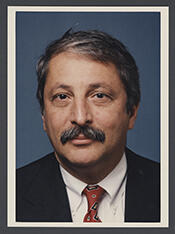
Here you will find contact information for Representative Sam Gejdenson, including email address, phone number, and mailing address.
| Name | Sam Gejdenson |
| Position | Representative |
| State | Connecticut |
| District | 2 |
| Party | Democratic |
| Status | Former Representative |
| Term Start | January 5, 1981 |
| Term End | January 3, 2001 |
| Terms Served | 10 |
| Born | May 20, 1948 |
| Gender | Male |
| Bioguide ID | G000120 |
About Representative Sam Gejdenson
Samuel Gejdenson (born May 20, 1948) is an American politician and businessman who served as a Democratic member of the United States House of Representatives from Connecticut’s 2nd congressional district from 1981 to 2001. Over the course of 10 consecutive terms in Congress, he participated actively in the legislative process and represented the interests of his eastern Connecticut constituents during a period of significant political and economic change in the United States.
Gejdenson was born in a displaced persons camp in Eschwege, in Allied-occupied Germany, to a Belarusian father and a Lithuanian mother, both Jewish survivors of the upheavals of World War II. His family immigrated to the United States and settled in Bozrah, Connecticut, near Norwich, where he grew up on a dairy farm. This rural upbringing in New England, combined with his family’s refugee experience, helped shape his later interest in public service, international affairs, and economic opportunity.
After attending local schools in Connecticut, Gejdenson pursued higher education at Mitchell College in New London, where he studied for two years. He then transferred to the University of Connecticut, where he completed his undergraduate studies. Early in his professional life, from 1970 to 1973, he worked for the FIA Company, gaining experience in the private sector that would later inform his work on economic and trade policy.
Gejdenson entered elective office in the 1970s. In 1974, he was elected as a Democrat to the Connecticut House of Representatives, where he served two terms. During this period, he became involved in local educational initiatives and subsequently worked as president of the Montessori School in Norwich, Connecticut. His state legislative service and community leadership helped establish his reputation as an advocate for his region and laid the groundwork for his later congressional campaigns.
In November 1980, Gejdenson won election to the United States House of Representatives from Connecticut’s 2nd congressional district, taking office on January 3, 1981. He would hold the seat for 10 terms, serving until January 3, 2001. His tenure coincided with major developments in U.S. domestic and foreign policy, including the end of the Cold War, the expansion of global trade, and debates over defense spending. Representing a district that included a major submarine manufacturer and the Naval Submarine Base New London, Gejdenson was frequently at the center of discussions over defense policy and local economic interests. There was persistent debate over whether he was a strong enough advocate for the submarine industry and base; twice he was offered a seat on the House Armed Services Committee but declined. His supporters maintained that he did not need formal membership on that committee to be effective in protecting the district’s defense-related interests.
Within the House, Gejdenson developed particular influence through his committee and subcommittee work. He served as chairman of the Subcommittee on Oversight and Investigations of the House Interior Committee (now the House Committee on Natural Resources), where he conducted oversight of the Nuclear Regulatory Commission and the Bureau of Indian Affairs, reflecting his interest in regulatory accountability and Native American issues. Beginning in 1989, he assumed the chairmanship of the Subcommittee on International Economic Policy and Trade of the House Foreign Affairs Committee (now the House Committee on International Relations). In that role, he focused on promoting American exports and streamlining export controls to facilitate high-technology exports, positioning himself as a proponent of expanding U.S. participation in the global economy. In 1999, he became the ranking Democratic member of the full International Relations Committee, where he played a key role in drafting legislation to combat international human trafficking and to authorize the activities of the U.S. Department of State.
Gejdenson’s congressional career was marked by a series of closely contested elections. He surpassed 60 percent of the vote only three times in his 10 campaigns. In 1992, state senator Edward Munster held him to 50 percent of the vote. The 1994 rematch, in a year when Democrats lost control of the House, resulted in an exceptionally narrow 21-vote victory for Gejdenson. Munster formally challenged the result, but the Republican-controlled House Government Reform and Oversight Committee upheld the outcome by a vote of 2–1. Munster ran against him a third time in 1996, losing by six percentage points. In November 2000, amid controversy over several issues, Gejdenson unexpectedly lost his bid for re-election to the 107th Congress to Republican state representative Rob Simmons. Factors cited in his defeat included his prominent 1998 counter-letter urging President Bill Clinton to continue peacemaking efforts in the Middle East, which put him at odds with the American Israel Public Affairs Committee despite his own Jewish background; allegations that he had moved out of the district; and claims, including those by author Jeffrey Benedict, that he had supported allowing the Mashantucket Pequot Tribe to develop the Foxwoods Resort Casino.
After leaving Congress in January 2001, Gejdenson transitioned to work in international business and policy advocacy. He established his own firm, Sam Gejdenson International, through which he became involved in international trade and consulting. He took up residence in Branford, Connecticut, while remaining engaged in public affairs and Democratic Party politics. In 2006, he endorsed Democrat Joe Courtney in the race for his former congressional seat; Courtney went on to defeat Rob Simmons in an extremely close contest. Gejdenson has also remained active in democracy promotion and human rights issues, serving on the board of directors of the National Democratic Institute. From 2012 to 2014, he was a commissioner on the United States Commission on International Religious Freedom, reflecting his continued engagement with international policy and the protection of fundamental rights.