Representative Samuel Beach Axtell
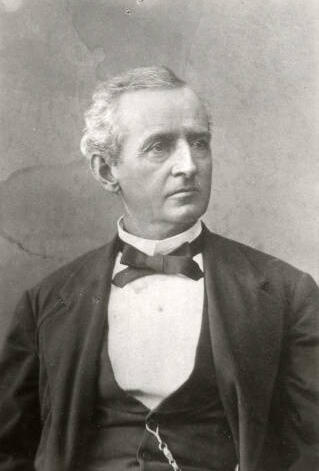
Here you will find contact information for Representative Samuel Beach Axtell, including email address, phone number, and mailing address.
| Name | Samuel Beach Axtell |
| Position | Representative |
| State | California |
| District | 1 |
| Party | Democratic |
| Status | Former Representative |
| Term Start | March 4, 1867 |
| Term End | March 3, 1871 |
| Terms Served | 2 |
| Born | October 14, 1819 |
| Gender | Male |
| Bioguide ID | A000349 |
About Representative Samuel Beach Axtell
Samuel Beach Axtell (October 14, 1819 – August 6, 1891) was an American jurist and politician who served as a two-term Democratic Congressman from California, territorial governor of Utah and New Mexico, and later chief justice of the New Mexico Territorial Supreme Court. His public career spanned the tumultuous decades following the California Gold Rush and the Civil War, and he played a controversial role in the governance of several western territories during a period of rapid expansion and frequent conflict.
Axtell was born in Franklin County, Ohio, into a family of farmers with a strong military tradition. An ancestor had served as an officer in the American Revolutionary army, and his grandfather was a colonel of a New Jersey regiment during the War of 1812. He was educated in Ohio and graduated from Western Reserve College at Oberlin, Ohio. Trained in the law, he was admitted to the bar in Ohio in the 1830s. On September 20, 1840, he married Adaline S. Williams of Summit County, Ohio. In 1843 the couple moved to Mount Clemens, Michigan, where Axtell continued to build his legal and professional career before turning his attention to opportunities in the Far West.
In 1851, drawn by the waning days of the California Gold Rush, Axtell moved to California and engaged in gold mining along the American River, though he found little success in mining itself. As California’s counties were organized and civil institutions took shape, he became increasingly involved in politics and public affairs. He settled in Amador County and was elected district attorney, holding that office for three terms. His work as a local prosecutor established his reputation in the young state’s legal community and provided a platform for higher office. In 1860 he moved to San Francisco, positioning himself at the center of California’s political and commercial life.
Axtell entered national politics as a member of the Democratic Party representing California. He was elected to the United States House of Representatives from California’s First Congressional District in 1866 and was re-elected in 1868, serving two terms in Congress during a significant period in American history marked by Reconstruction and the nation’s political realignment after the Civil War. In Congress, he participated in the legislative process and represented the interests of his California constituents as a Democrat. After his second term, he chose not to run for re-election and subsequently changed his political affiliation to the Republican Party, a shift that aligned him with the party then dominant in federal appointments and western territorial administration.
In 1874 President Ulysses S. Grant appointed Axtell governor of the Utah Territory. His tenure there was brief and contentious, occurring amid ongoing tensions between Mormon and non-Mormon (often called “Gentile”) populations. Facing criticism from anti-Mormon elements within the territory and political pressure from Washington, Axtell left the Utah governorship in June 1875. Later that year, Grant appointed him governor of the New Mexico Territory, and he was inaugurated in that office on July 30, 1875. His administration in New Mexico became best known for its troubled handling of two major episodes of frontier violence: the Colfax County War and the Lincoln County War.
In Colfax County, a long-standing land dispute between the powerful Maxwell Land Grant Company and local settlers erupted into open violence in late 1875 after the murder of Reverend F. J. Tolby, a prominent spokesman for small landholders. The conflict escalated into a series of clashes between settler vigilantes and pro-company gunmen, resulting in as many as 200 deaths. Axtell was closely associated with the pro-company “Santa Fe Ring,” a group of influential lawyers, politicians, and businessmen. In 1876, reacting to pro-settler verdicts returned by local juries, he suspended the judicial powers of Colfax County and sent a company of U.S. Army soldiers to arrest settler leader Clay Allison and three of Allison’s allies, actions that deepened controversy over his impartiality and use of executive power.
Axtell’s role in the Lincoln County War further damaged his reputation. In Lincoln County, an intense business rivalry between “The House,” a mercantile and banking enterprise controlled by James Dolan and supported by the Jesse Evans Gang, and competing businesses led by John Tunstall and Alexander McSween spiraled into a cycle of revenge killings. The Tunstall–McSween faction was backed by the Lincoln County Regulators, a group that included figures later made famous in western lore. Axtell intervened on behalf of The House, using his authority to remove officials sympathetic to the Regulators and to shift legal authority to Dolan’s supporters. His decisions may have been influenced by Thomas Catron, the attorney general of the New Mexico Territory and a leading member of the Santa Fe Ring, who held a mortgage on Dolan’s property. These actions fueled accusations that Axtell’s administration favored entrenched economic interests over the rule of law.
Mounting allegations of corruption, misconduct, and abuse of power prompted Secretary of the Interior Carl Schurz to order an investigation into Axtell’s conduct as governor. Frank Angell, the special agent assigned to the inquiry, later characterized Axtell’s administration as marked by more “corruption, fraud, mismanagement, plots and murder” than that of any other governor in United States history. Acting on Angell’s findings, Schurz suspended Axtell from the governorship on September 4, 1878. President Rutherford B. Hayes subsequently appointed General Lew Wallace as governor of New Mexico later that year, formally ending Axtell’s tenure in that office.
Despite his suspension, Axtell was never criminally prosecuted. He remained active in territorial affairs and, in 1882, was appointed chief justice of the New Mexico Territorial Supreme Court. His elevation to the bench marked a notable rehabilitation of his public standing and placed him at the center of the territory’s judicial system. He served as chief justice until May 1885, when he resigned following the election of President Grover Cleveland, a Democrat, who was expected to replace Republican appointees in federal and territorial offices. Axtell continued to be involved in Republican politics, and in 1890 he was elected chairman of the New Mexico Territorial Republican Committee, underscoring his enduring influence in the region’s political life.
Samuel Beach Axtell died in Morristown, New Jersey, on August 6, 1891. His career, which encompassed service as a local prosecutor, two-term Congressman from California, territorial governor in Utah and New Mexico, and chief justice of the New Mexico Territorial Supreme Court, reflected both the opportunities and the controversies that attended governance on the American frontier in the nineteenth century.