Representative Samuel June Barrows
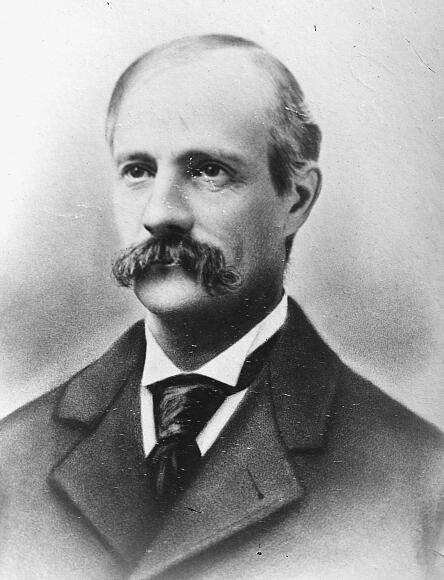
Here you will find contact information for Representative Samuel June Barrows, including email address, phone number, and mailing address.
| Name | Samuel June Barrows |
| Position | Representative |
| State | Massachusetts |
| District | 10 |
| Party | Republican |
| Status | Former Representative |
| Term Start | March 15, 1897 |
| Term End | March 3, 1899 |
| Terms Served | 1 |
| Born | May 26, 1845 |
| Gender | Male |
| Bioguide ID | B000186 |
About Representative Samuel June Barrows
Samuel June Barrows (May 26, 1845 – April 21, 1909) was an American Republican politician, reformer, and advocate for social justice who served one term as a U.S. Representative from Boston, Massachusetts. A member of the Republican Party, he represented Massachusetts in the United States House of Representatives from March 4, 1897, to March 3, 1899, during the 55th United States Congress. His congressional service took place during a significant period in American history marked by debates over imperial expansion, social reform, and the evolving role of the federal government.
Barrows was born on May 26, 1845, and came of age in the mid-nineteenth century, a time of intense national conflict over slavery, civil rights, and the future of the Union. Details of his early life and family background are less extensively documented than his public career, but his later work suggests that his formative years exposed him to the moral and political issues that would shape his lifelong commitment to humanitarian and reform causes. Growing up in an era that encompassed the Civil War and Reconstruction, he developed a strong interest in questions of equality, citizenship, and the responsibilities of government toward vulnerable populations.
Barrows’s education and early professional development prepared him for a career that combined public service, advocacy, and intellectual engagement. Although specific institutions and degrees are not detailed in the available record, his subsequent roles and writings indicate that he was well read and deeply engaged with contemporary political and social thought. His later work as a reformer and legislator reflected a broad understanding of national and international affairs, as well as a capacity to translate moral convictions into concrete legislative and organizational efforts.
By the time he entered national politics, Barrows had aligned himself firmly with the Republican Party, then associated with the legacy of Union victory and Reconstruction-era civil rights. Elected as a Republican to the 55th United States Congress, he took his seat as a Representative from Massachusetts on March 4, 1897. During his single term in office, which ended on March 3, 1899, he participated in the legislative process and represented the interests of his Boston and Massachusetts constituents in the House of Representatives. His tenure coincided with major national debates over economic policy, America’s role abroad, and the rights of various groups within the United States.
In Congress, Barrows quickly distinguished himself as an advocate for a broad range of reform causes. He supported women’s suffrage and worked to advance the political and civil rights of African Americans at a time when those rights were under sustained attack in many parts of the country. He also focused on the condition of Native Americans, promoting legislation that would remove Native Americans from reservations in the belief that cultural assimilation into mainstream American society would lead to equality. Although this assimilationist approach is viewed critically by later generations, it reflected his conviction that full citizenship and integration were essential to justice as he understood it. He was likewise a prominent advocate of prison reform, seeking more humane treatment of incarcerated individuals and improvements in penal policy.
Barrows’s humanitarian concerns extended beyond the borders of the United States. On the international stage, he was an activist for ending hunger and addressing large-scale human suffering. One of his first actions in Congress was to support sending ships carrying grain to India to feed populations suffering from famine, an early example of organized American relief efforts abroad. His opposition to war and militarism also shaped his congressional record. A committed pacifist, he bitterly opposed the Spanish–American War of 1898, arguing against the resort to arms and the expansion of American power through military conquest at a time when such views were often unpopular.
Despite his energetic engagement with reform issues and his efforts on behalf of his constituents, Barrows was an unsuccessful candidate for reelection in 1898 to the Fifty-sixth Congress. His defeat ended his formal legislative career after a single term, but it did not diminish his involvement in public affairs. He continued to work in the realm of humanitarian and social reform, applying his experience in Congress to broader national and international initiatives. In his later years, he served as executive secretary of the Russian Famine Relief Commission, a position that allowed him to continue his longstanding commitment to combating hunger and alleviating suffering abroad.
Samuel June Barrows died on April 21, 1909. By the time of his death, he had established a reputation as a principled, if sometimes controversial, reformer whose work spanned civil rights, women’s suffrage, Native American policy, prison reform, pacifism, and international relief. His single term in Congress from 1897 to 1899 formed only one part of a wider career devoted to the use of public policy and organized action to address social injustice and human need, both in the United States and overseas.