Senator Samuel Bell
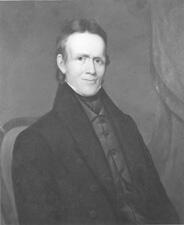
Here you will find contact information for Senator Samuel Bell, including email address, phone number, and mailing address.
| Name | Samuel Bell |
| Position | Senator |
| State | New Hampshire |
| Party | Unknown |
| Status | Former Representative |
| Term Start | December 1, 1823 |
| Term End | March 3, 1835 |
| Terms Served | 2 |
| Born | February 9, 1770 |
| Gender | Male |
| Bioguide ID | B000345 |
About Senator Samuel Bell
On This Page
Samuel Bell (February 9, 1770 – December 23, 1850) was an American politician and lawyer who served as the eighth Governor of New Hampshire from 1819 to 1823 and as a United States Senator from New Hampshire from 1823 to 1835. Over a long career in New Hampshire politics, he served in the state legislature, on the state supreme court, and in the U.S. Senate.
Early Life and Education
Bell was born on February 9, 1770, in Londonderry, New Hampshire, to John and Mary Ann (Gilmore) Bell. Until he was eighteen, he worked on his father’s farm and was educated at common schools during winter sessions. Eager for higher education, Bell began studying Latin in April 1788 and later enrolled at New Ipswich Academy. From October 1790 to April 1791, he taught school in Londonderry. He then entered the sophomore class at Dartmouth College, graduating in 1793. Bell proceeded to study law and was admitted to the Hillsborough County bar in September 1796, after which he practiced law in Francestown, New Hampshire.
Early Political Career
Bell entered politics in 1804 as a member of the New Hampshire House of Representatives, winning re-election for the next two years and serving as Speaker of the House during both terms. In 1806, he became president of the Bank of Hillsborough. He served in the New Hampshire Senate from 1807 to 1809 as its president, and then on the Executive Council of New Hampshire from 1809 to 1811. He was also appointed a trustee of Dartmouth College from 1808 to 1811.
Governor of New Hampshire
In 1816, Bell was elevated to the New Hampshire Supreme Court as an associate justice, but resigned in 1819 to become Governor of New Hampshire on June 3, 1819. He was re-elected in 1820, 1821, and 1822, winning by overwhelming margins. In 1822, he received 22,934 out of 23,980 votes cast, the largest share for a governor candidate since John Taylor Gilman’s victory in 1795. During his governorship, crime within the state was reduced, and New Hampshire’s industry was promoted and developed. Bell declined to run again in June 1822 and left office on June 4, 1823.
United States Senate
On March 4, 1823, Bell was elected to the United States Senate as an Adams-Clay Republican. Over the course of his Senate tenure, he became affiliated successively with the Adams Party, the Anti-Jacksonian Party, and by 1834 the Whig Party. He was re-elected in 1829 and during the 23rd United States Congress served as chairman of the Committee on Claims. After leaving the Senate on March 3, 1835, Bell retired from public life.
Personal Life and Legacy
In November 1797, Bell married Mehitable Bowen Dana, with whom he had six children, including four sons and two daughters. After Dana’s death in August 1810, Bell married Lucy G. Smith in July 1828, with whom he had four sons. His brother John served as Governor of New Hampshire from 1828 to 1829, and Bell was the uncle of Charles Henry Bell, who governed the state from 1881 to 1883.
Bell spent his later years cultivating a farm in Chester, New Hampshire, that he had purchased in 1813. He died there on December 23, 1850, at the age of 80, and was interred in the Village Cemetery.