Representative Samuel Mitchell Brinson
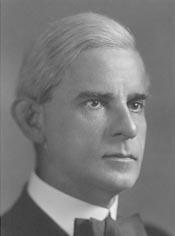
Here you will find contact information for Representative Samuel Mitchell Brinson, including email address, phone number, and mailing address.
| Name | Samuel Mitchell Brinson |
| Position | Representative |
| State | North Carolina |
| District | 3 |
| Party | Democratic |
| Status | Former Representative |
| Term Start | May 19, 1919 |
| Term End | March 3, 1923 |
| Terms Served | 2 |
| Born | March 20, 1870 |
| Gender | Male |
| Bioguide ID | B000840 |
About Representative Samuel Mitchell Brinson
Samuel Mitchell Brinson (March 20, 1870 – April 13, 1922) was an American politician and attorney who represented North Carolina in the United States House of Representatives in the early twentieth century. A member of the Democratic Party, he served as the Representative for North Carolina’s 3rd congressional district from 1919 until his death in 1922, contributing to the legislative process during two terms in office. His service in Congress occurred during a significant period in American history, immediately following World War I and during the early years of the postwar era, when issues of economic adjustment, veterans’ affairs, and agricultural policy were prominent.
Brinson was born on March 20, 1870, in New Bern, Craven County, North Carolina, to William George Brinson and Kittie Elizabeth Brinson. He was raised in eastern North Carolina, a region shaped by the legacy of the Civil War and Reconstruction, and came of age as the state and the South were undergoing political and economic realignment. Details of his early schooling are not extensively documented, but his subsequent professional career indicates a solid educational foundation that prepared him for work in law, education, and public service.
Before entering national politics, Brinson established himself in North Carolina as a lawyer and civic leader. He read law and was admitted to the bar, beginning the practice of law in New Bern. In addition to his legal work, he became active in local educational affairs, reflecting a broader Progressive Era interest in public education and community improvement. His engagement in local issues and Democratic Party politics helped build the reputation and constituency base that would later support his election to Congress.
Brinson was elected as a Democrat to the Sixty-sixth Congress and took office on March 4, 1919, representing North Carolina’s 3rd congressional district. He was subsequently reelected, serving into the Sixty-seventh Congress. As a member of the House of Representatives, he participated in the democratic process and represented the interests of his eastern North Carolina constituents during a time when the region’s largely rural and agricultural communities were grappling with changing markets and postwar conditions. While specific committee assignments and sponsored legislation are not extensively recorded in the available sources, his tenure coincided with national debates over agricultural credit, transportation, and the reintegration of returning soldiers into civilian life, issues of particular concern to his district.
Brinson’s congressional service was cut short by declining health. An obituary noted that he suffered from an undisclosed illness “that dated back to the close of the campaign in 1918,” suggesting that his medical condition had begun even before he assumed office. During a recess in Congress, he sought treatment at the Battle Creek Sanitarium in Michigan, a well-known health institution of the era. As his condition worsened, he returned to his hometown of New Bern, North Carolina. Upon arrival he was admitted to New Bern General Hospital, where he remained for six days.
Samuel Mitchell Brinson died in office on April 13, 1922, in New Bern, North Carolina. He was interred at Cedar Grove Cemetery in New Bern, reflecting his lifelong connection to the community in which he was born and to which he returned at the end of his life. His death brought an early close to a congressional career that had spanned just over three years, during which he served as a Democratic representative of North Carolina’s 3rd district in the United States Congress from 1919 to 1922.