Representative Samuel Price Carson
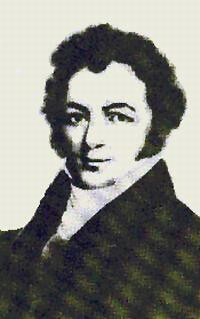
Here you will find contact information for Representative Samuel Price Carson, including email address, phone number, and mailing address.
| Name | Samuel Price Carson |
| Position | Representative |
| State | North Carolina |
| District | 12 |
| Party | Jackson |
| Status | Former Representative |
| Term Start | December 5, 1825 |
| Term End | March 3, 1833 |
| Terms Served | 4 |
| Born | January 22, 1798 |
| Gender | Male |
| Bioguide ID | C000193 |
About Representative Samuel Price Carson
Samuel Price Carson (January 22, 1798 – November 2, 1838) was an American political leader and farmer in both North Carolina and Texas who served as a U.S. congressional representative from North Carolina. He was born at Carson House at Pleasant Gardens, in what is now McDowell County, North Carolina, then part of Burke County. Raised in a prominent family, he was educated by private tutors in Pleasant Gardens. The Carson family were substantial slaveholders for their region, holding as many as sixty people in slavery, an unusually high number for the small estates of the area, and their plantation-based agriculture shaped both his early life and his later pursuits as a farmer and public figure.
Carson engaged in agricultural pursuits as a young man while beginning his political career in North Carolina. He entered public life as a member of the North Carolina Senate, serving from 1822 to 1824. His early legislative service coincided with a period of growing political realignment in the United States, as factions coalesced around the emerging leadership of Andrew Jackson. During this time, Carson established himself as a supporter of Jacksonian principles, aligning with the movement that emphasized expanded participation for white male voters and opposition to certain federal economic policies, while still firmly rooted in the slaveholding agrarian society of western North Carolina.
In national politics, Carson was elected as a member of the Jackson Party, or Jacksonian, to the United States House of Representatives. He represented North Carolina in Congress for four consecutive terms, having been elected to the Nineteenth and to the three succeeding Congresses, and served from March 4, 1825, to March 3, 1833. As a Jacksonian representative during a significant period in American history, he participated in the democratic process and contributed to the legislative work of the House at a time marked by debates over internal improvements, tariffs, Indian removal, and the growing sectional tensions of the antebellum era. His service in Congress reflected the interests of his constituents in western North Carolina, many of whom were small farmers, while he himself remained a substantial landowner and slaveholder. He stood for re-election in 1833 but was defeated, ending his eight-year tenure in the national legislature.
Carson’s political career was marked by one of the most notorious personal conflicts in North Carolina’s early nineteenth-century politics. During the heated 1827 congressional campaign, his opponent Robert Brank Vance made a derogatory remark about Carson or his family, which Carson regarded as an affront to his honor. In response, Carson challenged Vance to a duel. The encounter took place at Saluda Gap, on the North Carolina–South Carolina border, where Carson mortally wounded Vance. The duel, though part of the prevailing code of honor among Southern gentlemen of the time, cast a long shadow over Carson’s public life and became one of the most remembered episodes of his career.
In his personal life, Carson married Catherine Wilson on May 10, 1831. The couple had one daughter together. They also adopted Carson’s illegitimate daughter, born to their neighbor Emma Trout, bringing her into their household. This family arrangement, while discreetly handled in its own era, reflected the complex personal relationships that sometimes accompanied the social and economic structures of plantation society in the early nineteenth-century South.
After his defeat for re-election to Congress, Carson returned to state politics in North Carolina. He was again elected to the North Carolina Senate in 1834, resuming his role in the state legislature. The following year, in 1835, he served as a delegate to the North Carolina constitutional convention, which undertook a significant revision of the state’s constitution. That convention addressed issues such as representation, suffrage, and the structure of state government, and Carson’s participation placed him among the leading political figures engaged in reshaping North Carolina’s political framework in the Jacksonian era.
By 1836, Carson had moved west to Texas, then a Mexican territory in open revolt that soon declared itself an independent republic. Settling among other Anglo-American settlers, he engaged in agricultural pursuits and quickly emerged as a political leader in his new community. His neighbors elected him as a delegate to the Convention of 1836 at Washington-on-the-Brazos. There he signed both the Texas Declaration of Independence and the Constitution of the Republic of Texas, aligning himself with the movement to separate Texas from Mexico and establish a new republic. The convention also created an interim government for Texas, which was still at war with Mexico. Carson’s prominence was such that he was seriously considered for the presidency of the Republic of Texas; in the balloting, however, David G. Burnet was chosen president, receiving only six more votes than Carson.
Although he narrowly missed the presidency, Carson was elected by the convention to serve as Secretary of State in the interim government of the Republic of Texas. In that capacity, President Burnet dispatched him to Washington, D.C., to head a diplomatic mission seeking recognition of Texas independence and material aid from the United States. While Carson was in Washington pursuing these objectives, Burnet later appointed James Collinsworth to replace him as secretary of state. Carson reportedly learned of his removal from office by reading about it in a newspaper. Disillusioned by this abrupt change and the manner in which it was communicated, he abandoned his diplomatic efforts and simply returned home, effectively ending his brief tenure in high office in the Texas government.
In the final years of his life, shifting jurisdictional boundaries altered the formal designation of Carson’s residence. When the borders between the Republic of Texas, the United States, and later state and territorial lines were clarified and formalized, his home was identified as lying within Miller County, Arkansas. Carson spent his last years in this region, continuing his life as a farmer and former statesman of both North Carolina and Texas. He died in Hot Springs, Arkansas, on November 2, 1838, and was buried in the Government Cemetery there. His career, spanning service in the North Carolina Senate, four terms in the U.S. House of Representatives as a Jacksonian, participation in a pivotal state constitutional convention, and a role in the founding government of the Republic of Texas, reflected the turbulent and expansionist character of the United States in the early nineteenth century.