Representative Samuel Chilton
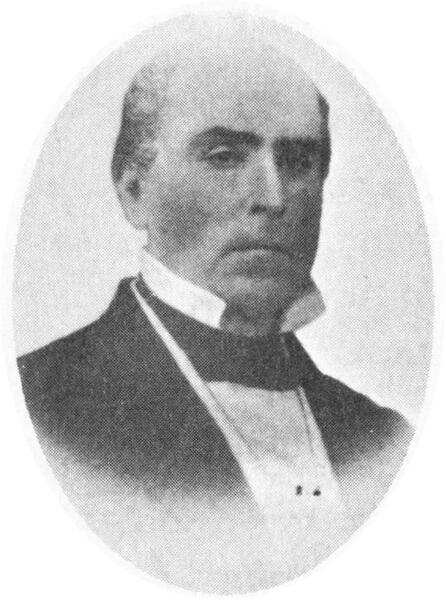
Here you will find contact information for Representative Samuel Chilton, including email address, phone number, and mailing address.
| Name | Samuel Chilton |
| Position | Representative |
| State | Virginia |
| District | 9 |
| Party | Whig |
| Status | Former Representative |
| Term Start | December 4, 1843 |
| Term End | March 3, 1845 |
| Terms Served | 1 |
| Born | September 7, 1804 |
| Gender | Male |
| Bioguide ID | C000358 |
About Representative Samuel Chilton
Samuel Chilton (September 7, 1804 – January 14, 1867) was a 19th‑century politician, lawyer, and delegate to Virginia’s constitutional convention who served one term in the United States House of Representatives as a member of the Whig Party. He was born in Warrenton, Fauquier County, Virginia, on September 7, 1804. During his childhood his family moved west to Missouri, where he attended private schools. This early relocation exposed him to the expanding western frontier of the United States while maintaining his ties to his native Virginia.
Chilton pursued legal studies as a young man and was admitted to the bar in 1826. After qualifying as an attorney, he returned to his birthplace of Warrenton, Virginia, where he commenced the practice of law. Establishing himself as a lawyer in Fauquier County, he entered public life in a period marked by intense national debates over economic policy, states’ rights, and the expansion of slavery. His legal practice and growing reputation in local affairs provided the foundation for his subsequent political career.
As a member of the Whig Party representing Virginia, Chilton contributed to the legislative process during one term in office. In 1842, following a redistricting that reshaped Virginia’s congressional boundaries, he was elected as a Whig to the United States House of Representatives. In that closely contested race he narrowly defeated prominent Democrat William “Extra Billy” Smith. Chilton served in the Twenty‑eighth Congress from March 4, 1843, to March 3, 1845, during a significant period in American history marked by debates over economic reform and territorial expansion. While in Congress he participated in the democratic process and represented the interests of his constituents, notably advocating the abolition of imprisonment for debt, a reform measure aimed at easing harsh penalties on financially distressed individuals.
After the conclusion of his congressional term in 1845, Chilton returned to Warrenton and resumed the practice of law. He remained active in public affairs and emerged as an important figure in Virginia’s mid‑century constitutional reform movement. From 1850 to 1851 he served as a delegate to the Virginia Constitutional Convention, which met to revise the state’s fundamental law. During the convention he proposed a key compromise on legislative apportionment, seeking to balance the competing interests of eastern, slaveholding counties and the more populous, rapidly developing western regions of the state. His role in crafting this compromise placed him among the influential legal and political voices shaping Virginia’s antebellum governance.
By 1853 Chilton had moved to Washington, D.C., where he continued his legal career and became associated with the American Party, commonly known as the Know‑Nothings, reflecting the shifting partisan alignments of the 1850s. Although he had been a slaveholder, he gained national attention in 1859 when he was appointed as one of the defense attorneys for the abolitionist John Brown following Brown’s raid on the federal arsenal at Harpers Ferry, Virginia. Chilton entered the case after earlier defense counsel had urged Brown to rely on a plea of insanity, a strategy that Brown rejected. Chilton’s participation in this highly publicized treason trial placed him at the center of one of the most polarizing episodes in the sectional crisis that preceded the Civil War.
In his later years, Chilton divided his time between his legal work and his connections to Virginia. He lived through the secession of his native state and the devastation of the Civil War, events that transformed the political and social order in which he had built his career. He eventually returned to Warrenton, where his public life had begun. Samuel Chilton died there on January 14, 1867, and was interred in Warrenton Cemetery, closing a life that had spanned from the early national period through the upheavals of the mid‑19th century.