Representative Samuel Andrew Cook
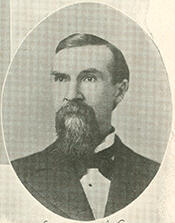
Here you will find contact information for Representative Samuel Andrew Cook, including email address, phone number, and mailing address.
| Name | Samuel Andrew Cook |
| Position | Representative |
| State | Wisconsin |
| District | 6 |
| Party | Republican |
| Status | Former Representative |
| Term Start | December 2, 1895 |
| Term End | March 3, 1897 |
| Terms Served | 1 |
| Born | January 28, 1849 |
| Gender | Male |
| Bioguide ID | C000726 |
About Representative Samuel Andrew Cook
Samuel Andrew Cook (January 28, 1849 – April 4, 1918) was an American businessman, Republican politician, and Wisconsin pioneer who served one term as a Representative from Wisconsin in the United States Congress from 1895 to 1897. A member of the Republican Party, he represented Wisconsin’s 6th congressional district in the 54th U.S. Congress and was aligned with the conservative, or stalwart, faction of the party during its early twentieth‑century struggle with the emerging progressive wing. Known publicly and in contemporary records as S. A. Cook, he was also a prominent figure in veterans’ affairs and later served as commander of the Wisconsin department of the Grand Army of the Republic from 1915 to 1916.
Cook was born on January 28, 1849, into a large family that would become closely associated with Wisconsin’s early development and with military service in the Civil War. Several of his older brothers served in the Union Army. Watson Henry Cook (1839–1929) enlisted in the 21st Wisconsin Infantry Regiment, fought in the western theater, rose through the enlisted ranks, and was commissioned a first lieutenant in 1864, mustering out as 1st lieutenant of Company A. Jacob Harrison Cook (1841–1917), the lone family survivor of the Lady Elgin disaster, enlisted at the outset of the war in the 5th Wisconsin Infantry Regiment, saw heavy combat in the eastern theater at battles including Antietam and Gettysburg, and rose from lieutenant to captain, mustering out as captain of Company B after the regiment was reorganized. James Milton Cook (1845–1936) enlisted in the 2nd Wisconsin Cavalry Regiment and served largely as an escort for general officers in Missouri and Arkansas, later joining a post‑war expedition into Texas with George A. Custer until late 1865, mustering out as a veteran corporal. Samuel’s younger brother, Alfred M. Cook (1850–1921), too young to serve in the Civil War, later pursued his own political career as a Democrat, serving in the Wisconsin State Assembly from Marathon County in the 1901–1902 term. This family background in military and civic service formed an important part of the environment in which Samuel Andrew Cook came of age and helped shape his later public career.
In his personal life, Cook married twice. His first marriage was to Abbie F. Kelliher of Stockbridge, Wisconsin, in 1873. The union was brief and tragic: Abbie died in 1874 following the birth of their first son, and the infant died a few weeks later; mother and child were buried together. On May 17, 1876, Cook married Jennie Christie, also of Stockbridge. They had two children and were married for nineteen years. Their daughter, Maud Christie Cook, later married Charles F. Lancaster, a successful investment broker in Boston, Massachusetts, while their son, Henry Harold “Harry” Cook entered the paper industry in Indiana, continuing the family’s connection to paper manufacturing. Cook’s second marriage ended in further tragedy when Jennie died suddenly of tuberculosis in September 1895, during his first year in Congress, an event that deeply affected his subsequent political decisions.
Before his election to national office, Cook established himself as a businessman and local political leader in Wisconsin. He became involved in the paper industry, notably through the Neenah Paper Company, and by the late 1880s had become a prominent figure in Neenah, Wisconsin. He was elected the 13th mayor of Neenah, serving from 1889 to 1890, at the same time that his brother Jacob Harrison Cook unsuccessfully ran for mayor of nearby Appleton. Cook then advanced to state office, representing northern Winnebago County in the Wisconsin State Assembly during the 1891–1892 term. His business interests and municipal experience helped build a political base in a region that was economically tied to paper manufacturing and river commerce, and he became identified with the Republican Party’s stalwart, business‑oriented wing.
Cook’s path to Congress developed out of both his business decisions and the shifting political climate of the 1890s. In 1894 he sold his interest in the Neenah Paper Company, and that spring rumors circulated that he would seek a seat in the U.S. House of Representatives. Several newspapers endorsed his prospective candidacy, and during the summer he systematically accumulated delegates in county conventions. By the time of the Republican congressional convention, he held a clear majority and was unanimously nominated on July 20, 1894. His district, Wisconsin’s 6th congressional district, then comprised Winnebago, Calumet, Manitowoc, Fond du Lac, Marquette, Green Lake, and Waushara counties. Although it was considered one of the more Democratic‑leaning districts in Wisconsin at the time, the national political mood had turned sharply against the Democratic Party following the Panic of 1893. In the general election of 1894, Cook won by a seventeen‑point margin, receiving 56 percent of the vote and defeating the incumbent Democrat, Owen A. Wells.
As a member of the House of Representatives in the 54th U.S. Congress, serving from March 4, 1895, to March 3, 1897, Cook participated in the legislative process during a significant period in American political and economic history. His tenure was marked by both legislative activity and personal hardship. Shortly after he took office, his wife Jennie fell ill; her sister had died of tuberculosis in the spring, and Cook took Jennie to Canada in the fall of 1895 in the hope that the climate would aid her recovery. She died in September 1895, leaving him a widower with two children. Cook did not return to Washington until December of that year. Despite this disruption, he remained engaged in congressional work. His most noted legislative achievement was the passage of the Filled Cheese Act, which imposed a heavy tax and regulatory regime on “filled cheese,” a cheese‑like product made with margarine or lard instead of milk fat, reflecting both agricultural and consumer protection concerns of the era. Local newspapers in his district also praised his success in securing federal appropriations for harbors, dams, and bridges, which were important to the commercial infrastructure of his largely industrial and agricultural constituency.
Although widely expected to win re‑election, Cook announced in July 1896 that he would decline renomination, citing his desire to devote more time to his children and to his personal business affairs following his wife’s death. His single term in Congress thus ran from 1895 to 1897, during which he represented the interests of his constituents in Wisconsin’s 6th district and aligned with the conservative faction of the Republican Party in the broader intra‑party debates of the period. After leaving Congress, he remained active in political and civic life in Wisconsin. His stature as a Civil War‑era veteran and as the brother of several Union soldiers contributed to his prominence in veterans’ organizations, culminating in his service as commander of the Wisconsin department of the Grand Army of the Republic from 1915 to 1916, a position that underscored his continuing influence in public affairs and his commitment to the memory and welfare of Union veterans.
In his later years, Cook continued to be recognized as a leading Republican stalwart and as a figure closely associated with the development of Neenah and the broader Fox River Valley. He maintained his business interests and his engagement in party politics even as the progressive movement gained strength within Wisconsin’s Republican ranks. Samuel Andrew Cook died on April 4, 1918. His life and career reflected the trajectory of many nineteenth‑century Midwestern Republicans: rooted in frontier settlement and Civil War service, advancing through local business and municipal office, and culminating in service in the state legislature and the United States Congress, followed by continued leadership in civic and veterans’ organizations.