Representative Samuel Bronson Cooper
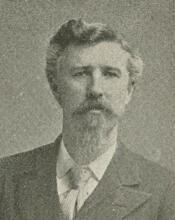
Here you will find contact information for Representative Samuel Bronson Cooper, including email address, phone number, and mailing address.
| Name | Samuel Bronson Cooper |
| Position | Representative |
| State | Texas |
| District | 2 |
| Party | Democratic |
| Status | Former Representative |
| Term Start | August 7, 1893 |
| Term End | March 3, 1909 |
| Terms Served | 7 |
| Born | May 30, 1850 |
| Gender | Male |
| Bioguide ID | C000761 |
About Representative Samuel Bronson Cooper
Samuel Bronson Cooper (May 30, 1850 – August 21, 1918) was a United States Representative from Texas, a member of the Democratic Party, and later a Member of the Board of General Appraisers. He served seven terms in the United States Congress between 1893 and 1909, representing Texas during a significant period in American political and economic development.
Cooper was born on May 30, 1850, near Eddyville in Caldwell County, Kentucky. In the same year, his family moved to Texas and settled in Woodville, Tyler County. He was educated in the common schools of Woodville, receiving the basic formal instruction typical of rural Texas in the mid-nineteenth century. Growing up in East Texas in the years following statehood and amid the broader national tensions preceding and following the Civil War, he came of age in a region that was developing its legal and political institutions.
Pursuing a legal career, Cooper read law and was admitted to the bar in 1871. He began practicing law in Woodville in 1872 and continued in private practice there until 1885. During this period he entered public service at the local level, serving as prosecutor for Tyler County from 1876 to 1880. His work as a county prosecutor helped establish his reputation in legal and political circles and led to higher office in state government.
Cooper was elected to the Texas Senate, where he served from 1881 to 1885. As a state senator, he participated in shaping legislation during a time when Texas was expanding its infrastructure and adjusting to post-Reconstruction political realities. In 1885, President Grover Cleveland appointed him Collector of Internal Revenue for the First District of Texas, headquartered in Galveston, a position he held from 1885 to 1888. After completing this federal appointment, he sought judicial office but was an unsuccessful candidate for Texas district judge in 1888, returning thereafter to his legal and political activities.
Cooper entered national politics as a Democrat and was elected to the United States House of Representatives for the Fifty-third Congress. He was subsequently reelected to the five succeeding Congresses, serving continuously from March 4, 1893, to March 3, 1905. During these six consecutive terms, he contributed to the legislative process and represented the interests of his Texas constituents in the House of Representatives at a time marked by debates over tariffs, monetary policy, and the regulation of commerce. Although an experienced incumbent, he was an unsuccessful candidate for reelection to the Fifty-ninth Congress in 1904. He returned to the House when he was again elected as a Democrat to the Sixtieth Congress, serving from March 4, 1907, to March 3, 1909. After this final term, he was once more an unsuccessful candidate, this time for reelection to the Sixty-first Congress.
Following his congressional service, Cooper was appointed to a federal quasi-judicial post. President William Howard Taft nominated him on May 16, 1910, to the Board of General Appraisers, a federal body responsible for adjudicating customs and tariff disputes, to fill the seat vacated by Marion De Vries. The United States Senate confirmed his nomination on May 24, 1910, and he received his commission on May 26, 1910. In this capacity, Cooper applied his legal training and legislative experience to the increasingly complex field of customs law during a period of expanding international trade. He served on the Board of General Appraisers until his death on August 21, 1918, in New York City, New York. His service on the board terminated on that date, and he was succeeded by George Emery Weller.
Cooper maintained close ties to Texas throughout his life despite his later service in New York. He was interred in Magnolia Cemetery in Beaumont, Jefferson County, Texas, reflecting his enduring connection to the state he had represented in Congress. His family also figured in Texas public life. His daughter, Willie C. Cooper, was born in Woodville and, at the age of sixteen, was graduated from the Texas Female College with first honors. She later became the first wife of William P. Hobby, who would serve as governor of Texas, further linking the Cooper family to the political history of the state.