Representative Samuel Sullivan Cox
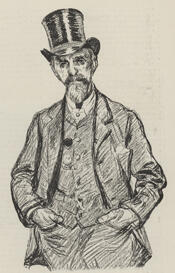
Here you will find contact information for Representative Samuel Sullivan Cox, including email address, phone number, and mailing address.
| Name | Samuel Sullivan Cox |
| Position | Representative |
| State | New York |
| District | 9 |
| Party | Democratic |
| Status | Former Representative |
| Term Start | December 7, 1857 |
| Term End | March 3, 1891 |
| Terms Served | 15 |
| Born | September 30, 1824 |
| Gender | Male |
| Bioguide ID | C000839 |
About Representative Samuel Sullivan Cox
Samuel Sullivan “Sunset” Cox (September 30, 1824 – September 10, 1889) was an American congressman, diplomat, author, and newspaper editor who represented both Ohio and New York in the United States House of Representatives and served as United States Ambassador to the Ottoman Empire. Over the course of his long political career, he served 15 terms in Congress, including continuous service as a Representative from New York from 1857 to 1891, and became a prominent Democratic Party figure during the tumultuous decades before, during, and after the Civil War. Known for his wit, oratorical skill, and party loyalty, he played a notable role in debates over slavery, Reconstruction, civil service reform, and economic policy.
Cox was born on September 30, 1824, in Zanesville, Ohio, to Ezekiel Taylor Cox and Maria Matilda (née Sullivan) Cox. His father, a journalist and politician in Zanesville, was descended from a prominent New Jersey family that included Thomas Cox, one of the original proprietors of the Province of East New Jersey; Congressman James Cox, a veteran of George Washington’s Continental Army; and Joseph Borden, founder of Bordentown, New Jersey. Ezekiel Cox, an uncompromising Jacksonian Democrat, was also a cousin by marriage of U.S. Senator James J. Wilson. Cox was named for his maternal grandfather, Samuel Sullivan, who served as Ohio Treasurer from 1820 to 1823 and, like Ezekiel Cox, represented Zanesville in the Ohio State Senate. At fourteen, Cox began serving as an assistant to his father, who was then clerk of the Ohio Supreme Court and of the Court of Common Pleas. Neighbors later recalled the young Cox as “bright, sunny, genial, fond of fun, sparkling with wit, always truthful, fearless, and generous, never hesitating to confess a fault of his own, and ever ready to defend the weak and oppressed.” A star student who dreamed of traveling the world, he attended an academy in Zanesville where his classmates included future Supreme Court Justice William Burnham Woods and geologist James M. Safford.
In 1842, Cox entered Ohio University at Athens. The campus was marked by a sharp rivalry between townspeople and students, and during his freshman year, after the town won a court case against the university, Cox sabotaged a cannon that was to be fired in celebration. Disenchanted with what he later called the “scaly vale of mud,” he left Athens and, by 1844, re-enrolled at Brown University in Providence, Rhode Island. At Brown he joined the Delta Phi fraternity and quickly distinguished himself as an energetic and controversial speaker. He delivered addresses in support of temperance and Fourierism and in opposition to the abolition of slavery, once publicly rebutting a lecture by noted abolitionist Wendell Phillips. His subject matter and style sometimes clashed with New England sensibilities, and he wrote home that “there are some monstrous mean fellows among the Yankees,” yet he was widely praised for his wit, work ethic, and intellectual vigor. Among his friends at Brown were Franklin J. Dickman, James Burrill Angell, and future Chief Justice of the Rhode Island Supreme Court Thomas Durfee. Cox graduated in 1846 and returned to Ohio.
While still a student, Cox had read legal treatises such as Blackstone’s Commentaries and William Cruise’s Digest of the Laws of England Respecting Real Property. After his return to Ohio, he pursued formal legal training, first in the office of Judge C. W. Searle and then with Judge Convers, where one of his fellow students was future Ohio Governor George Hoadly. He completed his studies under Vachel Worthington in Cincinnati and was admitted to the Ohio bar. Cox then formed a law partnership with George E. Pugh, who would later represent Ohio in the United States Senate. His legal career, however, was soon overshadowed by his literary and journalistic ambitions. While on his honeymoon in Europe in 1851, Cox wrote a series of travel letters that were collected and published as “A Buckeye Abroad.” The book was warmly received and encouraged him to abandon full-time legal practice for journalism. In 1853, he purchased a controlling interest in the Ohio Statesman, a Democratic newspaper in Columbus, and became its editor. As an editor, and earlier as a writer at Brown, he articulated his opposition to the Whig Party’s American System and his support for free trade, and he became increasingly active in Democratic Party politics.
Cox’s rise in Ohio politics was rapid. In 1853, Washington McLean resigned as chairman of the Ohio Democratic State Committee on the condition that Cox be chosen as his successor. As party chair, Cox managed the gubernatorial campaign of William Medill, who was elected by an overwhelming majority, establishing Cox as a rising Democratic leader and bringing him to the attention of national figures, including President Franklin Pierce. In 1855, Pierce offered him the post of Secretary of Legation at the Court of St. James’s in London. Cox declined and instead requested a diplomatic assignment to Peru. He sailed for Peru but fell ill, returned to the United States, and resigned his commission. In 1856, he accepted the Democratic nomination to represent the Columbus region in the U.S. House of Representatives. He narrowly defeated Republican Samuel Galloway and entered Congress in 1857, chairing the Committee on Revolutionary Claims in his first term. On December 16, 1857, he delivered the maiden speech in the newly completed House chamber in the south wing of the Capitol. In that address he aligned himself with Senator Stephen A. Douglas’s doctrine of “popular sovereignty” and opposed President James Buchanan’s support for the pro-slavery Lecompton Constitution for Kansas. Cox’s speech was widely credited with helping defeat the Lecompton Constitution and paving the way for Kansas’s eventual admission as a free state, though Buchanan retaliated by removing Cox’s ally from the postmastership of Columbus.
Cox was re-elected in 1858 and again in 1860, each time by increasing margins, remaining an opponent of the Buchanan administration and a close ally of Douglas as sectional tensions deepened. As Southern states began to secede in the winter of 1860–1861, he issued appeals for unity and caution. When Douglas died in 1861, Cox delivered a eulogy in the House. During and before the Civil War, he emerged as a moderate member of the Copperhead faction of Northern Democrats, supporting peace with the Confederacy and opposing what he regarded as Republican efforts to transform the war into a crusade for abolition. Initially, he resolved to sustain President Abraham Lincoln “in every constitutional endeavor to put down the rebellion,” but he strongly resisted “that abolition policy which sought to convert this holy war for the defence of the government and the union into a mere anti-slavery party war.” In 1862, after his already Republican-leaning district was redrawn to be even more favorable to the opposition, he nonetheless defeated Republican Samuel Shellabarger by a narrow margin. In 1863, he opposed the Thirteenth Amendment to the United States Constitution, arguing that peace was close at hand and that the amendment would undermine negotiations. He later explained that, in his view, slavery was “already dead by the bullet” and that ending the bloodshed mattered more than “the mere empty, abstract ceremonial of burying the dead corpse of slavery.” In the 1864 campaign, he actively opposed Lincoln’s re-election and denounced Republicans for allegedly supporting miscegenation. That year he was defeated by Shellabarger in a landslide, largely due to the votes of Union soldiers. Six weeks after Cox left Congress, the Civil War ended and Lincoln was assassinated. Despite his opposition to administration policies, Cox remained personally on good terms with Lincoln in the months before the president’s death and was later praised by Secretary of State William H. Seward as a member of the loyal opposition.
After his 1864 defeat, Cox moved to New York City and resumed the practice of law in partnership with Charlton Thomas Lewis. He also published “Eight Years in Congress,” a memoir of his legislative experience. During the impeachment crisis of President Andrew Johnson in 1867–1868, Cox was summoned to Washington to lobby Senator John B. Henderson of Missouri, a close friend, against voting for conviction. Henderson ultimately cast a decisive vote against impeachment, though Cox disclaimed any personal credit. In 1868, Tammany Hall and the Democratic Party in New York selected Cox as their nominee for Congress from a district encompassing Greenwich Village, Chelsea, and the West Village. He won the general election in a landslide and began the long New York phase of his congressional career. Although Tammany Hall was instrumental in his repeated elections, Cox himself was never seriously accused of corruption. One contemporary remarked that “Mr. Cox is … almost the only honest man I know who passed through a portion of the Tweed Ring period.”
Returning to Congress as a Representative from New York, Cox served continuously for much of the next two decades, contributing to the legislative process during 15 terms in office and participating in debates on Reconstruction, economic policy, and civil service. After a second trip to Europe, limited to the Mediterranean coast by ill health, he returned to find Reconstruction the dominant issue in Congress. He favored reconciliation with the South and the restoration of political rights to former Confederates. In 1869, he introduced a general amnesty bill to restore voting rights to Confederate veterans, but it failed to achieve the required two-thirds majority by two votes. In 1870, he defeated Horace Greeley, editor of the New York Tribune, by about 1,000 votes. During the ensuing Congress he devoted considerable effort to abolishing the “test oath” that required civil servants and military officers to swear they had not engaged in disloyal conduct during the war. He succeeded in securing repeal of the oath for members of Congress, though it remained in force for other offices until 1884. In 1872, Cox was nominated on a fusion ticket of Democrats and anti-Grant Republicans as a Representative at-large from New York, while his former opponent Greeley headed the same ticket as its presidential nominee. Cox lost the election to Republican Lyman Tremain. In the lame-duck session that followed, he unsuccessfully opposed a congressional salary increase and returned the excess $4,812 he received to the Treasury.
Soon after Cox’s temporary departure from Congress, Representative James Brooks died, leaving vacant a seat in a district along the East River stretching from the Lower East Side to Murray Hill. Cox agreed to run in the special election and won in a landslide, returning to the House without missing a single day of the session. Along with Pennsylvania Representative Samuel J. Randall, he led Democratic opposition to federal civil rights measures for freedmen. He was re-elected in 1874 from a slightly redrawn Lower East Side district, again by a large margin. The Democratic victory in the 1874 midterm elections produced the party’s first postwar House majority. Cox, who had previously been nominated for the Speakership largely as a matter of party honor under Republican majorities, now became one of three serious candidates for Speaker, alongside Randall and Michael C. Kerr. He drew enthusiastic support from Western and Southern Democrats but ultimately finished third. As a form of consolation and in recognition of his seniority and influence, he was appointed chairman of the powerful Committee on Banking and Currency in 1875. Early in 1876, when Speaker Kerr fell gravely ill, Cox occasionally served as acting Speaker and was formally designated Speaker pro tempore on June 19. He then left Washington to serve as a delegate to the 1876 Democratic National Convention, and Milton Sayler was chosen to preside in his absence. When Cox returned, Sayler did not relinquish the chair. After Kerr’s death, Randall was elected Speaker in the 45th Congress, and Cox was placed at the head of the committee overseeing the Tenth Census. During the contested presidential election of 1876, Cox loyally supported Democrat Samuel J. Tilden against Rutherford B. Hayes and backed legislation to investigate irregularities in states carried by Hayes, but he ultimately urged the House to accept Hayes as the victor in the interest of national stability.
In 1881, Cox undertook an extended global journey. He visited London, where he attended the funeral of former Prime Minister Benjamin Disraeli and observed debates in the House of Commons over the Bradlaugh case, which reinforced his long-standing opposition to test oaths. He continued on to Constantinople and Jerusalem and was in Tarsus when he learned by telegram of President James A. Garfield’s assassination. Upon his return to the United States, Cox became increasingly active in movements for civil service reform and for restrictions on foreign contract labor, reflecting his evolving focus on administrative efficiency and labor protections. After moving to New York, he had already shifted his legislative priorities toward trade liberalization, civil service reform, and railroad regulation, aligning himself with reform-minded Democrats who sought to modernize the party’s economic and administrative policies. In addition to his legislative work, Cox served as United States Ambassador to the Ottoman Empire, further extending his public career into the diplomatic sphere and drawing on his long-standing interest in foreign affairs and travel.
Cox remained an influential Democratic voice in Congress until the final years of his life, participating in the democratic process and representing the interests of his constituents in both Ohio and New York during a period of profound national transformation. He died on September 10, 1889, in New York City, just weeks before his sixty-fifth birthday. His career spanned the antebellum era, the Civil War, Reconstruction, and the Gilded Age, and his long service in the House of Representatives, combined with his diplomatic post in the Ottoman Empire, made him one of the more prominent Democratic legislators and party strategists of his generation.