Representative Samuel L. Devine
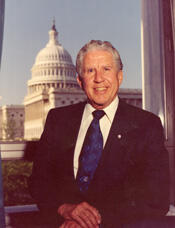
Here you will find contact information for Representative Samuel L. Devine, including email address, phone number, and mailing address.
| Name | Samuel L. Devine |
| Position | Representative |
| State | Ohio |
| District | 12 |
| Party | Republican |
| Status | Former Representative |
| Term Start | January 7, 1959 |
| Term End | January 3, 1981 |
| Terms Served | 11 |
| Born | December 21, 1915 |
| Gender | Male |
| Bioguide ID | D000279 |
About Representative Samuel L. Devine
Samuel Leeper Devine (December 21, 1915 – June 27, 1997) was an American politician of the Republican Party who represented Ohio in the United States House of Representatives for eleven consecutive terms. Serving as the Representative for Ohio’s 12th congressional district from January 3, 1959, until January 3, 1981, he played a sustained role in the legislative process during a significant period in American political history, spanning the late Eisenhower administration through the Carter administration. Over more than two decades in Congress, he participated actively in the democratic process and worked to represent the interests of his central Ohio constituents.
Born on December 21, 1915, Devine came of age in the early twentieth century, a period marked by the Great Depression and the lead-up to World War II. These formative years helped shape his outlook on public service and governance. Although detailed accounts of his early family life and upbringing are limited in the available record, his later career in law and politics reflects a trajectory consistent with many mid‑century Republican officeholders who combined legal training with party activism and electoral service.
Devine pursued higher education and legal training before entering public life, preparing for a career that would blend law, politics, and public administration. His legal background provided a foundation for his subsequent work in government, where familiarity with statutory interpretation, constitutional issues, and regulatory frameworks was essential. This professional preparation positioned him to navigate the increasingly complex legislative environment of the postwar United States.
Before his election to Congress, Devine established himself in public affairs and Republican Party politics in Ohio, building the political base that would sustain his long tenure in the House of Representatives. His early career in law and public service, along with his engagement in party activities, helped him secure the Republican nomination for the 12th congressional district and win election to the Eighty‑sixth Congress in 1958. Taking office on January 3, 1959, he entered the House at a time when the nation was confronting Cold War tensions, the emerging civil rights movement, and rapid economic and social change.
During his congressional service from 1959 to 1981, Devine contributed to the legislative process across eleven terms, participating in debates and votes on domestic policy, foreign affairs, and federal spending that defined the era. Representing a district centered in Ohio, he worked within the Republican Conference to advance his party’s positions while addressing the needs of his constituents. His tenure spanned major national developments, including the Kennedy and Johnson administrations’ Great Society programs, the Vietnam War, the Watergate scandal, and the economic challenges of the 1970s, situating him among the long‑serving House members who provided continuity across shifting political landscapes.
Devine’s influence within the House Republican leadership culminated during the 96th Congress (1979–1981), when he served as Chairman of the House Republican Conference. In that role, he helped coordinate party strategy, messaging, and internal organization at a time when Republicans were seeking to expand their influence in Congress and prepare for the emerging conservative realignment that would crest with the election of Ronald Reagan in 1980. His leadership position reflected the confidence placed in him by his colleagues and underscored his standing within the national party.
Devine’s congressional career concluded following the 1980 election, when he was defeated for reelection by Democrat Bob Shamansky. He left office on January 3, 1981, after more than twenty‑two years of continuous service in the House. The district he had long represented remained politically competitive; Shamansky himself served only a single term before losing the seat in 1982 to Republican John Kasich, who would later become a prominent figure in Ohio and national politics. Devine’s departure marked the end of a lengthy period of Republican representation in the district under his stewardship.
In his later years, Devine remained identified with his long record of public service and his role in mid‑twentieth‑century congressional politics. He died on June 27, 1997, closing a life that had spanned much of the modern American political era and leaving a legacy as a durable Republican representative, party leader, and participant in some of the most consequential legislative debates of his time.