Representative Samuel Dibble
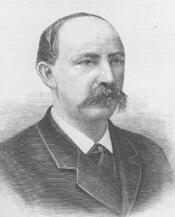
Here you will find contact information for Representative Samuel Dibble, including email address, phone number, and mailing address.
| Name | Samuel Dibble |
| Position | Representative |
| State | South Carolina |
| District | 1 |
| Party | Democratic |
| Status | Former Representative |
| Term Start | December 5, 1881 |
| Term End | March 3, 1891 |
| Terms Served | 5 |
| Born | September 16, 1837 |
| Gender | Male |
| Bioguide ID | D000300 |
About Representative Samuel Dibble
Samuel Dibble (September 16, 1837 – September 16, 1913) was an American lawyer, educator, Confederate Civil War veteran, and Democratic politician who represented South Carolina in the United States House of Representatives from 1881 to 1891. Over the course of five terms in Congress during the 1880s, he participated actively in the legislative process and represented the interests of his South Carolina constituents during a significant period in American political and social history.
Dibble was born in Charleston, South Carolina, the oldest son of Philander Virgil Dibble (1808–1883) and Frances Ann (Evans) Dibble (1815–1891). His father and uncle, Andrew Dibble (1800–1846), had moved from Bethel, Connecticut, to Charleston, where they engaged in business together as hatters. Through his mother, Ann Evans, he was descended from the Gabeau family of French Huguenots and the Henley family of England. Dibble was also a direct descendant of Thomas Dibble, who emigrated from England to Dorchester, Massachusetts, in 1630 as part of the Puritan migration to New England and who, in 1635, was one of the founders of Windsor, Connecticut. Young Dibble pursued an academic course both in Bethel, Connecticut, his father’s birthplace, and in Charleston, South Carolina, reflecting the family’s ties to New England and the South.
Beginning in 1853, Dibble attended the College of Charleston for two years before transferring to Wofford College in Spartanburg, South Carolina. He graduated with an A.B. degree from Wofford in July 1856 under the presidency of the Reverend William M. Wightman, and he is noted as the first graduate of that institution. While at Wofford, he was a member of the Calhoun Literary Society, an experience that helped prepare him for his later legal and political career. After graduation he taught at Shilow Academy and Pine Grove Academy in Orangeburg District from 1856 to 1857, and in the spring of 1858 he served as assistant teacher in the preparatory department of Wofford College. During this period he also began the study of law, reading under Jefferson Choice of Spartanburg and the firm of Lesesne and Wilkins in Charleston between 1858 and 1859. He was admitted as an attorney at law in December 1859 and, after further study of equity under Judge Charles H. Simonton, was admitted as a solicitor in equity in 1865. In January 1860 he commenced the practice of law in Orangeburg, South Carolina, where he would remain professionally based for much of his life. Wofford College later conferred upon him the honorary degree of LL.D.
With the secession crisis and the outbreak of the Civil War, Dibble entered military service in the Confederate States Army. On January 3, 1861, he volunteered as a private in the Edisto Rifles, a company in Colonel Johnson Hagood’s First Regiment of South Carolina Volunteers. He later attained the rank of first lieutenant. The company eventually became part of the Eutaw Regiment, the Twenty-fifth South Carolina Volunteers, under Colonel Charles H. Simonton, within Hagood’s Brigade, Hoke’s Division, of the Army of Northern Virginia. He also served as a lieutenant under the command of Wade Hampton III. Dibble served throughout the Civil War, and his experiences in the Confederate Army shaped his subsequent public life in Reconstruction and post-Reconstruction South Carolina.
After the war, Dibble resumed the practice of law in Orangeburg and became active in local civic and educational affairs. He edited the Orangeburg News, contributing to public discourse in the community. He served as a member of the Board of School Commissioners of Orangeburg County, reflecting his longstanding interest in education, and in 1878 he was appointed a trustee of the University of South Carolina at Columbia. Entering formal politics during the turbulent Reconstruction era, he served as a member of the South Carolina House of Representatives in 1877 and 1878, participating in the reestablishment of Democratic control in the state. In 1880 he was chosen as a delegate to the Democratic National Convention, further solidifying his role within the Democratic Party.
Dibble’s service in the United States Congress began in a contested setting. He presented his credentials as a Democratic Member-elect to the Forty-seventh Congress to fill a vacancy thought to exist by reason of the death, pending an election contest, of Representative Michael P. O’Connor. Dibble served in this capacity from June 9, 1881, to May 31, 1882, when the seat was awarded to Edmund W. M. Mackey under the original election. He was subsequently elected in his own right as a Democrat to the Forty-eighth and to the three succeeding Congresses, serving from March 4, 1883, to March 3, 1891. During these five terms in office, he contributed to the legislative process at a time when the nation was grappling with issues of reconstruction, economic development, and race relations. He served as chairman of the Committee on Public Buildings and Grounds during the Forty-ninth and Fiftieth Congresses, a position that gave him influence over federal construction projects and related appropriations. In 1889, reflecting the racial and social tensions of the era, Dibble petitioned for the pardon of three Black men who had been convicted for the lynching of Manse Waldrop; he stated that he regarded lynching to avenge rape as justifiable, regardless of race, a stance that illustrates the period’s deeply entrenched and violent racial attitudes. He declined to be a candidate for reelection in 1890, thereby concluding his congressional career in March 1891.
Following his departure from Congress, Dibble returned to Orangeburg and engaged in banking and other business interests, while continuing to practice law and to participate in community affairs. His post-congressional years were spent largely in private life, though he remained a figure of local prominence due to his long record in education, law, and politics. He maintained his connections to his alma mater and to the civic institutions with which he had been associated throughout his career.
Samuel Dibble died near Baltimore, Maryland, on September 16, 1913, his seventy-sixth birthday. His body was returned to South Carolina, and he was interred in Sunnyside Cemetery in Orangeburg, reflecting his enduring ties to the community where he had built his professional and political life.