Representative Samuel Bernard Dick
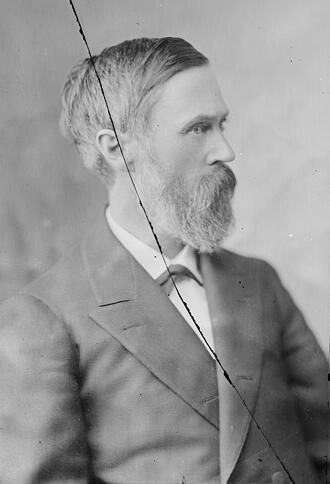
Here you will find contact information for Representative Samuel Bernard Dick, including email address, phone number, and mailing address.
| Name | Samuel Bernard Dick |
| Position | Representative |
| State | Pennsylvania |
| District | 26 |
| Party | Republican |
| Status | Former Representative |
| Term Start | March 18, 1879 |
| Term End | March 3, 1881 |
| Terms Served | 1 |
| Born | October 26, 1836 |
| Gender | Male |
| Bioguide ID | D000305 |
About Representative Samuel Bernard Dick
Samuel Bernard Dick (October 26, 1836 – May 10, 1907) was an American politician and businessman who served as a Republican member of the U.S. House of Representatives from Pennsylvania from 1879 to 1881. A member of the Republican Party, he contributed to the legislative process during his single term in Congress, representing the interests of his constituents during a significant period in American history. His career combined military service in the Civil War, local and national political activity, and leadership in major industrial and transportation enterprises.
Samuel B. Dick, the son of John Dick, was born in Meadville, Crawford County, Pennsylvania, where he attended the public schools. He later pursued higher education at Allegheny College in Meadville. Before the outbreak of the American Civil War, he was engaged in banking, establishing himself in local business circles in northwestern Pennsylvania.
With the onset of the Civil War, Dick entered military service in the Union Army. He served as captain of Company F, 9th Pennsylvania Reserve Regiment. On December 20, 1861, he was severely wounded at the Battle of Dranesville in Virginia. Despite this early injury, he continued his military career and later commanded the 9th Pennsylvania Reserves at the Battle of Antietam in September 1862, one of the war’s most significant and bloody engagements. He subsequently served as colonel of the regiment until February 1863, when he resigned his commission. Later that year, he commanded the Fifth Regiment, Pennsylvania Militia, and in July 1863 proceeded with that unit to New Creek, West Virginia, during the period of heightened military activity surrounding the Gettysburg Campaign.
After the war, Dick returned to Meadville and entered public life. He served as mayor of Meadville in 1870, marking his first major elective office. That same year he was an unsuccessful candidate for election to the U.S. House of Representatives, and he again sought a seat unsuccessfully in 1876. These efforts reflected his growing prominence within the Republican Party in Pennsylvania and his continued engagement in civic affairs at both the local and state levels.
Dick was elected as a Republican to the Forty-sixth Congress and served as a Representative from Pennsylvania from March 4, 1879, to March 3, 1881. His service in Congress occurred during the post-Reconstruction era, a time of economic development and political realignment in the United States. As a member of the House of Representatives, Samuel Bernard Dick participated in the democratic process and represented the interests of his constituents. He was not a candidate for reelection in 1880, in part because local custom in his district required that the congressional nomination rotate to a candidate from another county.
Following his term in Congress, Dick remained active in business and Republican Party affairs. He served as president of the Pittsburgh, Bessemer & Lake Erie Railroad Company, a key regional carrier in the industrial heartland of Pennsylvania, holding that position until April 1900. He was also president of the Phoenix Iron Works Company, reflecting his involvement in the iron and steel-related industries that were central to the economic growth of the region. In national politics, he served as a delegate to the Republican National Convention in 1900 and as an alternate delegate in 1904, maintaining his influence within the party long after his congressional service had ended.
In addition to his political and business activities, Dick was active in fraternal organizations. He was a Freemason and served as grand master of the Grand Lodge of Pennsylvania from 1881 to 1882, a position that underscored his standing in civic and social life in the state. His leadership in the Masonic order paralleled his broader public service and community involvement.
Samuel Bernard Dick died in his native Meadville, Pennsylvania, on May 10, 1907. He was interred at Greendale Cemetery in Meadville, closing a life that spanned pre–Civil War banking, distinguished Civil War service, local and national political office, and significant roles in the railroad and iron industries of Pennsylvania.