Senator Sam J. Ervin Jr.
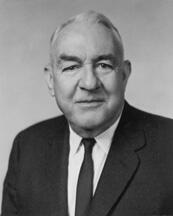
Here you will find contact information for Senator Sam J. Ervin Jr., including email address, phone number, and mailing address.
| Name | Sam J. Ervin Jr. |
| Position | Senator |
| State | North Carolina |
| Party | Democratic |
| Status | Former Representative |
| Term Start | January 3, 1945 |
| Term End | January 3, 1975 |
| Terms Served | 2 |
| Born | September 27, 1896 |
| Gender | Male |
| Bioguide ID | E000211 |
About Senator Sam J. Ervin Jr.
Samuel James Ervin Jr. (September 27, 1896 – April 23, 1985) was an American politician and lawyer who served as a United States Senator from North Carolina from 1954 to 1974. A member of the Democratic Party and a Southern Democrat, he liked to describe himself as a “country lawyer” and was widely known for his homespun humor and stories delivered in a distinctive Southern drawl. Samuel James Ervin served as a Senator from North Carolina in the United States Congress from 1945 to 1975, contributing to the legislative process during five terms in office and representing his constituents during a significant period in American history. Over the course of his Senate career, he evolved from a staunch defender of Jim Crow laws and racial segregation—often regarded as the South’s leading constitutional expert in congressional civil rights debates—into an unexpected liberal hero for his vigorous defense of civil liberties. He is especially remembered for his work on Senate investigation committees that helped bring down Senator Joseph McCarthy in 1954 and for his leadership of the Senate committee that investigated the Watergate scandal, which culminated in the resignation of President Richard M. Nixon in 1974.
Ervin was born in Morganton, Burke County, North Carolina, the son of Laura Theresa (Powe) and Samuel James Ervin. He grew up in the foothills of western North Carolina, an upbringing that shaped both his cultural outlook and his enduring “country lawyer” persona. He attended the University of North Carolina at Chapel Hill, where he was active in the Dialectic and Philanthropic Societies and graduated in 1917. Shortly thereafter, he entered military service during World War I. Serving in the U.S. Army with the First Division in combat in France, he fought at Cantigny and Soissons and was awarded the Distinguished Service Cross, the Silver Star, and two Purple Hearts for gallantry and wounds received in action. These wartime experiences contributed to his later reputation for personal courage and a deep, if sometimes hawkish, sense of patriotism.
After the war, Ervin pursued legal studies and was admitted to the bar in 1919, before completing formal legal education. He later enrolled at Harvard Law School, from which he graduated in 1922. He often joked that he was the only student to go through Harvard Law “backwards,” having taken the third-year courses first, followed by the second-year courses, and finally the first-year curriculum. Already a practicing lawyer and calling himself “a simple country lawyer,” he entered politics immediately after leaving Harvard. Democrats in Burke County nominated him in absentia for the North Carolina House of Representatives, and he was elected to that body in 1922, 1924, and 1930. In 1927, as attorney for Burke County, he served as legal adviser to the local sheriff during the manhunt for Broadus Miller, a Black man believed to have murdered a white teenage girl. County officials invoked the “outlaw” provision of the North Carolina constitution, which allowed any citizen to kill a declared outlaw without formal charges; Miller was shot and killed while being pursued, and his body was displayed in the courthouse square. Ervin also served as a state judge in the late 1930s and early 1940s, building a reputation as a meticulous student of constitutional law.
In 1948, Ervin was appointed an associate justice of the North Carolina Supreme Court, filling a vacancy created by the resignation of Justice Michael Schenck. He was serving in that capacity when, in June 1954, Governor William B. Umstead appointed him to the United States Senate to fill the seat of Senator Clyde R. Hoey, who had died in office. Ervin subsequently won the seat in his own right in the November 1954 election and went on to serve five terms, with his Senate tenure generally recorded as extending from 1954 to 1974 and, in broader references to his congressional service, from 1945 to 1975. As a Senator, Samuel James Ervin participated fully in the legislative and democratic processes, representing North Carolina during an era marked by the Cold War, the civil rights movement, and the Vietnam War.
During the early and middle years of his Senate career, Ervin emerged as a leading Southern constitutional authority and a principal opponent of federal civil rights legislation. In 1956, he helped organize Southern resistance to the Supreme Court’s 1954 decision in Brown v. Board of Education by drafting the Southern Manifesto, an influential document that encouraged defiance of school desegregation and was signed by nearly all Southern members of Congress. He voted against the Civil Rights Acts of 1957, 1960, 1964, and 1968, as well as the 24th Amendment to the Constitution and the Voting Rights Act of 1965. On March 30, 1965, he announced that he would offer a substitute to President Lyndon B. Johnson’s voting rights bill, calling the administration’s proposal “cockeyed” and unconstitutional and urging a more limited system of federal registrars in areas with proven discrimination under the Fifteenth Amendment. He was also a staunch opponent of the Immigration and Nationality Act of 1965, objecting to the abandonment of national-origin quotas tied to existing ancestral populations in the United States. Some historians have described his stance as a form of “cognitive dissonance”: he opposed federal measures to combat race-based discrimination while avoiding the harsh racial rhetoric used by some contemporaries, insisting that his objections stemmed from suspicion of federal power and from his dissatisfaction with what he believed the Warren Court “has done to the Constitution.” In his autobiography, Preserving the Constitution, he later wrote that Brown was correct insofar as it eliminated mandatory segregation, but he continued to oppose what he characterized as forced integration under subsequent decisions.
At the same time, Ervin’s strict constructionist view of the Constitution led him to champion civil liberties in other contexts, earning him admiration from many liberals and civil libertarians. He became an outspoken critic of “no knock” search laws, the expansion of government data banks, and the use of lie-detector tests, all of which he regarded as invasions of personal privacy. He played a major role in the 1966 defeat of Senator Everett Dirksen’s proposed constitutional amendment to permit organized prayer in public schools and strongly supported the exclusionary rule under the Fourth Amendment, which bars the use of illegally seized evidence in criminal trials. Influenced in part by Vance Packard’s 1964 essay “The Naked Society,” he attacked President Johnson’s proposal for a National Data Bank as a grave threat to privacy, warning that “the computer never forgets.” He was a staunch opponent of the polygraph, calling it “20th century witchcraft” and arguing that its use for employment purposes intruded upon “the innermost part” of an individual’s consciousness and threatened fundamental rights to privacy and freedom of thought. In foreign and defense policy, however, he was often hawkish; he strongly supported American involvement in the Vietnam War and once declared, “We ought to bomb the North Vietnamese out of existence.” In domestic policy, he opposed the Equal Rights Amendment, arguing that it was the “height of folly” to require legislatures to ignore sex in lawmaking, and after the ERA passed the Senate in 1971, he used his influence to dissuade the North Carolina General Assembly from ratifying it. He also voted in November 1970 against an occupational safety bill establishing federal oversight of workplace conditions, a stance that reflected his preference for state control and was later associated with North Carolina’s relatively lax workplace safety regime, exemplified by the Hamlet chicken processing plant fire.
Ervin’s national prominence was cemented by his work on high-profile Senate investigations. In 1954, then–Vice President Richard Nixon appointed him to a special committee to consider whether Senator Joseph McCarthy should be censured; the committee’s work contributed significantly to McCarthy’s downfall. In January 1970, Ervin’s Judiciary Subcommittee on Constitutional Rights received information from investigator Christopher Pyle that the U.S. Army was conducting domestic surveillance of civilians. Ervin pursued the matter over several years, and his efforts, together with those of the later Church Committee, helped lay the groundwork for the Foreign Intelligence Surveillance Act, enacted after he left office. His most famous role came as chair of the Senate Select Committee to Investigate Campaign Practices—popularly known as the “Ervin Committee”—which was created to investigate the 1972 presidential election and the Watergate break-in. Senate Majority Leader Mike Mansfield selected Ervin because he was not expected to seek re-election in 1974, had no higher political ambitions, and was regarded as an even-keeled, conservative, and independent-minded Democrat with deep constitutional expertise. President Nixon initially believed Ervin might be sympathetic, but the Senator proved to be a determined and skeptical investigator.
During the televised Watergate hearings, Ervin presided over some of the most dramatic moments in modern congressional history. After White House aide Alexander Butterfield revealed the existence of a secret Oval Office taping system, Ervin announced that the committee would subpoena the tapes and declared that Watergate had surpassed even the Civil War as the worst tragedy in American history. He famously clashed with Nixon domestic policy chief John Ehrlichman over whether the President could lawfully authorize operations such as the White House “Plumbers” break-in at the Democratic National Committee headquarters and the burglary of the office of Daniel Ellsberg’s psychiatrist. When Ehrlichman challenged his interpretation of the law, Ervin replied, “Because I can understand the English language! It’s my mother tongue!”—a retort that drew applause and required him to restore order with his gavel. Following the 1972 elections, he introduced five bills designed to curb presidential power: two restricting the President’s ability to reallocate appropriated funds, one increasing congressional oversight of appointed officials, one limiting the use of pocket vetoes when Congress was not in session, and one requiring the President to inform Congress of executive agreements with foreign governments. For his work and public visibility during this period, he received the Paul White Award from the Radio Television Digital News Association in 1972. Ongoing disputes with Senate Democratic leaders and the Democratic National Committee contributed to his decision to leave office, and he resigned in December 1974, shortly before the formal end of his final term. In 1981, he was further honored with the Golden Plate Award of the American Academy of Achievement.
After retiring from the Senate, Ervin returned to the practice of law, wrote books, and became a familiar public figure in American popular culture. He practiced with and served as co-counsel to the firm Womble Carlyle Sandridge & Rice PLLC in several high-profile cases, including a successful appeal in Joyner v. Duncan. He authored works on constitutional issues and his Senate experiences, and he continued to speak out on questions of privacy, civil liberties, and the proper limits of governmental power. In 1973, CBS Records released an LP titled Senator Sam at Home, featuring Ervin telling stories and expressing his views between tracks of him singing popular songs; his rendition of “Bridge Over Troubled Water” was issued as a single and later included on the 1991 compilation album Golden Throats 2. He appeared in various television commercials, further cementing his image as a plainspoken, folksy statesman. In a notable appearance on William F. Buckley Jr.’s program Firing Line, he remarked that people in public life needed more “backbone.” When Buckley jokingly suggested G. Gordon Liddy as a model, Ervin replied that Liddy had “a little too much backbone,” adding that he had “a sort of sneaking admiration” for Liddy’s excess of courage, but that “his backbone exceeds his intelligence, really.” Ervin was also active in Freemasonry and was elevated to the 33rd and highest degree of Master Mason.
Samuel James Ervin Jr. died on April 23, 1985, at a hospital in Winston-Salem, North Carolina, from complications of emphysema, at the age of 88. His funeral was attended by numerous dignitaries, including former President Richard Nixon and members of Nixon’s administration, a testament to the respect he commanded even among those whose careers had been damaged by his investigations. His family continued his legal and judicial legacy: his son, Samuel J. Ervin III, was appointed in 1980 by President Jimmy Carter to the United States Court of Appeals for the Fourth Circuit; his grandson Sam J. Ervin IV was elected to the North Carolina Court of Appeals in 2008 and to the North Carolina Supreme Court in 2014; and another grandson, Robert C. Ervin, was elected in 2002 as a North Carolina Superior Court judge for District 25A. Ervin’s office and personal library have been preserved as the Senator Sam J. Ervin Jr. Library and Museum, housed in the Phifer Learning Resource Center at Western Piedmont Community College in Morganton, North Carolina, ensuring that his papers, books, and memorabilia remain accessible to scholars and the public.