Representative Samuel Augustus Foot
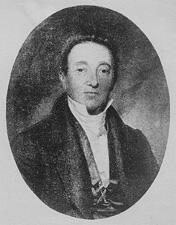
Here you will find contact information for Representative Samuel Augustus Foot, including email address, phone number, and mailing address.
| Name | Samuel Augustus Foot |
| Position | Representative |
| State | Connecticut |
| District | -1 |
| Party | Anti-Jacksonian |
| Status | Former Representative |
| Term Start | December 6, 1819 |
| Term End | May 9, 1834 |
| Terms Served | 4 |
| Born | November 8, 1780 |
| Gender | Male |
| Bioguide ID | F000247 |
About Representative Samuel Augustus Foot
Samuel Augustus Foot (November 8, 1780 – September 15, 1846; his surname is also spelled Foote) was an American merchant, lawyer by training, legislator, United States Representative and Senator from Connecticut, and the 28th Governor of Connecticut. A member of the splintering Democratic-Republican movement who later aligned with the Adams and Anti-Jacksonian factions and ultimately the Whig Party, he served in the United States Congress from 1819 to 1834, during which time he became a prominent figure in the debates over federal land policy and national unity.
Foot was born on November 8, 1780, in Cheshire, New Haven County, Connecticut, to John Foot and Abigail (Hall) Foot. Raised in a New England farming community, he showed early academic promise and entered Yale College at the age of thirteen, making him the youngest student in the graduating class of 1797. At seventeen he began legal studies at the Litchfield Law School, one of the leading law institutions of the early republic. Ill health forced him to discontinue his formal legal education, a setback that redirected his early career away from the bar and toward commerce.
After leaving Litchfield Law School, Foot moved to New Haven, Connecticut, where he became engaged in the West India trade. As a West India trader he made numerous voyages, travel that was also intended to improve his health. In 1803 he married Eudocia Hull; the couple had seven children. Their second son, Andrew Hull Foote, later achieved national distinction as a United States Navy officer and Civil War admiral. Foot’s mercantile career prospered until the disruptions associated with the Embargo Act and the War of 1812 ruined his business. In 1813 he returned to his father’s farm in Cheshire, where he resumed agricultural pursuits and began to participate more actively in local and state politics.
Foot’s political career commenced in the Connecticut House of Representatives, where he served in 1817 and 1818. He was elected as a Democratic-Republican to the Sixteenth Congress and served as a Representative from Connecticut in the United States House of Representatives from March 4, 1819, to March 3, 1821. After this initial term in Congress, he returned to state politics and again sat in the Connecticut House of Representatives from 1821 to 1823 and from 1825 to 1826, serving as speaker of the house during the 1825–1826 session. He was elected to the Eighteenth Congress and served another term in the U.S. House of Representatives from March 4, 1823, to March 3, 1825, continuing to represent the interests of his Connecticut constituents and to participate in the legislative process during a formative period in the nation’s political realignment.
In 1827 Foot advanced to the United States Senate, having been elected by the Connecticut General Assembly as an Adams man within the fracturing Democratic-Republican Party, a faction that would soon be identified with the Anti-Jacksonian cause. He served as a United States Senator from Connecticut from March 4, 1827, to March 3, 1833. During his Senate tenure he became best known for introducing, on December 29, 1829, the so‑called “Foot Resolution,” a proposal to limit the sale of public lands in the West. Debate over this resolution grew into one of the most celebrated exchanges in congressional history, culminating in Daniel Webster’s famous “Liberty and Union, now and forever, one and inseparable” speech, which framed the Union as perpetual and indivisible. Foot’s measure and the controversy it sparked placed him at the center of the national debate over states’ rights, western expansion, and federal authority. He was an unsuccessful candidate for reelection to the Senate in 1832, but during his service in Congress he also held the influential post of chairman of the Committee on Pensions in the Twenty-first and Twenty-second Congresses.
After leaving the Senate, Foot returned to the House of Representatives as an Anti-Jacksonian. He was elected to the Twenty-third Congress and served from March 4, 1833, to May 9, 1834. In total, Samuel Augustus Foot served as a Representative from Connecticut in the United States Congress from 1819 to 1834, contributing to the legislative process during four terms in the House and one full term in the Senate. His final House service ended when he resigned on May 9, 1834, upon his election as Governor of Connecticut.
Foot became the 28th Governor of Connecticut in 1834. Elected as a Whig, he served as governor from 1834 to 1835. His administration occurred during a period of growing partisan organization and economic change in the state, as Connecticut adjusted to the broader national issues of banking, internal improvements, and political reform. He sought reelection in 1835 as the Whig candidate but was unsuccessful, bringing his brief gubernatorial tenure to a close. Even after leaving the governor’s office, he remained engaged in national politics and later served as a presidential elector on the Whig ticket of Henry Clay and Theodore Frelinghuysen in 1844.
In his later years, Foot resided in Cheshire, where he continued to be regarded as a leading citizen and elder statesman. He died there on September 15, 1846. Samuel Augustus Foot was interred at Hillside Cemetery in Cheshire, Connecticut, leaving a legacy as a Yale-educated merchant-turned-agriculturalist, state legislator, multi-term member of Congress, U.S. Senator, and governor who played a notable role in some of the most consequential debates of the early nineteenth century.