Representative Samuel Griffin
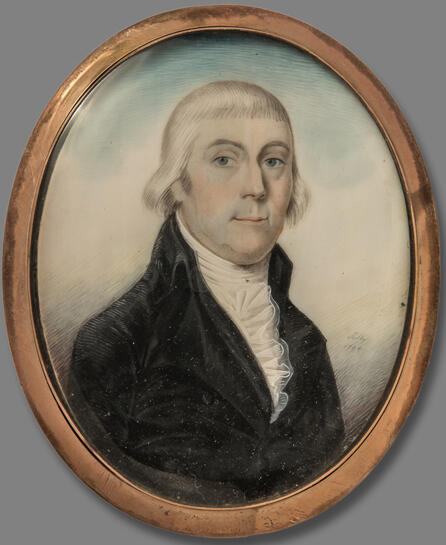
Here you will find contact information for Representative Samuel Griffin, including email address, phone number, and mailing address.
| Name | Samuel Griffin |
| Position | Representative |
| State | Virginia |
| District | 13 |
| Party | Unknown |
| Status | Former Representative |
| Term Start | March 4, 1789 |
| Term End | March 3, 1795 |
| Terms Served | 3 |
| Gender | Male |
| Bioguide ID | G000466 |
About Representative Samuel Griffin
Samuel Griffin (April 20, 1746 – November 23, 1810) was an American lawyer, soldier, politician, and slave trader from Virginia who played a multifaceted role in the political and military life of the early United States. Born in the Colony of Virginia, he came of age in the final decades of British colonial rule, entering adulthood as tensions between the colonies and Great Britain intensified. Trained in the law, Griffin established himself as a member of Virginia’s professional and landholding class, a milieu in which slaveholding and participation in the slave trade were common economic and social practices. His early legal career and social standing helped position him for later roles in both military and civil service.
Griffin’s education followed the pattern of many aspiring Virginia gentlemen of his generation, combining classical instruction with legal training that prepared him for practice at the bar and for public life. Immersed in the legal and political debates of the pre-Revolutionary period, he developed the skills and connections that would later support his advancement in both the Continental Army and Virginia politics. His legal background also informed his understanding of the constitutional and governmental issues that emerged as the colonies moved toward independence and then sought to organize a new national government.
During the American Revolutionary War, Griffin served as a Continental Army officer, participating in the struggle for independence as part of the patriot military establishment. His service placed him within the officer corps that worked closely with General George Washington and other senior commanders during the conflict. This experience not only gave him firsthand exposure to the hardships and strategic challenges of the war but also enhanced his reputation in Virginia as a veteran of the Revolution. The leadership, discipline, and connections he developed in uniform would later support his transition into public office in the postwar period.
After the Revolution, Griffin returned to Virginia and resumed his legal and civic pursuits, emerging as a prominent figure in Williamsburg, the former colonial and state capital. He served as mayor of Williamsburg, Virginia, assuming responsibility for local governance at a time when the city was adjusting to the political and economic changes brought about by independence and the relocation of the state capital to Richmond. In this municipal role, he dealt with issues of local administration, commerce, and public order in a community that had been central to Virginia’s political life before and during the Revolution.
Griffin subsequently represented Williamsburg in the Virginia House of Delegates, the lower house of the state legislature. As a member of that body, he participated in shaping Virginia’s laws and policies in the formative years of the new republic, when the state was addressing questions of taxation, internal improvements, the organization of courts, and the balance of authority between state and emerging federal institutions. His legislative service reflected the interests of a constituency rooted in an older political center while also encompassing the concerns of surrounding areas undergoing economic and demographic change.
Building on his state-level experience, Griffin was elected to the U.S. House of Representatives, where he represented Williamsburg and its surrounding areas during the early years of the federal government under the Constitution. As a member of the Unknown Party representing Virginia, he served three terms in Congress, contributing to the legislative process during a significant period in American history. His tenure in the House coincided with the establishment of many of the nation’s foundational policies and institutions, and he participated in the democratic process by advocating for the interests and priorities of his Virginia constituents within the broader national debate.
In addition to his public offices, Griffin remained engaged in the economic life of Virginia as a lawyer, landholder, and slave trader, reflecting the entrenched system of slavery that underpinned much of the state’s wealth and social hierarchy in the late eighteenth and early nineteenth centuries. His career thus embodied both the ideals and contradictions of the early republic, as a Revolutionary War veteran and national legislator who also participated in and benefited from the institution of slavery. Samuel Griffin died on November 23, 1810, in Virginia, leaving a record of military, municipal, legislative, and economic activity that linked the colonial era, the Revolution, and the first decades of the United States under the Constitution.