Bios     Samuel Griffith

Representative Samuel Griffith
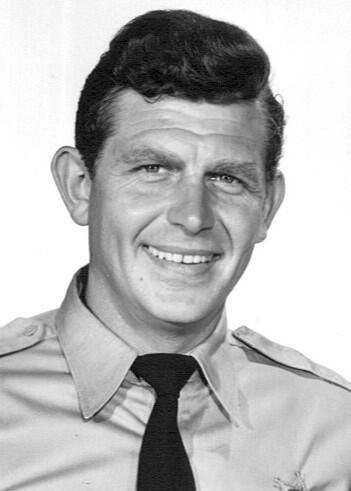
Democratic | Pennsylvania

Representative Samuel Griffith - Pennsylvania Democratic

Here you will find contact information for Representative Samuel Griffith, including email address, phone number, and mailing address.

NameSamuel Griffith
PositionRepresentative
StatePennsylvania
District20
PartyDemocratic
StatusFormer Representative
Term StartMarch 4, 1871
Term EndMarch 3, 1873
Terms Served1
BornFebruary 14, 1816
GenderMale
Bioguide IDG000470
Representative Samuel Griffith
Samuel Griffith served as a representative for Pennsylvania (1871-1873).

About Representative Samuel Griffith


Sir Samuel Walker Griffith (21 June 1845 – 9 August 1920) was an Australian judge and politician who served as the inaugural Chief Justice of Australia, in office from 1903 to 1919. He also served a term as Chief Justice of Queensland and two terms as Premier of Queensland, and played a key role in the drafting of the Australian Constitution. Over a long public career he was successively a leading colonial politician, a principal architect of federation, and the dominant figure in the early High Court of Australia.

Griffith was born on 21 June 1845 in Wales, the son of a Congregational minister. His family emigrated to Australia when he was a child, arriving in the Moreton Bay district of New South Wales (now in the state of Queensland) when he was eight years old. He was educated at schools in the colony and showed early academic promise, which led him to the University of Sydney. At the university he formed friendships that would later influence his professional life, including with Charles Mein, with whom he would remain closely associated. Griffith graduated with distinction, and after further legal training was called to the bar in 1867, beginning practice as a barrister in Queensland.

Griffith entered public life in the early 1870s. In 1872 he was elected to the Queensland Legislative Assembly, where he quickly emerged as an able debater and rising figure in colonial politics. He served as Attorney-General of Queensland from 1874 to 1878, during which time he developed a reputation for legal acumen and reformist zeal. In the later 1870s and early 1880s he became the leader of the parliament’s liberal faction, advocating measures associated with political and social reform. Griffith’s first term as Premier of Queensland ran from 1883 to 1888. During this period he took a keen interest in external and defence affairs, leading the Australian delegation to the 1887 Colonial Conference in London, giving financial and administrative support to the newly annexed Territory of Papua, and establishing the Queensland Maritime Defence Force to strengthen colonial naval capacity.

During his first premiership Griffith was regarded as a close ally of the labour movement and was widely seen as a radical reformer. He introduced a bill to legalise trade unions and publicly declared that “the great problem of this age is not how to accumulate wealth but how to secure its more equitable distribution.” His government, however, was defeated in 1888, and he moved into opposition. While out of office he wrote radical articles for The Boomerang, the socialist newspaper edited by William Lane, reinforcing his image as a progressive thinker. In 1886, during his first term as premier, he had been made a Knight Commander of the Order of St Michael and St George (KCMG), and in 1895 he was advanced to Knight Grand Cross of the same order (GCMG), reflecting imperial recognition of his services to the colony.

Griffith returned to office in 1890 in dramatically altered political circumstances. He became Premier again at the head of an unlikely alliance with his former conservative rival Sir Thomas McIlwraith, a combination popularly dubbed “Griffilwraith.” In this second premiership, which lasted from 1890 to 1893, his relationship with the labour movement deteriorated sharply. During the 1891 shearers’ strike, a major industrial confrontation in Queensland, his government took an active role in arresting and prosecuting strike leaders, and Griffith personally praised the firm handling of the dispute. This stance prompted bitter criticism from former allies; William Lane denounced him as a “fraud” in his 1892 novel The Workingman’s Paradise. Despite the political controversies, Griffith continued to be influential in both domestic and intercolonial affairs and remained a central figure in Queensland politics until the end of the decade.

Parallel to his political career, Griffith became one of the leading advocates of Australian federation. He was an ardent federationist and, working with Andrew Inglis Clark of Tasmania, he helped prepare a draft constitution that was presented to the 1891 constitutional convention. Many of the structural and conceptual features of this draft, including key provisions concerning the division of powers and the judiciary, were preserved in the final Australian Constitution enacted by the British Parliament in 1900. His expertise in constitutional design and legislative drafting was widely recognised, and he was frequently consulted on complex legal questions by political leaders across the colonies.

In 1899 Griffith retired from active politics to head the Supreme Court of Queensland, becoming Chief Justice of Queensland. On the bench he continued his work as a legal reformer and draftsman. The Queensland Criminal Code, the first comprehensive criminal code in Australia, was mostly his creation and became a model for other jurisdictions. His judicial work further enhanced his standing as one of the leading legal minds in the country. When the federal Parliament passed the Judiciary Act 1903, which created the High Court of Australia, Griffith was closely involved in its drafting. He was the natural choice to lead the new court, and his appointment as one of the first three judges of the High Court, and as its inaugural Chief Justice, was approved by the Governor-General on 5 October 1903 on the nomination of Prime Minister Alfred Deakin.

As Chief Justice of Australia from 1903 to 1919, Griffith presided over the formative years of the High Court. During his sixteen years on the bench he sat on some 950 reported cases, many of them involving foundational questions of constitutional interpretation and the balance of power between the Commonwealth and the states. Some of his interpretations, particularly those emphasising states’ rights and a reserved powers doctrine, were later rejected or modified by subsequent courts, but his influence on the early development of Australian constitutional law was profound. In 1913 he visited England and sat on the Judicial Committee of the Privy Council, further cementing his position within the wider British imperial legal system. Like his fellow founding justice Sir Edmund Barton, Griffith was several times consulted by Governors-General of Australia on the exercise of the reserve powers during periods of political instability, reflecting the high regard in which his constitutional judgment was held.

Griffith’s later years were marked by both continued intellectual activity and declining health. In 1912 he published a translation of Dante’s Divina Commedia, demonstrating his scholarly interests beyond law and politics. After 1910 his health began to deteriorate, and in 1917 he suffered a stroke, which limited his capacity to carry out judicial duties. He retired from the High Court in 1919. Over the course of his judicial career he had become the first of two justices of the High Court of Australia to have previously served in the Parliament of Queensland, along with Charles Powers, and one of five justices to have served on the Supreme Court of Queensland, alongside William Webb, Harry Gibbs, Susan Kiefel and Patrick Keane in later generations.

Sir Samuel Walker Griffith died at his home in Brisbane on 9 August 1920. He was buried in Toowong Cemetery, Brisbane, together with his wife, Julia, and their son, Llewellyn. Cemetery records indicate that their plot adjoins that of his close friend Charles Mein (1841–1890), a barrister, politician and judge whom Griffith had first met during their undergraduate days at the University of Sydney. His legacy endures in the institutions and legal instruments he helped shape, including the Queensland Criminal Code and the Australian Constitution. Griffith University in Brisbane and the Canberra suburb of Griffith are named in his honour, and his life and work continue to be studied by scholars of Australian law, politics and federation.