Representative Samuel Hooper
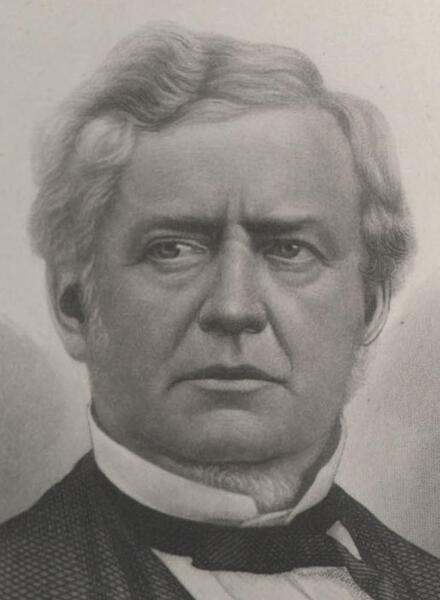
Here you will find contact information for Representative Samuel Hooper, including email address, phone number, and mailing address.
| Name | Samuel Hooper |
| Position | Representative |
| State | Massachusetts |
| District | 4 |
| Party | Republican |
| Status | Former Representative |
| Term Start | July 4, 1861 |
| Term End | March 3, 1875 |
| Terms Served | 7 |
| Born | February 3, 1808 |
| Gender | Male |
| Bioguide ID | H000765 |
About Representative Samuel Hooper
Samuel Hooper (February 3, 1808 – February 14, 1875) was an American businessman and Republican member of the United States House of Representatives from Massachusetts who served from 1861 to 1875. Over the course of seven consecutive terms in Congress, he played a role in the legislative process during a period marked by the Civil War, Reconstruction, and significant economic and political transformation in the United States.
Born on February 3, 1808, Hooper pursued a career in business before entering national politics. He became a successful merchant and businessman, gaining experience in commercial affairs that later informed his legislative interests, particularly in matters related to finance and economic policy. His business background helped establish his reputation as a practical and knowledgeable figure in economic and commercial questions at a time when the nation was rapidly industrializing and expanding its financial institutions.
Hooper was elected as a Republican to the United States House of Representatives from Massachusetts and took his seat in 1861, just as the country was descending into civil war. He served continuously until 1875, completing seven terms in office. During his tenure, he participated in the democratic process as a member of the House of Representatives and represented the interests of his Massachusetts constituents through the Civil War and Reconstruction eras. His service in Congress occurred during a significant period in American history, and he contributed to the legislative debates and policymaking that shaped the Union war effort, postwar recovery, and the evolving national economy.
While in Washington, D.C., Hooper’s residence became closely associated with major figures and events of the Civil War period. From 1861 to 1862, his home in Washington served as the headquarters of General George B. McClellan, then commanding general of the Union Army. Following the assassination of President Abraham Lincoln in April 1865, Hooper likewise permitted Vice President Andrew Johnson, who had just assumed the presidency, to reside in his Washington home for the first several weeks after Lincoln’s death, until Mary Todd Lincoln was prepared to vacate the White House. These arrangements placed Hooper’s household at the center of critical military and political transitions during the war and its immediate aftermath.
In addition to his regular congressional duties, Hooper took part in broader political efforts to support the Union and Reconstruction. In 1866, he served as a delegate to the Philadelphia Loyalists’ Convention, a gathering of Unionists and Republicans who met to affirm loyalty to the Union and support for the Reconstruction policies then being contested in national politics. His participation in this convention reflected his alignment with the Republican Party’s postwar program and his continued engagement with national issues beyond the confines of routine legislative work.
Hooper’s personal life intersected with other prominent political figures of his era. He was briefly the father-in-law of Charles Sumner, the powerful antislavery and later Reconstruction-era senator from Massachusetts. Sumner married Hooper’s widowed daughter-in-law, Alice Mason Hooper, but the marriage was short-lived and ended in divorce after a brief period. This connection underscored Hooper’s place within the political and social networks that shaped Massachusetts and national politics in the mid-nineteenth century.
After more than a decade in Congress, Hooper declined to stand for reelection to the Forty-fourth Congress, choosing to bring his long period of legislative service to a close. He turned down reelection and remained in office only until the expiration of his final term. Hooper died in Washington, D.C., on February 14, 1875, less than a month before the completion of that last term in Congress. He was interred in Oak Hill Cemetery in 1875, leaving behind a record of sustained service during one of the most consequential periods in the history of the United States.