Senator Samuel Johnston
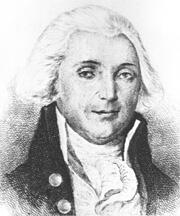
Here you will find contact information for Senator Samuel Johnston, including email address, phone number, and mailing address.
| Name | Samuel Johnston |
| Position | Senator |
| State | North Carolina |
| Party | Pro-Administration |
| Status | Former Representative |
| Term Start | March 4, 1789 |
| Term End | March 3, 1793 |
| Terms Served | 1 |
| Born | December 15, 1733 |
| Gender | Male |
| Bioguide ID | J000198 |
About Senator Samuel Johnston
Samuel Johnston (December 15, 1733 – August 17, 1816) was an American planter, lawyer, grand master of Freemasons, slave holder, and statesman from Chowan County, North Carolina. Born in Dundee, Scotland, in the Kingdom of Great Britain, he emigrated as a child with his family to the American colonies and rose to prominence as a leading political figure in North Carolina during the Revolutionary and early national periods. He represented North Carolina in both the Continental Congress and the United States Senate, and he was the sixth governor of North Carolina. A member of the Pro-Administration Party in the First Congress, he served one term as a United States Senator from 1789 to 1793, participating in the formative legislative work of the new federal government.
Johnston was born in Dundee on December 15, 1733, to Samuel Johnston Sr., who would later become surveyor-general of the Province of North Carolina. In 1736, he accompanied his father in relocating to Onslow County in the colonial Province of North Carolina. His family’s status and his father’s official position afforded him opportunities for education and advancement. Johnston was educated in New England and then returned to the South to read law in Carolina. After completing his legal training, he moved to Chowan County, where he established a plantation known as Hayes near Edenton, laying the foundation for his dual career as a planter and attorney.
Admitted to the bar, Johnston began a law practice in Edenton and quickly entered public life. In 1759, he was elected to the North Carolina House of Burgesses, where he served until that body was displaced in 1775 during the American Revolution. During North Carolina’s War of the Regulation, he played a controversial role in colonial politics. In December 1770, he introduced an anti-Regulator measure that was later enacted as the Johnston Riot Act, passed in response to the September 1770 Hillsborough Riot and reports of a planned Regulator march on the provincial capital at New Bern, which ultimately did not occur. The Johnston Riot Act and related measures contributed to the further escalation of the Regulator movement and helped precipitate Royal Governor William Tryon’s decision to call out the provincial militia, culminating in the Battle of Alamance on May 16, 1771. Despite his earlier alignment with royal authority in this conflict, Johnston emerged as a strong supporter of American independence as tensions with Britain deepened.
As the imperial crisis gave way to revolution, Johnston became a leading figure in North Carolina’s revolutionary politics. He was elected a delegate to the first four provincial congresses and presided over the Third and Fourth Provincial Congresses in 1775 and 1776, respectively. After Royal Governor Josiah Martin effectively abdicated his authority and fled the colony in 1775, Johnston, as presiding officer of the revolutionary assemblies, was for a time the highest-ranking de facto official in North Carolina until Richard Caswell was elected president of the Fifth Provincial Congress. Although he is frequently cited as having served in the North Carolina Senate in 1779, this is not confirmed in the Senate journals; he may have been elected but certainly did not attend. In Johnston’s own words, after 1777 he “had nothing to do with public business” during a portion of the Revolutionary War. Under the new state government established by the North Carolina Constitution of 1776, he later returned to legislative service and was elected to the North Carolina Senate in 1783 and 1784.
North Carolina sent Johnston as a delegate to the Continental Congress in 1780 and 1781, where he participated in the national deliberations under the Articles of Confederation. During this period, he was elected the first President of the United States in Congress Assembled under the Articles, but he declined to accept the office. On July 10, 1781, Congress recorded that “Mr. [Samuel] Johnston having declined to accept the office of President, and offered such reasons as were satisfactory, the House proceeded to another election; and, the ballots being taken, the hon. Thomas McKean was elected.” In his home state, Johnston also rose to prominence in civic and fraternal life. He was chosen as the first Grand Master of Freemasons for the State of North Carolina on December 11, 1787, reviving Masonic activities that had lapsed after the break with England, when only a Deputy Grand Master had been in place. He was again elected Grand Master from 1789 to 1791, reflecting his continued influence and standing in North Carolina society.
Johnston’s most significant state office came with his election as governor of North Carolina, a position he held from 1787 to 1789 as the state’s sixth chief executive under its constitution. As governor, he presided over both state conventions called to consider ratification of the United States Constitution. The first convention, meeting in 1788, rejected ratification despite Johnston’s strong advocacy for the new federal charter. He then supported the calling of a second convention in 1789, which ultimately voted to ratify the Constitution and bring North Carolina into the new Union. Following this decision, Johnston resigned as governor to enter national service in the new federal government.
With the establishment of the United States under the Constitution, Johnston was chosen as one of North Carolina’s first two United States Senators. A member of the Pro-Administration Party, he served in the Senate from 1789 to 1793, completing one term in office. His tenure coincided with a formative period in American history, during which the First Congress and its successors organized the executive departments, established the federal judiciary, and set early fiscal and foreign policies under President George Washington. As a senator, Johnston participated in the legislative process and represented the interests of his North Carolina constituents while generally supporting the administration’s program to strengthen the national government. After leaving the Senate in 1793, he returned to North Carolina, but he remained an important figure in the state’s legal and political circles.
In 1800, Johnston was appointed a judge of the Superior Court of North Carolina, one of the state’s highest judicial offices at the time. He held this position until his retirement in 1803, bringing to the bench decades of experience in colonial, revolutionary, and federal governance. Throughout his public career, Johnston was also a substantial slaveholding planter. The 1790 federal census records that he enslaved 96 people at Hayes Plantation, underscoring the extent to which his wealth and status were tied to the institution of slavery. His plantation at Hayes, near Edenton in Chowan County, had been purchased from David Rieusett in 1765, and Johnston resided there until 1793, when he moved to the Hermitage, another plantation in Martin County.
Johnston died on August 17, 1816, at his home, Hayes Plantation, near Edenton in Chowan County, having returned there in his later years. He was buried in the Johnston Burial Ground on the property. Although the current plantation house at Hayes was completed by his son, James Cathcart Johnston, in 1817, a year after Samuel Johnston’s death, the site remains closely associated with his life and career. Hayes Plantation was designated a National Historic Landmark in 1973 and is now within the limits of Edenton, though it remains privately owned. In the twentieth and twenty-first centuries, the property gained additional historical interest when, in 1983, a copy of the Declaration of Independence was discovered there, and in 2024 a copy of the Constitution of the United States was also found. Johnston’s intellectual legacy is reflected in his collection of books, which he bequeathed to his son James; this library is preserved in a full-scale replica of the octagonal Hayes Plantation library at the University of North Carolina at Chapel Hill, on permanent exhibit in the North Carolina Collection Gallery in Wilson Library.