Representative Samuel Wilder King
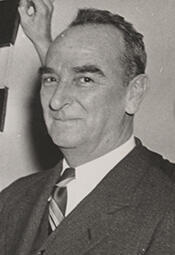
Here you will find contact information for Representative Samuel Wilder King, including email address, phone number, and mailing address.
| Name | Samuel Wilder King |
| Position | Representative |
| State | Hawaii |
| District | At-Large |
| Party | Republican |
| Status | Former Representative |
| Term Start | January 3, 1935 |
| Term End | January 3, 1943 |
| Terms Served | 4 |
| Born | December 17, 1886 |
| Gender | Male |
| Bioguide ID | K000214 |
About Representative Samuel Wilder King
Samuel Wilder King (December 17, 1886 – March 24, 1959) was an American politician and naval officer who became the eleventh Territorial Governor of Hawaii and the first person of Native Hawaiian descent to hold the territory’s highest office. A member of the Republican Party and the Republican Party of Hawaii, he also served as a delegate from the Territory of Hawaii in the United States House of Representatives, where he represented his constituents in Congress from 1935 to 1943, participating in the legislative and democratic processes during a critical period in American history.
King was born on December 17, 1886, in Honolulu, then part of the Kingdom of Hawaii. He was of mixed Native Hawaiian and European ancestry, and his family was connected to prominent political and business circles in the islands. Growing up in Honolulu during the transition from kingdom to republic and then to United States territory, he was exposed early to both Hawaiian traditions and American political institutions, an experience that would later shape his public service and his role as a bridge between local and federal interests.
King received his early education in Hawaii and later attended the United States Naval Academy at Annapolis, Maryland, graduating in the early twentieth century. His education at the Naval Academy provided him with rigorous training in engineering, seamanship, and leadership, and introduced him to national-level military and political networks. This combination of local Hawaiian upbringing and formal military education on the mainland prepared him for a career that would span both naval service and elective office.
Following his graduation, King embarked on a career in the United States Navy. He served as a naval officer in the first decades of the twentieth century, a period that included World War I, and gained experience in command, administration, and logistics. After active duty, he maintained ties to the naval service through the Naval Reserve, while returning to Hawaii and entering business and local civic affairs. His military background enhanced his stature in the territory and contributed to his reputation for discipline and public responsibility.
King’s political career developed in the context of Hawaii’s status as a United States territory. Aligning with the Republican Party of Hawaii, he became active in territorial politics and emerged as a leading advocate for the islands’ interests in Washington, D.C. In 1934 he was elected as a Republican to the United States House of Representatives as the non-voting delegate from the Territory of Hawaii. He took his seat in Congress in 1935 and served four consecutive terms, remaining in office until 1943. During these years he represented Hawaii’s residents in the federal legislature, worked to secure attention to the territory’s economic and strategic needs, and participated in debates shaped by the Great Depression and the approach and early years of World War II.
As a delegate in the House of Representatives, King contributed to the legislative process despite the limitations placed on territorial delegates, who could serve on committees and speak on the floor but not cast final votes on legislation. From 1935 to 1943 he used this position to articulate the concerns of his constituents, promote development in Hawaii, and underscore the islands’ growing importance to national defense and Pacific policy. His service in Congress occurred during a significant period in American history, and he played a role in ensuring that Hawaii’s perspectives were included in national discussions on economic recovery, military preparedness, and the evolving relationship between the mainland and the Pacific territories.
After leaving Congress in 1943, King continued his public service, including further naval duty during World War II and ongoing involvement in territorial affairs. His experience in both military and legislative roles, combined with his long-standing engagement in Republican politics, led to his appointment as the eleventh Territorial Governor of Hawaii. He assumed office in 1953, following the term of Governor Oren E. Long, and served until 1957. As governor, King oversaw a period of postwar growth and modernization in the islands, working within the framework of territorial government while Hawaii moved closer to eventual statehood. His tenure was marked by efforts to improve infrastructure, education, and administration, and by his symbolic importance as the first governor of Native Hawaiian descent.
In his later years, after leaving the governorship in 1957, King remained a respected figure in Hawaii’s public life, associated with the territory’s political maturation and its integration into the broader American system. He died on March 24, 1959, in Honolulu, just months before Hawaii was admitted as the fiftieth state of the Union. His career, spanning naval service, four terms as Hawaii’s delegate in the United States House of Representatives from 1935 to 1943, and his governorship from 1953 to 1957, left a lasting imprint on the political development of Hawaii and on the representation of Native Hawaiians in territorial and national leadership.