Senator Samuel Jordan Kirkwood
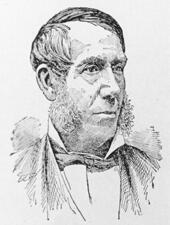
Here you will find contact information for Senator Samuel Jordan Kirkwood, including email address, phone number, and mailing address.
| Name | Samuel Jordan Kirkwood |
| Position | Senator |
| State | Iowa |
| Party | Republican |
| Status | Former Representative |
| Term Start | January 1, 1866 |
| Term End | December 31, 1881 |
| Terms Served | 2 |
| Born | December 20, 1813 |
| Gender | Male |
| Bioguide ID | K000242 |
About Senator Samuel Jordan Kirkwood
Samuel Jordan Kirkwood (December 20, 1813 – September 1, 1894) was an American politician who twice served as governor of Iowa, twice as a United States Senator from Iowa, and as the U.S. Secretary of the Interior. A member of the Republican Party, he represented Iowa in the U.S. Senate during two separate periods between 1865 and 1881, contributing to the legislative process during two terms in office and participating in the democratic governance of the nation during a significant period in American history.
Kirkwood was born on December 20, 1813, in Harford County, Maryland. At the age of seventeen he began teaching school, and among his pupils was his cousin Daniel Kirkwood, who later became a noted mathematician and astronomer. Samuel Kirkwood spent part of his youth in Washington, D.C., before joining his father in moving to Ohio in 1835. In Ohio he became known as an anti-slavery Democrat and entered public life, being elected to several state offices and working closely with Thomas Bartley, who later served as governor of Ohio, during the 1840s. These early experiences shaped his political views, particularly his opposition to slavery, which would later define much of his public career.
In 1855, Kirkwood moved west to Iowa, settling northwest of Iowa City. There he entered into a milling venture with members of the Clark family, who, like him, had come from Ohio, and later joined the Clark and Lucas families in land speculation. He married Jane Clark, the sister of Phoebe Ann Clark, thereby becoming the brother-in-law of Edward Lucas, son of Iowa’s first Territorial Governor Robert Lucas and his second wife, Friendly Ashley (Sumner) Lucas. Intending at first to leave politics behind, Kirkwood focused on his mill at Coralville, but he soon became involved in the newly formed Republican Party. Summoned directly from his work at the mill and still covered in flour dust, he delivered a powerful address at the founding meeting of the Iowa Republican Party in February 1856. His speech and subsequent organizational work were widely credited with helping secure the early success of the Republican Party in Iowa. That same year he was elected to the Iowa Senate, where he served from 1856 to 1859.
Kirkwood’s growing prominence in Iowa politics led to his nomination for governor in 1859. Running as a Republican, he defeated Democrat Augustus C. Dodge after a bitter campaign centered on the issue of slavery. Taking office as governor in 1860, he confronted a nation rapidly moving toward civil war. The John Brown raid on Harpers Ferry in 1859 and its aftermath further polarized the country, and Kirkwood aligned himself clearly with militant abolitionists. When Barclay Coppock, a young Iowan from Springdale who had participated in Brown’s raid, fled back to Iowa, Kirkwood refused to honor extradition papers from Virginia, allowing Coppock to escape. During the American Civil War, Kirkwood gained national attention as Iowa’s “war governor” for his extraordinary efforts to raise, equip, and supply soldiers for the Union Army. A strong supporter of President Abraham Lincoln’s policies, he was instrumental in organizing dozens of Iowa regiments and ensuring they were properly provisioned. In 1862 he attended the Loyal War Governors’ Conference in Altoona, Pennsylvania, which helped solidify gubernatorial support for Lincoln’s Emancipation Proclamation.
After leaving the governor’s office in 1864, Kirkwood moved to a new residence on Wyoming Road in Iowa City, a street later renamed Kirkwood Avenue in his honor, and resumed the practice of law. Around this time he sold his interest in the Coralville mill, transferring part of it to his brother William and part to Valentine Miller. In 1865 he entered national office when he was chosen to fill the remainder of U.S. Senator James Harlan’s term, serving in the United States Senate from 1865 to 1867. A Republican Senator from Iowa during the early Reconstruction era, he participated in the legislative process at a time when Congress was grappling with the reintegration of the former Confederate states and the status of newly freed African Americans. After this first Senate term, he returned to Iowa politics and was again elected governor, serving from 1876 to 1877. He resigned the governorship in 1877 in order to begin his second period of service in the U.S. Senate, where he served from 1877 to 1881, once more representing the interests of his Iowa constituents during a period marked by postwar adjustment, economic development, and debates over federal policy.
In 1881, Kirkwood resigned his Senate seat to join the cabinet of President James A. Garfield as U.S. Secretary of the Interior. As Interior Secretary he oversaw a department responsible for public lands, Native American affairs, and various domestic administrative functions. Following the assassination of President Garfield later that year, Kirkwood continued in the same post under President Chester A. Arthur, serving until 1882. After leaving the Interior Department, he remained active in public life in Iowa and, in 1886, made an unsuccessful bid for election to the U.S. House of Representatives. Though he did not return to elective office, his long record of service at both the state and national levels had already secured his reputation as one of Iowa’s most important nineteenth-century political leaders.
Kirkwood died on September 1, 1894, in Iowa City, Iowa, and was buried in Oakland Cemetery there. His memory has been preserved in numerous public honors and memorials. A sculptured likeness of Kirkwood by Vinnie Ream stands in the National Statuary Hall Collection in the United States Capitol in Washington, D.C., as one of the two statues allotted to the State of Iowa. A bust of him is displayed at Vicksburg National Military Park, and a memorial plaque stands in front of Iowa City High School. Kirkwood Community College, with several campuses in eastern Iowa, is named in his honor; its mascot is an eagle named “Sammy.” Kirkwood Elementary School in Coralville commemorates the town where he operated his mill. His name is further memorialized in the town of Kirkwood, Illinois; on Kirkwood Avenue in Iowa City and Des Moines; on Kirkwood Boulevard in Davenport; and in the Kirkwood House in Iowa City and the Hotel Kirkwood in Des Moines, both of which are listed on the National Register of Historic Places.