Senator Samuel Livermore
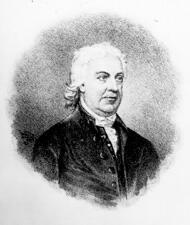
Here you will find contact information for Senator Samuel Livermore, including email address, phone number, and mailing address.
| Name | Samuel Livermore |
| Position | Senator |
| State | New Hampshire |
| Party | Federalist |
| Status | Former Representative |
| Term Start | March 4, 1789 |
| Term End | December 31, 1801 |
| Terms Served | 4 |
| Born | May 14, 1732 |
| Gender | Male |
| Bioguide ID | L000364 |
About Senator Samuel Livermore
Samuel Livermore (May 14, 1732 – May 18, 1803) was an American politician and judge who served as a U.S. Representative and later as the U.S. senator from New Hampshire, and who held the office of president pro tempore of the United States Senate in 1796 and again in 1799. A member of the Federalist Party, he served in Congress during the formative years of the federal government and contributed to the legislative process over four terms in office, representing the interests of his New Hampshire constituents during a significant period in American history.
Livermore was born in Waltham, in the Province of Massachusetts Bay, the son of Hannah (Brown) and Samuel Livermore. He attended local schools in Waltham before pursuing higher education at the College of New Jersey (now Princeton University), from which he graduated in 1752. After college he studied law, was admitted to the bar in 1756, and commenced legal practice in his native Waltham. Seeking broader professional opportunities, he moved to Portsmouth, New Hampshire, in 1758 and later settled in Londonderry, New Hampshire, continuing his legal career and entering public service.
By the late 1760s Livermore had become an established figure in New Hampshire’s legal and political life. He served as a member of the New Hampshire General Court, the colony’s general assembly, from 1768 to 1769. In 1769 he was appointed judge-advocate in the Admiralty court and also served as Attorney General of New Hampshire, positions he held until 1774. In 1775 he moved to Holderness, New Hampshire, where he continued his legal work and served as state attorney for three years, further consolidating his reputation as a leading lawyer and public official in the state.
Livermore’s role expanded to the national stage during the American Revolution and the Confederation period. He was a delegate to the Continental Congress from 1780 to 1782 and again from 1785 to 1786, participating in the governance of the young nation under the Articles of Confederation. Concurrently, he held one of the highest judicial offices in New Hampshire, serving as chief justice of the New Hampshire Superior Court of Judicature from 1782 to 1789. He was also a member of the New Hampshire state constitutional convention in 1788, taking part in the deliberations surrounding the ratification of the United States Constitution.
With the establishment of the new federal government, Livermore entered the United States Congress as a member of the House of Representatives. He was elected to the First and Second Congresses and served from March 4, 1789, to March 4, 1793. During his House service he chaired the House Committee on Elections in the Second Congress, overseeing matters related to the validity and conduct of congressional elections. In one of the notable recorded votes of his House career, he was among the seven representatives who voted against the Fugitive Slave Act of 1793, placing him in a small minority on that controversial measure.
Livermore’s congressional career continued in the United States Senate. In 1792 he was elected as a Federalist to represent New Hampshire in the Senate and took his seat on March 4, 1793. He was reelected in 1798 and served until his resignation, effective June 12, 1801, due to ill health. During his Senate tenure he served as president pro tempore of the Senate during the Fourth Congress in 1796 and again during the Sixth Congress in 1799, presiding over the chamber in the absence of the vice president. His years in the Senate coincided with the administrations of George Washington and John Adams and with the early development of the Federalist Party’s national program. In addition to his federal responsibilities, he remained influential in state affairs, serving as president of the New Hampshire state constitutional convention in 1791. His overall Senate service is sometimes broadly described as spanning from 1789 to 1801, reflecting his continuous presence in the federal legislature from the opening of the First Congress through his departure from the Senate.
In his later years Livermore resided in Holderness, New Hampshire, where he had long maintained his home. He resigned from the Senate in 1801 because of declining health and lived quietly until his death in Holderness on May 18, 1803. He was interred in Trinity Churchyard in Holderness. His legacy in New Hampshire is reflected in the naming of the now-defunct town of Livermore, New Hampshire, in his honor, as well as his inclusion on New Hampshire historical marker number 39 along New Hampshire Route 175 in Holderness. Livermore’s public service extended through his family as well: he was the father of Arthur Livermore, who served as a U.S. representative from New Hampshire, and Edward St. Loe Livermore, who served as a U.S. representative from Massachusetts.