Representative Samuel Kerns McConnell
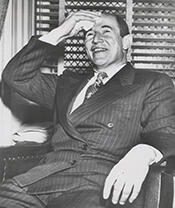
Here you will find contact information for Representative Samuel Kerns McConnell, including email address, phone number, and mailing address.
| Name | Samuel Kerns McConnell |
| Position | Representative |
| State | Pennsylvania |
| District | 13 |
| Party | Republican |
| Status | Former Representative |
| Term Start | January 6, 1943 |
| Term End | January 3, 1959 |
| Terms Served | 8 |
| Born | April 6, 1901 |
| Gender | Male |
| Bioguide ID | M000354 |
About Representative Samuel Kerns McConnell
Samuel Kerns McConnell Jr. (April 6, 1901 – April 11, 1985) was a Republican member of the U.S. House of Representatives from Pennsylvania who served eight consecutive terms in Congress from 1943 to 1959. Over the course of his legislative career, he represented his constituents during a period marked by World War II, the early Cold War, and significant domestic political and economic change, contributing to the federal lawmaking process as a member of the House of Representatives.
Born on April 6, 1901, McConnell came of age in the early twentieth century, a time of rapid industrialization and social transformation in the United States. Details of his early life, including his family background and upbringing, are not extensively documented in the available sources, but his later public career reflects the trajectory of a Pennsylvanian who was closely connected to the political and civic life of his state. His formative years would have coincided with World War I and the postwar period, experiences that shaped the generation of leaders who entered public service in the 1930s and 1940s.
Information about McConnell’s formal education is limited in the existing record, but his subsequent professional and political activities indicate that he was well prepared for the responsibilities of public office. Like many members of Congress of his era, he likely combined practical experience in business, law, or local affairs with increasing involvement in party politics, building the foundation for a congressional career through engagement with community and state-level issues in Pennsylvania.
By the early 1940s, McConnell had emerged as a Republican standard-bearer in his district, winning election to the U.S. House of Representatives from Pennsylvania in 1942. He took his seat in the Seventy-eighth Congress on January 3, 1943, at the height of World War II. As a member of the House of Representatives, Samuel Kerns McConnell participated in the democratic process and represented the interests of his constituents, voting on wartime measures, postwar reconversion policies, and the early architecture of U.S. Cold War strategy. His service in Congress occurred during a significant period in American history, encompassing the end of World War II, the beginning of the nuclear age, the Marshall Plan, the Korean War, and the domestic debates of the 1950s over economic policy, civil rights, and federal power.
McConnell was reelected seven times, serving continuously through the Seventy-ninth, Eightieth, Eighty-first, Eighty-second, Eighty-third, Eighty-fourth, and Eighty-fifth Congresses, and remained in office until January 3, 1959. Over these eight terms, he contributed to the legislative process as a Republican member of the House, working within his party’s caucus and the committee system that structured congressional activity. In representing Pennsylvania, he was part of a delegation from a state with major industrial, mining, and transportation interests, and his tenure coincided with the evolution of federal policies affecting labor, infrastructure, veterans, and the postwar economy.
After leaving Congress in 1959, McConnell concluded his formal congressional service but remained part of the generation of mid-twentieth-century legislators whose careers spanned the transition from wartime mobilization to Cold War governance. His later life was spent outside the national spotlight, and the public record provides limited detail on his post-congressional activities, though former members of his era often continued to be involved in civic affairs, party politics, or private business. Samuel Kerns McConnell Jr. died on April 11, 1985, closing a life that had intersected with many of the central political developments of the United States in the mid-twentieth century.