Senator Samuel James Renwick McMillan
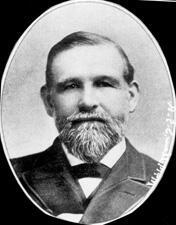
Here you will find contact information for Senator Samuel James Renwick McMillan, including email address, phone number, and mailing address.
| Name | Samuel James Renwick McMillan |
| Position | Senator |
| State | Minnesota |
| Party | Republican |
| Status | Former Representative |
| Term Start | December 6, 1875 |
| Term End | March 3, 1887 |
| Terms Served | 2 |
| Born | February 22, 1826 |
| Gender | Male |
| Bioguide ID | M000570 |
About Senator Samuel James Renwick McMillan
Samuel James Renwick McMillan (February 22, 1826 – October 3, 1897) was an American lawyer, judge, and Republican politician who served as a United States Senator from Minnesota from 1875 to 1887. Over the course of his public career he held a series of important judicial and legislative positions, including service on the Minnesota District Court and the Minnesota Supreme Court, where he ultimately became chief justice, before representing Minnesota in the United States Senate for two full terms.
McMillan was born on February 22, 1826, in Brownsville, Pennsylvania. His parents, Thomas Long McMillan and Jane McMillan (née Gormly), were of Scottish and Irish ancestry, and he grew up in a region shaped by early American expansion and industrial development along the Monongahela River. He pursued higher education at the Western University of Pennsylvania in Pittsburgh, an institution later renamed the University of Pittsburgh. There he completed his studies and graduated in 1846. After university he read law under the tutelage of Edwin M. Stanton, who would later gain national prominence as Secretary of War under President Abraham Lincoln. This legal training prepared McMillan for a professional life in the law and public service. In 1850 he married Harriet Butler, beginning a family life that would accompany his move west and his subsequent political and judicial career.
In 1852, McMillan and his wife moved to the Minnesota Territory, initially settling in Stillwater, a key early settlement on the St. Croix River. As the territory developed and the legal system expanded, he established himself in the practice of law. The couple later moved to St. Paul, which became the capital and principal city of Minnesota. When Minnesota achieved statehood in 1858, McMillan was named the first judge of the newly formed Minnesota District Court, marking the beginning of his judicial career in the new state. His early judicial service coincided with a period of rapid population growth, economic development, and evolving legal institutions on the frontier.
During the Dakota War of 1862, a conflict between the United States and several bands of the Dakota (Sioux) people in Minnesota, McMillan briefly served in a military capacity. He held the rank of second lieutenant in a local militia unit known as the Stillwater Frontier Guards. Although the unit was only briefly active, his service reflected the close connection between civic leaders and local defense efforts during the crisis. His judicial reputation continued to grow, and in 1864 he was appointed to the Minnesota Supreme Court as one of two new justices replacing recently resigned Justices Charles Eugene Flandrau and Isaac Atwater. His work on the high court involved shaping the legal framework of a young state, addressing questions of property, commerce, and civil governance.
McMillan’s judicial career reached its peak in 1874, when he was promoted to chief justice of the Minnesota Supreme Court following the resignation of Chief Justice Christopher G. Ripley. In this role he presided over the state’s highest court at a time when Minnesota was consolidating its legal precedents and institutions. The following year, in 1875, the Minnesota Legislature elected him to the United States Senate, reflecting both his standing within the Republican Party and his prominence in state affairs. He resigned from the bench to take up his new duties in Washington, D.C.
As a member of the Republican Party, Samuel James Renwick McMillan served as a Senator from Minnesota in the United States Congress from March 4, 1875, to March 3, 1887. He sat in the 44th, 45th, 46th, 47th, 48th, and 49th United States Congresses, thus serving two full terms in office during a significant period in American history that encompassed the late Reconstruction era, the rise of industrialization, and major debates over economic and civil policy. In the Senate he contributed to the legislative process, participated in the democratic governance of the nation, and represented the interests of his Minnesota constituents. His work formed part of the broader Republican legislative agenda of the period, which addressed issues such as infrastructure development, western settlement, and the regulation of emerging national industries.
McMillan chose not to stand for re-election in 1886, bringing his congressional service to a close at the end of his second term in 1887. After leaving the Senate, he returned to Minnesota and resumed the practice of law, continuing to be a respected figure in St. Paul’s legal and civic community. He lived in St. Paul until his death on October 3, 1897. McMillan was buried in Oakland Cemetery in St. Paul, a resting place for many of the city’s early leaders and public figures.
The legacy of Samuel James Renwick McMillan and his family is documented in the Ravi D. Goel collection of Samuel James Renwick McMillan family papers, 1818–1956, held by the Minnesota Historical Society. This collection includes photographs, personal letters, transcribed documents, and printed publications spanning five generations. The materials trace connections from the Revolutionary War era through the late nineteenth century, including a direct connection to the 1890 Battle of Wounded Knee, and provide valuable primary-source insight into McMillan’s life, family, and the historical context in which he lived and served.