Representative Samuel Jones Nicholls
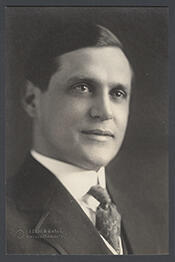
Here you will find contact information for Representative Samuel Jones Nicholls, including email address, phone number, and mailing address.
| Name | Samuel Jones Nicholls |
| Position | Representative |
| State | South Carolina |
| District | 4 |
| Party | Democratic |
| Status | Former Representative |
| Term Start | December 6, 1915 |
| Term End | March 3, 1921 |
| Terms Served | 3 |
| Born | May 7, 1885 |
| Gender | Male |
| Bioguide ID | N000088 |
About Representative Samuel Jones Nicholls
Samuel Jones Nicholls (May 7, 1885 – November 23, 1937) was a Democratic United States Representative from South Carolina who served three terms in Congress from 1915 to 1921. Born in Spartanburg, Spartanburg County, South Carolina, he came of age in the late nineteenth-century New South, a period marked by economic transition and the consolidation of Democratic control in the region. His early life in Spartanburg, then an emerging textile and railroad center, helped shape his later focus on local and state public service.
Nicholls pursued an extensive and varied education that reflected both military and academic training. He attended the Bingham Military Institute in Asheville, North Carolina, where he received a disciplined preparatory education. He then studied at Wofford College in Spartanburg, South Carolina, one of the state’s leading liberal arts institutions, before enrolling at Virginia Polytechnic Institute in Blacksburg, Virginia, which provided him with additional technical and collegiate experience. Seeking professional training in the law, he continued his studies at the University of Chicago Law School. After completing his legal education, he was admitted to the bar in 1906 and commenced the practice of law in his native Spartanburg.
Nicholls quickly became active in local legal and civic affairs. Early in his career he served as city attorney of Spartanburg, a position that placed him at the center of municipal legal matters during a period of urban growth and modernization. He also held the office of prosecuting attorney of Spartanburg County, South Carolina, where he was responsible for representing the state in criminal proceedings at the county level. His work in these roles established his reputation as a capable attorney and public servant and provided him with practical experience in statutory interpretation and courtroom advocacy.
In addition to his legal practice, Nicholls entered elective office and the state judiciary. He was a member of the South Carolina House of Representatives from 1907 to 1908, participating in the legislative process at the state level during his early twenties. His legal expertise led to further responsibilities when he served by special appointment as a circuit judge and as an associate justice of the Supreme Court of South Carolina, assignments that underscored the confidence placed in his judgment and legal acumen. Parallel to his civil career, he was active in the state’s military establishment; he organized and served for three years as captain of Company I, First Regiment, South Carolina National Guard Infantry, contributing to the preparedness and organization of the state militia in the years preceding World War I.
Nicholls’s growing prominence in law and politics culminated in his election to the United States House of Representatives. A member of the Democratic Party, he was elected to the Sixty-fourth Congress to fill the vacancy caused by the resignation of Representative Joseph T. Johnson. He took his seat on September 14, 1915, representing a South Carolina district in the House of Representatives. He was subsequently reelected to the Sixty-fifth and Sixty-sixth Congresses, serving continuously until March 3, 1921. His tenure in Congress coincided with a significant period in American history, including the Progressive Era reforms and the nation’s involvement in World War I. During these three terms, Nicholls participated in the legislative process, represented the interests of his constituents, and contributed to debates and decisions affecting both South Carolina and the nation. In 1920 he declined to be a candidate for renomination, thereby concluding his federal legislative service at the end of the Sixty-sixth Congress.
After leaving Congress, Nicholls returned to Spartanburg and resumed the private practice of law. He continued to be a figure in the legal community of his hometown, drawing on his experience as a legislator, judge, and attorney. He practiced law in Spartanburg until his death there on November 23, 1937. Samuel Jones Nicholls was interred in West Oakwood Cemetery in Spartanburg, South Carolina, closing a career that spanned municipal, county, state, and national service.