Senator Samuel Pasco
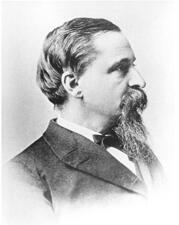
Here you will find contact information for Senator Samuel Pasco, including email address, phone number, and mailing address.
| Name | Samuel Pasco |
| Position | Senator |
| State | Florida |
| Party | Democratic |
| Status | Former Representative |
| Term Start | December 5, 1887 |
| Term End | March 3, 1899 |
| Terms Served | 2 |
| Born | June 28, 1834 |
| Gender | Male |
| Bioguide ID | P000095 |
About Senator Samuel Pasco
Samuel Pasco (June 28, 1834 – March 13, 1917) was an American politician, lawyer, educator, and Confederate soldier who served as a United States Senator from Florida from 1887 to 1899. A member of the Democratic Party, he is notable as the only Confederate private ever elected to the U.S. Senate and represented Florida in Congress during a significant period in American history, contributing to the legislative process over two full terms in office.
Pasco was born in London, England, on June 28, 1834, to a family of Cornish ancestry. His family emigrated to North America when he was a child, moving first to Prince Edward Island in 1841 and then to the United States in 1843, where they settled in Charlestown, Massachusetts. Raised and educated in New England, Pasco attended Harvard University, receiving the classical education that would underpin his later career in law, education, and politics.
After completing his studies at Harvard, Pasco moved to Florida in 1859, settling in Monticello in Jefferson County. There he entered the field of education and became principal of the Waukeenah Academy, a school near Monticello, serving in that role from 1860 to 1861. His early years in Florida established his ties to the local community and laid the groundwork for his later prominence in state affairs.
With the outbreak of the American Civil War, Pasco closed Waukeenah Academy and joined the army of the Confederate States of America in 1861. He enlisted as a private and served in the 3rd Florida Infantry Regiment. During his military service he saw active combat and was captured at Missionary Ridge in Chattanooga, Tennessee. Pasco was held as a prisoner of war by Union forces for the remainder of the conflict and was not released until March 1865. Upon his release, he immediately returned to Florida and resumed his position as principal of Waukeenah Academy, reflecting his continued commitment to education in the postwar South.
In the Reconstruction era, Pasco transitioned from education into public service and the law. He served as clerk of Jefferson County from 1866 to 1868, a role that introduced him more directly to local governance and legal affairs. During this period he studied law and established himself as a prominent lawyer in the Monticello area, building a reputation that would support his later rise in state politics. His legal and civic activities positioned him as an influential figure in the political reorganization of Florida following the Civil War.
Pasco’s statewide prominence was cemented in the 1880s. In 1885, he served as president of the convention that drafted a new constitution for Florida, a key document in the state’s post-Reconstruction political and legal framework. He was subsequently elected to the Florida House of Representatives, serving from 1886 to 1887, and briefly held the position of Speaker of the House in 1887. These legislative responsibilities, combined with his constitutional leadership, made him a central figure in Florida’s Democratic Party and in the shaping of state policy during that era.
In 1887, Pasco was elected as a United States Senator from Florida as a Democrat. He served two consecutive terms in the Senate, from 1887 to 1899, representing the interests of his Florida constituents during a period marked by industrial expansion, regional realignment, and debates over economic and foreign policy. As a member of the Senate, Samuel Pasco participated actively in the democratic process and contributed to the legislative work of the chamber. His twelve years in office coincided with the administrations of several presidents and with significant national issues, including tariff policy, monetary debates, and the early stirrings of American overseas expansion. He was defeated for reelection in 1899, ending his formal congressional career.
After leaving the Senate, Pasco continued to serve in a national capacity. He was appointed a member of the Isthmian Canal Commission, the federal body charged with determining the route and feasibility of a canal connecting the Atlantic and Pacific Oceans. Serving on this commission until 1905, he participated in the deliberations that led to the decision to construct a canal through the Isthmus of Panama, a project that would have lasting strategic and commercial significance for the United States. Following his service on the commission, Pasco retired from public life and returned to Monticello, Florida.
In his later years, Pasco lived quietly in Monticello, maintaining the community ties he had forged since before the Civil War. He died in Tampa, Florida, on March 13, 1917. His remains were returned to Monticello for burial in Roseland Cemetery. In recognition of his long public service and influence in state affairs, Pasco County, Florida, was named in his honor, ensuring that his role in Florida’s political and civic history would be remembered.