Senator Samuel Shethar Phelps
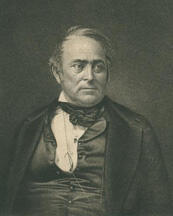
Here you will find contact information for Senator Samuel Shethar Phelps, including email address, phone number, and mailing address.
| Name | Samuel Shethar Phelps |
| Position | Senator |
| State | Vermont |
| Party | Whig |
| Status | Former Representative |
| Term Start | December 2, 1839 |
| Term End | March 3, 1855 |
| Terms Served | 3 |
| Born | May 13, 1793 |
| Gender | Male |
| Bioguide ID | P000299 |
About Senator Samuel Shethar Phelps
Samuel Shethar Phelps (May 13, 1793 – March 25, 1855) was an American lawyer, jurist, and politician who represented Vermont in the United States Senate as a member of the Whig Party. Serving in the Senate from 1839 to 1851 and again from 1853 to 1854, he contributed to the legislative process during three terms in office and participated in national debates during a significant period in American history, representing the interests of his Vermont constituents.
Phelps was born on May 13, 1793, in Litchfield, Connecticut, to John Phelps (1756–1833), a veteran of the American Revolutionary War and a great-great-grandson of early New England settler William Phelps. Raised in a family with deep colonial and revolutionary roots, he received a classical education that prepared him for higher study. He graduated from Yale University in 1811, a notable achievement that placed him among the educated elite of his generation. After Yale, he pursued legal training at the renowned Litchfield Law School, one of the earliest formal law schools in the United States, and continued his legal studies in the office of Horatio Seymour. Upon completion of his studies, he was admitted to the bar.
During the War of 1812, Phelps served as a military paymaster, an administrative and financial role that involved responsibility for the compensation of troops. This early federal service provided him with experience in public administration and exposed him to the practical demands of government in wartime. After the war, he moved to Middlebury, Vermont, where he established a law practice. Middlebury became his long-term home and the base from which he built his legal and political career.
Phelps entered public life in Vermont in the 1820s. He served in the Vermont House of Representatives from 1821 to 1832, a period in which he gained extensive legislative experience and developed a reputation as a capable lawyer-legislator. In 1832 he was elevated to the judiciary as a judge of the Vermont Supreme Court, succeeding to the position left vacant by the death of Justice John C. Thompson. Phelps served on the state’s highest court from 1832 to 1838, participating in the development of Vermont’s jurisprudence during a formative era in its legal history.
In 1839, Phelps was elected as a Whig to the United States Senate from Vermont. He served in the Senate continuously from 1839 until 1851. During this long tenure, he took part in the democratic process at the national level and was involved in legislative deliberations on issues that confronted the United States in the decades before the Civil War. As a senator, he chaired several important committees, including the Committee on the Militia, the Committee on Revolutionary Claims, and the Committee on Patents and the Patent Office. These assignments reflected both his legal expertise and his interest in military affairs, historical claims arising from the nation’s founding conflicts, and the emerging field of intellectual property and innovation.
After leaving the Senate in 1851 at the conclusion of his elected service, Phelps returned to Vermont but remained a figure of political significance. On January 17, 1853, he returned to the United States Senate when he was appointed to fill the unexpired term of Senator William Upham, who had died in office. His appointment was made by the Governor of Vermont at a time when the Vermont General Assembly was not in session, in accordance with prevailing practice for filling vacancies. Phelps served in this capacity until March 16, 1854, when the Senate resolved that he was not entitled to the seat on the grounds that, once the state legislature convened, it was incumbent upon the legislators to choose a successor. This decision effectively ended his final period of service in Congress, though it underscored the constitutional questions surrounding senatorial appointments and state legislative authority.
Beyond his official duties, Phelps engaged in public debate through political writing and pamphleteering, reflecting the vigorous partisan discourse of the Whig era. Among his known works are “Mr. Phelps’ Appeal to the People of Vermont,” published in the American Whig Review 12 (July 1850): 93–98, and printed in Middlebury, Vermont, in 1846, and “Mr. Phelps’ Rejoinder to Mr. Slade’s ‘Reply,’” printed by J. & G. S. Gideon in Washington, D.C., circa 1846. These publications illustrate his active role in defending his positions and responding to political opponents, including fellow Vermonters, in the context of contemporary policy and constitutional disputes.
In his personal life, Phelps was married to Frances Shurtleff Phelps. The couple had three children: Edward John Phelps, James Shether Phelps, and Charles Henry Phelps. His family connections, particularly through his son Edward John Phelps—who would later become a prominent lawyer and diplomat—helped extend the Phelps family’s influence in American public life beyond Samuel’s own career. Phelps remained a respected figure in Middlebury, where he continued to be associated with the legal and civic life of the community.
Samuel Shethar Phelps died in Middlebury, Vermont, on March 25, 1855. He was buried at West Cemetery in Middlebury. His career as a state legislator, state supreme court justice, and United States senator spanned more than three decades and placed him at the center of both Vermont’s development and the broader national political struggles of the antebellum period.