Senator Samuel Prentiss
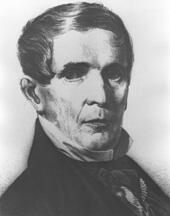
Here you will find contact information for Senator Samuel Prentiss, including email address, phone number, and mailing address.
| Name | Samuel Prentiss |
| Position | Senator |
| State | Vermont |
| Party | Whig |
| Status | Former Representative |
| Term Start | December 5, 1831 |
| Term End | March 3, 1843 |
| Terms Served | 2 |
| Born | March 31, 1782 |
| Gender | Male |
| Bioguide ID | P000510 |
About Senator Samuel Prentiss
Samuel Prentiss (March 31, 1782 – January 15, 1857) was an associate justice and chief justice of the Vermont Supreme Court, a United States senator from Vermont, and a United States district judge of the United States District Court for the District of Vermont. A member of the Whig Party during his later political career, he served in the United States Senate from 1831 to 1843, contributing to the legislative process during two terms in office and representing the interests of his Vermont constituents during a significant period in American history.
Prentiss was born on March 31, 1782, in Stonington, Connecticut, the fourth in his line to bear the name Samuel Prentiss. He was the second of nine children born to Dr. Samuel Prentiss III, a prominent physician, and Lucretia (Holmes) Prentiss. In 1786 the family moved first to Worcester, Massachusetts, and then to Northfield, Massachusetts, where he completed preparatory studies. He was instructed in the classics by a private tutor, the Reverend Samuel C. Allen. The Prentiss family had deep New England roots: his grandfather, Colonel Samuel Prentice II, served in the American Revolutionary War, with Dr. Samuel Prentiss acting as a combat surgeon, and the family traced its American lineage to Captain Thomas Prentice, who emigrated from England to the Massachusetts Bay Colony in the 1640s and served as a captain during King Philip’s War. Two of Samuel’s younger brothers also achieved political prominence: John Holmes Prentiss served two terms in the United States House of Representatives from New York, and William A. Prentiss became the tenth mayor of Milwaukee, Wisconsin, after earlier service in the Vermont House of Representatives and the Wisconsin State Assembly.
After his classical studies, Prentiss read law rather than attending a formal law school, following the common practice of the era. He studied in Northfield with attorney Samuel Vose and, beginning in 1802, in Brattleboro, Vermont, with attorney John W. Blake. He was admitted to the bar and commenced practice in Montpelier, Vermont, in 1803. He remained in active legal practice there until 1824, building a substantial reputation as an attorney. Among the lawyers who received their education and training in his office was William Upham, who later served in the United States Senate. Prentiss also developed close ties to Vermont’s civic and educational life; he served as a trustee of Dartmouth College from 1820 to 1827 and received honorary degrees from that institution, including an Artium Magister in 1817 and a Legum Doctor in 1832.
Prentiss’s political career began while he was still engaged in private practice. Initially a Federalist, he later aligned with the National Republican Party and ultimately with the Whig Party as the American party system evolved in the early nineteenth century. He was an unsuccessful candidate for the United States House of Representatives in 1816, but remained active in public affairs. He entered elective office as a member of the Vermont House of Representatives, serving from 1824 to 1825. His judicial career soon followed: he was appointed an associate justice of the Vermont Supreme Court in 1825 and served in that capacity until 1829. In 1829 he became chief justice of the Vermont Supreme Court, a position he held until 1830, further solidifying his standing as one of the leading legal figures in the state.
In 1831, Prentiss was elected to the United States Senate from Vermont as a National Republican. He took his seat on March 4, 1831, and was reelected in 1837 as a member of the Whig Party, serving until April 11, 1842. His Senate tenure thus spanned a period of major national debates over banking, internal improvements, and the balance of power between the federal government and the states. During the 27th Congress he served as Chairman of the Committee on Patents and the Patent Office, overseeing legislative matters related to intellectual property and the administration of the patent system. While in the Senate, he was the originator and successful advocate of a law to suppress dueling in the District of Columbia, reflecting contemporary concerns about violent political and personal disputes. Throughout his service, he participated actively in the democratic process and contributed to the legislative work of the Senate on behalf of Vermont.
Prentiss resigned from the Senate on April 11, 1842, to accept a federal judicial appointment. On April 8, 1842, President John Tyler nominated him to a seat on the United States District Court for the District of Vermont, vacated by Judge Elijah Paine. The United States Senate confirmed his nomination on the same day, and he received his commission immediately thereafter. As United States district judge, Prentiss presided over federal trial matters in Vermont for nearly fifteen years, bringing to the bench the extensive legal and legislative experience he had accumulated over decades of public service. His judicial service continued uninterrupted until his death on January 15, 1857.
In his personal life, Samuel Prentiss married Lucretia Houghton (1786–1855) of Northfield, Massachusetts, in 1804. The couple had twelve children, though at least two died in infancy, reflecting the high child mortality of the era. Their eighth child, Theodore Prentiss, moved west to Wisconsin, where he became the first mayor of Watertown and served in the Wisconsin State Assembly, extending the family’s tradition of public service into the developing Midwest. Prentiss remained closely associated with Montpelier throughout his adult life, both as a lawyer and as a judge.
Samuel Prentiss died in Montpelier, Vermont, on January 15, 1857, while still serving as United States district judge. He was interred at Green Mount Cemetery in Montpelier. His career, which encompassed service as a state legislator, state supreme court justice and chief justice, United States senator, and federal district judge, placed him among the most prominent Vermont public figures of the first half of the nineteenth century.