Representative Samuel Johnson Pugh
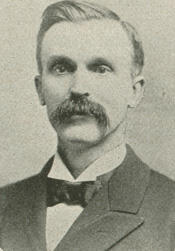
Here you will find contact information for Representative Samuel Johnson Pugh, including email address, phone number, and mailing address.
| Name | Samuel Johnson Pugh |
| Position | Representative |
| State | Kentucky |
| District | 9 |
| Party | Republican |
| Status | Former Representative |
| Term Start | December 2, 1895 |
| Term End | March 3, 1901 |
| Terms Served | 3 |
| Born | January 28, 1850 |
| Gender | Male |
| Bioguide ID | P000564 |
About Representative Samuel Johnson Pugh
Samuel Johnson Pugh (January 28, 1850 – April 17, 1922) was a U.S. Representative from Kentucky and a prominent attorney and local officeholder in Lewis County. He was born in Greenup County, Kentucky, on January 28, 1850, and in 1852 moved with his parents to neighboring Lewis County, a rural area along the Ohio River in northeastern Kentucky. Raised in this region, he came of age during the Civil War era, an experience that shaped the political and social environment in which he would later practice law and enter public life.
Pugh received his early education in Kentucky, attending Chandler’s Select School and Rand’s Academy, institutions that provided preparatory instruction for young men aspiring to professional careers. He later studied at Centre College in Danville, Kentucky, one of the state’s leading liberal arts colleges and a traditional training ground for many of Kentucky’s lawyers and public officials. After completing his formal studies, he read law in the customary manner of the period and was admitted to the bar, commencing the practice of law in Vanceburg, the county seat of Lewis County. His legal practice quickly became the foundation for a long career in public service.
Pugh’s early public career was closely tied to local government and the courts. He first served as city attorney of Vanceburg from 1872 to 1873, a position that involved advising municipal officials and representing the city in legal matters. He was then appointed master commissioner of the circuit court, serving from 1874 to 1880, where he assisted the court in handling judicial sales, references, and other chancery matters. Concurrently building his reputation as a capable lawyer, he was elected county attorney of Lewis County, holding that office from 1878 to 1886. In this role he acted as the chief legal officer for the county, prosecuting cases and advising county officials.
Advancing within the local judiciary, Pugh served as county judge of Lewis County from 1886 to 1890. As county judge, he presided over the county court, which at that time exercised both judicial and administrative functions, including oversight of local finances and infrastructure. His experience in county government led to his selection as a delegate to the Kentucky State constitutional convention of 1890–1891, where he participated in the drafting of the Kentucky Constitution of 1891, a document that restructured state government and remains the fundamental law of Kentucky. Following this service, he was elected to the Kentucky State Senate, serving from 1893 to 1894, which provided him with legislative experience at the state level and increased his visibility within the Republican Party in a state then largely dominated by Democrats.
On November 6, 1894, Pugh was elected as a Republican to the Fifty-fourth Congress and subsequently reelected to the Fifty-fifth and Fifty-sixth Congresses, serving from March 4, 1895, to March 3, 1901. Representing a district in northeastern Kentucky, he served during a period marked by debates over tariffs, currency policy, and the nation’s emerging role on the international stage following the Spanish–American War. As a Republican from Kentucky, he was part of a minority party in his home state but aligned with the national majority in Congress during much of his tenure. While specific committee assignments and legislative initiatives are less extensively documented, his service in three consecutive Congresses reflected sustained support from his constituents and continuity with his earlier record in local and state offices.
After leaving Congress in March 1901, Pugh returned to Vanceburg and resumed the practice of law, continuing the profession that had underpinned his public career. He remained a respected figure in the community, drawing on decades of experience in municipal, county, state, and federal service. He lived in Vanceburg for the remainder of his life, maintaining his ties to the region where he had grown up and first entered public life.
Samuel Johnson Pugh died in Vanceburg, Kentucky, on April 17, 1922. He was interred in Woodland Cemetery, a local burial ground that became the final resting place for a number of the area’s leading citizens. His career, spanning from city attorney and county judge to state senator and member of the U.S. House of Representatives, reflected the trajectory of a nineteenth-century Kentucky lawyer who rose through successive levels of public responsibility to serve in the national legislature.