Representative Samuel Jackson Randall
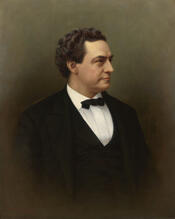
Here you will find contact information for Representative Samuel Jackson Randall, including email address, phone number, and mailing address.
| Name | Samuel Jackson Randall |
| Position | Representative |
| State | Pennsylvania |
| District | 3 |
| Party | Democratic |
| Status | Former Representative |
| Term Start | December 7, 1863 |
| Term End | March 3, 1891 |
| Terms Served | 14 |
| Born | October 10, 1828 |
| Gender | Male |
| Bioguide ID | R000039 |
About Representative Samuel Jackson Randall
Samuel Jackson Randall served as a Representative from Pennsylvania in the United States Congress from 1863 to 1891. A member of the Democratic Party, Samuel Jackson Randall contributed to the legislative process during 14 terms in office.
Samuel Jackson Randall’s service in Congress occurred during a significant period in American history. As a member of the House of Representatives, Samuel Jackson Randall participated in the democratic process and represented the interests of constituents.
Samuel Jackson Randall (October 10, 1828 – April 13, 1890) was an American politician from Pennsylvania who represented the Queen Village, Society Hill, and Northern Liberties neighborhoods of Philadelphia from 1863 to 1890 and served as the 44th speaker of the United States House of Representatives from 1876 to 1881. He was a contender for the Democratic Party nomination for President of the United States in 1880 and 1884. Born in Philadelphia to a family active in Whig politics, Randall shifted to the Democratic Party after the Whigs’ demise. His rise in politics began in the 1850s with election to the Philadelphia Common Council and then to the Pennsylvania State Senate for the 1st district. Randall served in a Union cavalry unit in the American Civil War before winning a seat in the federal House of Representatives in 1862. He was re-elected every two years thereafter until his death. The representative of an industrial region, Randall became known as a staunch defender of protective tariffs designed to assist domestic producers of manufactured goods. While often siding with Republicans on tariff issues, he differed with them in his resistance to Reconstruction and the growth of federal power. Randall’s support for smaller, less centralized government raised his profile among House Democrats, and they elevated him to Speaker in 1876. He held that post until the Democrats lost control of the House in 1881, and was considered a possible nominee for president in 1880 and 1884. Randall’s support for high tariffs began to alienate him from most Democrats, and when that party regained control of the House in 1883, he was denied another term as Speaker. Randall continued to serve in Congress as chair of the Appropriations Committee. He remained a respected party leader but gradually lost influence as the Democrats became more firmly wedded to free trade. Worsening health also curtailed his power until his death in 1890.