Representative Samuel Joelah Tribble
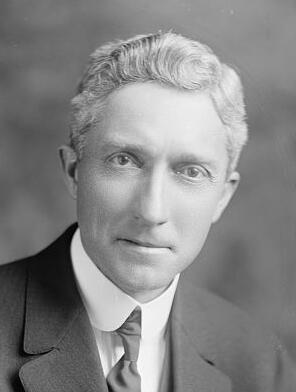
Here you will find contact information for Representative Samuel Joelah Tribble, including email address, phone number, and mailing address.
| Name | Samuel Joelah Tribble |
| Position | Representative |
| State | Georgia |
| District | 8 |
| Party | Democratic |
| Status | Former Representative |
| Term Start | April 4, 1911 |
| Term End | March 3, 1917 |
| Terms Served | 3 |
| Born | November 15, 1869 |
| Gender | Male |
| Bioguide ID | T000366 |
About Representative Samuel Joelah Tribble
Samuel Joelah Tribble (November 15, 1869 – December 8, 1916) was an American politician and lawyer who represented Georgia in the United States House of Representatives from 1911 until his death in 1916. A member of the Democratic Party, he served three consecutive terms in Congress during a significant period in American history, contributing to the legislative process and representing the interests of his constituents in northeast Georgia.
Tribble was born on November 15, 1869, near Carnesville in Franklin County, Georgia, then a largely rural area in the northeastern part of the state. He grew up in the post–Civil War South, in a region rebuilding its economy and political institutions during the late Reconstruction and post-Reconstruction eras. His early life in this agrarian community helped shape his understanding of the concerns of small-town and rural Georgians, which later informed his legal and political career.
Tribble pursued higher education at the University of Georgia in Athens, where he studied law. While a student, he was an active member of the Demosthenian Literary Society, one of the university’s principal debating and literary organizations, which was known for training many future lawyers, judges, and public officials in Georgia. He graduated in 1891 with a Bachelor of Law (LL.B.) degree. That same year he was admitted to the state bar and immediately commenced the practice of law in Athens, Clarke County, Georgia, establishing himself in the legal community of one of the state’s leading university towns.
Tribble’s public career began in local judicial and prosecutorial roles. From 1899 to 1904, he served as solicitor of the City Court of Athens, acting as a prosecuting attorney in that jurisdiction. In 1904, he was appointed or elected solicitor general of the western circuit of Georgia, a larger judicial circuit encompassing multiple counties in the region. He held that position until 1908. In these capacities, Tribble gained extensive courtroom experience and visibility as a public official, building a reputation that would support his later bid for national office.
In 1910, Tribble entered congressional politics as a Democrat, challenging incumbent Representative William Marcellus Howard for a seat in the United States House of Representatives. Running at a time when the Democratic Party dominated Georgia’s political landscape, he successfully unseated Howard and won election to the 62nd United States Congress. He took office on March 4, 1911, representing a Georgia district centered on Athens and the surrounding area. Tribble was subsequently re-elected to two additional terms, serving in the 63rd and 64th Congresses. During these years, he participated in the work of the House of Representatives as the nation confronted issues of economic regulation, rural development, and, increasingly, questions of national preparedness and foreign policy in the years leading up to American involvement in World War I.
As a member of Congress, Tribble took part in the democratic process at the federal level, contributing to debates and legislation affecting both his district and the country as a whole. His tenure coincided with the administrations of Presidents William Howard Taft and Woodrow Wilson and with the broader Progressive Era, during which Congress considered measures related to banking reform, tariff policy, and agricultural interests—matters of particular concern to many of his Georgia constituents. Although detailed records of his committee assignments and specific legislative initiatives are limited in the surviving summaries, his repeated re-election indicates sustained support from voters in his district.
Tribble’s congressional service was cut short by his death in office. He continued to serve in the House until December 8, 1916, when he died in Washington, D.C., while still a sitting member of the 64th Congress. His death placed him among the members of the United States Congress who died in office during the first half of the twentieth century. Following his death, memorial addresses were later delivered in the House of Representatives and the Senate, reflecting on his career and service, and these tributes were published in 1917 under the title “Samuel J. Tribble, late a representative from Georgia, Memorial addresses delivered in the House of Representatives and Senate.”
After his death, Samuel Joelah Tribble’s body was returned to Georgia. He was buried in Oconee Hill Cemetery in Athens, Georgia, a historic cemetery closely associated with the University of Georgia community and many of the city’s prominent citizens. His life and career have been noted in institutional histories, including Thomas Walter Reed’s “History of the University of Georgia,” which records his role as an alumnus who rose to national office. Tribble’s progression from rural Franklin County to the University of Georgia, through local legal offices, and ultimately to the United States Congress reflects the trajectory of a turn-of-the-century Southern lawyer-politician whose public service was rooted in both his legal training and his regional ties.