Representative Samuel Arthur Weiss
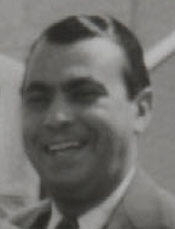
Here you will find contact information for Representative Samuel Arthur Weiss, including email address, phone number, and mailing address.
| Name | Samuel Arthur Weiss |
| Position | Representative |
| State | Pennsylvania |
| District | 33 |
| Party | Democratic |
| Status | Former Representative |
| Term Start | January 3, 1941 |
| Term End | January 3, 1947 |
| Terms Served | 3 |
| Born | April 15, 1902 |
| Gender | Male |
| Bioguide ID | W000257 |
About Representative Samuel Arthur Weiss
Samuel Arthur Weiss (April 15, 1902 – February 1, 1977) was an American attorney, professional football player, jurist, and Democratic politician who served as a Representative from Pennsylvania in the United States Congress from 1941 to 1947. Over three terms in office, he represented parts of Pittsburgh and the surrounding area, contributing to the legislative process during a significant period in American history that encompassed the Second World War and its immediate aftermath. In addition to his congressional service, he was a member of the Pennsylvania House of Representatives, a judge of the Allegheny County Court of Common Pleas, and a Deputy Commissioner of the National Football League.
Weiss was born on April 15, 1902, in Krotowocz, Poland. He immigrated to the United States in July 1905 with his mother, Sadie, and younger sister, Sarah, joining his father, Israel Weiss, who had arrived in November 1904. The family initially settled in Homestead, Pennsylvania, an industrial community near Pittsburgh, and later moved to nearby Glassport, Pennsylvania. Growing up in these working-class steel towns, Weiss was part of the broader wave of Eastern European Jewish immigration that helped shape the social and political life of western Pennsylvania in the early twentieth century.
Weiss pursued higher education at Duquesne University in Pittsburgh, Pennsylvania, where he graduated in 1925. He continued his studies at the university’s law department, earning an LL.B. in 1927 and a J.D. in 1929. While completing his education, he also distinguished himself as an athlete, playing quarterback for the professional football team Glassport Odds from 1925 to 1926. On June 30, 1930, he married Jeannette E. Hoffman. Alongside his emerging legal and political career, he was active in local civic affairs and served as director of the Roselia Maternity Hospital in Pittsburgh, reflecting an early commitment to public service and community welfare.
Weiss entered elective office in the Pennsylvania House of Representatives, representing parts of Pittsburgh and its environs from 1935 to 1939. A member of the Democratic Party, he participated in state-level legislative deliberations during the latter years of the Great Depression, gaining experience that would inform his later work in Congress. His state legislative service helped establish his reputation within Allegheny County Democratic circles and positioned him for higher office.
In 1940, Weiss was elected as a Democrat to the 77th United States Congress and was subsequently reelected to the 78th and 79th Congresses, serving from 1941 until his resignation on January 7, 1946. During these three terms in the U.S. House of Representatives, he represented the interests of his Pennsylvania constituents at a time marked by global conflict and domestic mobilization for World War II. His service in Congress occurred during a significant period in American history, and he participated in the democratic process as the nation confronted wartime challenges and the beginnings of postwar reconstruction. Weiss was particularly noted for his advocacy of universal civil rights and for his attention to minority issues, especially those affecting Jewish communities and Zionist concerns. In 1943, he wrote to President Franklin D. Roosevelt protesting the British White Paper on Palestine, which threatened to curtail Jewish immigration and maintain Jews as a permanent minority there; his position aligned with the 1942 Biltmore Conference, which had condemned the policy as “cruel and indefensible” in denying sanctuary to Jews fleeing Nazi persecution. That same year, he played a role in organizing more than fifty witnesses for congressional committee hearings on a bill aimed at limiting racial incitement by mail, underscoring his engagement with civil rights and anti-discrimination efforts.
Weiss resigned from Congress after winning election in November 1945 as a judge of the Allegheny County Court of Common Pleas, for a term commencing in January 1946. He served on that court from 1946 until his retirement from the bench in 1967, presiding over a wide range of civil and criminal matters in one of Pennsylvania’s most populous counties. His long judicial tenure reflected both his legal training and his sustained public trust. Following his retirement from the court, he continued to be involved in judicial administration and, in 1968, served as President of the Pennsylvania State Judicial Administration, contributing to the oversight and improvement of the state’s court system.
Parallel to his legal and political career, Weiss maintained a notable association with professional football. Having begun as a player with the Glassport Odds in the mid-1920s, he later joined the National Football League as a referee in 1942. That same year he was appointed Deputy Commissioner of the NFL, a position he held from 1942 to 1950. In this capacity, he helped oversee league operations during and after World War II, a period when professional football was expanding its national profile. His dual experience as a lawyer, legislator, and football official made him an unusual figure straddling both public service and professional sports administration.
Samuel Arthur Weiss died on February 1, 1977. Over the course of his life, he was recognized as one of the Jewish members of the United States Congress and as a public figure whose career spanned immigration, education, athletics, law, legislative service, judicial office, and national sports governance.