Representative Sander M. Levin
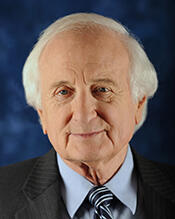
Here you will find contact information for Representative Sander M. Levin, including email address, phone number, and mailing address.
| Name | Sander M. Levin |
| Position | Representative |
| State | Michigan |
| District | 9 |
| Party | Democratic |
| Status | Former Representative |
| Term Start | January 3, 1983 |
| Term End | January 3, 2019 |
| Terms Served | 18 |
| Born | September 6, 1931 |
| Gender | Male |
| Bioguide ID | L000263 |
About Representative Sander M. Levin
Sander Martin Levin (born September 6, 1931) is an American politician who served as a Representative from Michigan in the United States Congress from January 3, 1983, to January 3, 2019. A member of the Democratic Party, he represented what was initially Michigan’s 17th congressional district from 1983 to 1993, the 12th district from 1993 to 2013, and the 9th district from 2013 to 2019. Over 18 consecutive terms in office, Levin contributed to the legislative process during a significant period in American history, participating in the democratic process and representing the interests of his constituents in the Detroit metropolitan area and surrounding communities.
Levin was born in Detroit, Michigan, the son of Jewish parents Bess Rachel (née Levinson) and Saul R. Levin. He grew up in Detroit and graduated from Central High School. He received a bachelor’s degree from the University of Chicago in 1952, followed by a master’s degree in international relations from Columbia University in 1954. He then attended Harvard Law School, earning his law degree in 1957. After completing his legal education, Levin returned to Michigan and developed a private law practice in Detroit, beginning a professional career that combined legal work with increasing involvement in Democratic Party politics.
Levin’s formal political career began in local and state party leadership. In 1962 he was named chairman of the Oakland County Democratic Party, a position that placed him at the center of suburban Detroit politics during a period of demographic and political change. He was elected to the Michigan State Senate in 1964 from the 15th district, defeating Republican George W. Kuhn, and served in that body until 1970. During his tenure, he rose to leadership positions, serving as Senate minority leader from January 1969 to January 1970. Following the resignation of Michigan Democratic Party chairman Zolton Ferency in 1967, Levin was elected state party chairman on December 17, 1967, and resigned his position as minority floor leader the following January to focus on party leadership. He twice sought the governorship of Michigan, running as the Democratic nominee in 1970 and again in 1974, but was defeated both times by Republican Governor William Milliken. After these statewide campaigns, Levin was a Fellow at the Harvard Kennedy School in 1975. From 1977 through 1981 he served at the federal level as assistant administrator of the Agency for International Development (USAID), gaining experience in international development and executive-branch administration.
Levin entered Congress in the 1982 election cycle, when incumbent Democratic U.S. Representative William Brodhead declined to seek re-election and instead made an unsuccessful run for governor. Levin won the Democratic primary in Michigan’s 17th congressional district with 49 percent of the vote; at that time the district included northwestern Detroit as well as parts of Macomb and Oakland counties. In the general election he prevailed with 67 percent of the vote. Thereafter he typically won re-election with at least 56 percent of the vote, with notable exceptions in the 1992 and 1994 elections. Following the 1990 United States census, his district was renumbered as the 12th district and lost its share of Detroit. In 1992 he narrowly defeated businessman and Vietnam War veteran John Pappageorge by a margin of 53 percent to 46 percent, and in a 1994 rematch during the Republican Revolution he again defeated Pappageorge, 52 percent to 47 percent. Levin faced Pappageorge a third time in 1996, winning by a wider margin of 57 percent to 41 percent. In 1998 he was re-elected over Republican nominee Leslie A. Touma, 56 percent to 42 percent. In 2000, despite Detroit-area businessman Bart Baron gaining the endorsement of the United Auto Workers union, Levin secured re-election with 64 percent of the vote. Redistricting in the 2000s added heavily Democratic communities such as Southfield and Mount Clemens to his district, and he subsequently won every election with at least 61 percent of the vote.
After the next round of redistricting, Levin’s district was merged with the 9th District of fellow Democrat Gary Peters. The combined district retained Peters’s district number—the 9th—but geographically more closely resembled Levin’s existing constituency. Peters chose to run in the newly drawn 14th District, effectively handing the Democratic nomination in the 9th District to Levin. Although the new configuration shifted Southfield to the 14th District, it added the remainder of Royal Oak as well as Oak Park, Clawson, Berkley, and other communities. The reconfigured district remained strongly Democratic, and Levin won a 16th term with 61.4 percent of the vote. He continued to serve until the end of the 115th Congress. In December 2017, Levin announced that he would retire from Congress at the conclusion of his term and would not seek re-election in 2018. His son Andy Levin was elected on November 6, 2018, and took office in the 116th Congress on January 3, 2019, succeeding him in representing the district.
During his long tenure in the House of Representatives, Levin became particularly prominent in tax, trade, and social policy through his work on the Committee on Ways and Means. He served as a member of the committee for many years, eventually becoming ranking member. On March 4, 2010, he took over as chairman of the Ways and Means Committee when Representative Charles B. Rangel of New York stepped aside due to ethics investigations. Levin served as chairman until January 2011 and then as the committee’s ranking member until the end of 2016. Within Ways and Means, he served as ranking member of the Subcommittee on Trade and also sat on the Subcommittee on Income Security, where he was involved in matters relating to international trade agreements, social insurance, and income-support programs. Beyond his committee work, he was a member of the House Baltic Caucus and the Congressional Arts Caucus. As a member of Congress, Levin was a consistent supporter of Israel and backed the international agreement on Iran’s nuclear program, arguing that Israel, the broader Middle East, and the world would be more secure under the terms of the Iran nuclear deal.
Levin’s public service was intertwined with a family deeply involved in Michigan and national politics. His younger brother, Carl Levin, served as a United States Senator from Michigan and was the state’s senior senator until his retirement in January 2015. Levin’s uncle, Theodore Levin, served as a federal judge, and his first cousin Charles Levin was a justice of the Michigan Supreme Court after serving on the Michigan Court of Appeals. Another first cousin, Joseph Levin, was a candidate for the U.S. House of Representatives. Levin’s son Andy Levin, after an unsuccessful bid for the Michigan Senate in 2006, was elected in 2018 to succeed him in the U.S. House of Representatives. Sander Levin is also listed among Jewish members of the United States Congress, reflecting both his heritage and the prominence of his family in public life.
In his personal life, Levin married Victoria “Vicki” Schlafer, with whom he shared a marriage of 50 years until her death on September 4, 2008. They had four children—Andy, Jennifer, Madeleine, and Matthew—and ten grandchildren. In a private ceremony in July 2012, Levin married Pamela Cole, a psychology professor at Pennsylvania State University who specializes in emotional development. Levin and Cole had known each other through his late wife Vicki and worked together to create a fund in Vicki’s name to support young professionals researching early childhood development. After leaving Congress in 2019, Levin remained a respected elder statesman within Michigan’s Democratic Party and among colleagues in Washington, drawing on decades of legislative experience in domestic and international policy.