Representative Schuyler Merritt
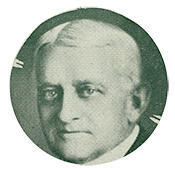
Here you will find contact information for Representative Schuyler Merritt, including email address, phone number, and mailing address.
| Name | Schuyler Merritt |
| Position | Representative |
| State | Connecticut |
| District | 4 |
| Party | Republican |
| Status | Former Representative |
| Term Start | April 2, 1917 |
| Term End | January 3, 1937 |
| Terms Served | 9 |
| Born | December 16, 1853 |
| Gender | Male |
| Bioguide ID | M000663 |
About Representative Schuyler Merritt
Schuyler Merritt (December 16, 1853 – April 1, 1953) was a Republican member of the United States House of Representatives from Connecticut’s 4th congressional district, serving nine terms between 1917 and 1937. A prominent industrialist and banker as well as a legislator, he represented his Fairfield County constituents during a transformative period in American history and later became the namesake of Connecticut’s Merritt Parkway.
Merritt was born in New York City on December 16, 1853, the son of Matthew Franklin Merritt (1815–1896), a Connecticut state senator and member of the Connecticut General Assembly, and Mariah Shaw Merritt. In 1855 he moved with his parents to Stamford, Connecticut, where his family had deep regional roots. Through his maternal grandmother, Clarissa Hoyt, he was descended from the original Hoyt family that had purchased Noroton Hill more than three centuries earlier. Raised in this politically and civically engaged environment, Merritt attended private schools in Stamford in preparation for college.
Merritt pursued higher education at Yale College, from which he graduated in 1873, and then studied law at Columbia Law School, receiving his degree in 1876. Although trained as a lawyer, he did not enter legal practice. Instead, in 1877 he joined the Yale & Towne Manufacturing Company, a major producer of locks and hardware, as an office assistant. His abilities in business and administration led to rapid advancement: he became secretary of the company in 1878, general manager in 1890, and treasurer in 1898. Concurrently, from 1877 until 1917, he was active in banking, helping to shape the financial life of Stamford and the surrounding region.
Merritt’s public career in Connecticut began in the early twentieth century. In 1904 he served as a member of the Connecticut constitutional convention that undertook a major revision of the state constitution. From 1910 until 1916 he was a member of the Connecticut State Board of Education, reflecting his interest in public schooling and civic improvement. He was also a delegate to the 1916 Republican National Convention, positioning him within the national party at the moment the United States was approaching entry into World War I. These roles established his reputation as a capable Republican leader and prepared the way for his election to Congress.
Merritt entered the United States House of Representatives as a Republican when he was elected to the Sixty-fifth Congress to fill the vacancy caused by the death of Representative Ebenezer J. Hill. He took his seat on November 6, 1917, and was reelected to the Sixty-sixth and the five succeeding Congresses, serving continuously from November 6, 1917, to March 3, 1931. After an unsuccessful campaign for reelection in 1930, he returned to the House when he was elected to the Seventy-third and Seventy-fourth Congresses, serving from March 4, 1933, until January 3, 1937. During his time in Congress, he served on the Interstate Commerce Committee and was known for his opposition to the Eighteenth Amendment, which established national prohibition of intoxicating liquors, and for his opposition to aspects of the New Deal program, particularly federal stock market controls. His long tenure in the House coincided with World War I, the Roaring Twenties, the onset of the Great Depression, and the early New Deal era, and he participated actively in the legislative process during these critical decades. During his service he sat alongside Representative Matthew Merritt of New York, whose identical surname occasionally led newspapers to misattribute their votes on certain bills. In 1936 he again sought reelection to the Seventy-fifth Congress but was defeated by Democrat Alfred N. Phillips, ending his congressional career.
While serving in Congress and afterward, Merritt maintained close ties to the business community. He returned to Yale & Towne Manufacturing Company in a leadership capacity and served as chairman of its board from 1924 until 1932, later remaining on the board as a director until his retirement in 1947. In banking, he was an officer of the First Stamford National Bank beginning in 1902 and served as chairman of its board, helping to guide the institution through periods of economic expansion and crisis. He was also a vice president of the Stamford Gas and Electric Company, reflecting his broader engagement with the development of local industry and public utilities. His influence in both business and politics made him a central figure in Stamford’s civic life for many decades.
Merritt’s personal life was closely intertwined with other prominent Connecticut families. On October 21, 1879, he married Frances Hannah Hoyt (1850–1943), the daughter of Stamford multimillionaire Joseph Blachley Hoyt (1812–1889) and Catherine Krom (1816–1862), and the niece of Oliver Hoyt (1823–1887), a Connecticut state senator. They were the parents of two daughters: Louise Hoyt Merritt (1880–1956), who married William B. Dalton and was a friend of poet Adelaide Crapsey, and Katharine Krom Merritt (1886–1986), a distinguished pediatrician and co-founder of Family and Children’s Service. Merritt also served as a mentor to his niece, Joyce Porter Arneill, who founded the National Federation of Republican Women in 1938 and later became a delegate to the Republican National Convention for the 1940 presidential election; Arneill was widely credited with encouraging many American women to become active in politics during the 1930s and 1940s.
In recognition of his long life and service, Merritt received several honors in his later years. Yale University conferred upon him the honorary degree of Doctor of Laws in 1935, acknowledging both his accomplishments in public life and his leadership in industry. By 1951 and 1952 he was recognized as the oldest living Yale graduate and the sole surviving member of the Yale College class of 1873. One of the most visible tributes to his public service came in the naming of the Merritt Parkway, a scenic limited-access highway in southern Connecticut. Completed on September 2, 1940, the parkway was named in his honor, and his daughter Louise Hoyt Merritt Dalton cut the ribbon at its opening ceremony.
Schuyler Merritt died in Stamford, Connecticut, on April 1, 1953, at the age of 99. He was buried in Woodland Cemetery. His nearly century-long life spanned from the antebellum era through World War II and into the early Cold War, and his legacy endures in Connecticut’s political history, its industrial development, and in the Merritt Parkway that bears his name.