Representative Scott Ferris
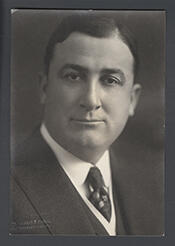
Here you will find contact information for Representative Scott Ferris, including email address, phone number, and mailing address.
| Name | Scott Ferris |
| Position | Representative |
| State | Oklahoma |
| District | 6 |
| Party | Democratic |
| Status | Former Representative |
| Term Start | December 2, 1907 |
| Term End | March 3, 1921 |
| Terms Served | 7 |
| Born | November 3, 1877 |
| Gender | Male |
| Bioguide ID | F000091 |
About Representative Scott Ferris
Scott Ferris (November 3, 1877 – June 8, 1945) was a Democratic U.S. Representative from Oklahoma who served seven consecutive terms in the United States Congress from 1907 to 1921. He was born in Neosho, Newton County, Missouri, to Scott and Annie M. Ferris. Raised in southwest Missouri, he attended the local public schools and completed his secondary education at Newton County High School, from which he graduated in 1897. Seeking a legal career, he enrolled in the Kansas City School of Law and graduated in 1901.
In 1901 Ferris was admitted to the bar and that same year moved to Lawton, in what was then Oklahoma Territory, where he commenced the practice of law. As Lawton and the surrounding region developed rapidly in the early twentieth century, Ferris established himself as a young attorney and community leader. On June 23, 1906, he married Grace Hubbert, the daughter of prominent attorney George Washington Hubbert, a union that further connected him to the legal and political circles of the region.
Ferris entered public life as a member of the territorial Oklahoma House of Representatives, serving in 1904 and 1905. His legislative experience in the territorial government positioned him to play a role in the transition from territory to statehood. When Oklahoma was admitted to the Union as a state on November 16, 1907, Ferris was elected as a Democrat to the 60th Congress. He was reelected to the 61st and to the six succeeding Congresses, serving continuously from November 16, 1907, until March 3, 1921. During this period, which encompassed the Progressive Era and World War I, he represented the interests of his Oklahoma constituents and contributed to the national legislative process.
During his tenure in the U.S. House of Representatives, Ferris rose to positions of influence. He served as chairman of the Committee on Public Lands in the 62nd through the 65th Congresses, a role of particular importance for a western state with significant federal land and natural resource issues. As a member of the House of Representatives, he participated actively in the democratic process at a time of major social, economic, and political change in the United States, including debates over conservation, development of public lands, and wartime legislation. In addition to his congressional duties, Ferris was a delegate to the Democratic National Conventions in 1912 and 1916, reflecting his prominence within the party at both the state and national levels.
Ferris chose not to seek renomination to the House in 1920 and instead became a candidate for the United States Senate. In the Democratic primary he defeated the incumbent senator, Thomas P. Gore, but in the general election he was unsuccessful, losing to Republican John W. Harreld and receiving 45 percent of the vote. With the conclusion of his congressional service in March 1921, Ferris turned to private business pursuits. He moved to New York City and engaged in the oil business from 1921 to 1924, participating in an industry that was increasingly important to both Oklahoma and the national economy.
Returning to Oklahoma in 1925, Ferris resumed the practice of law and continued his involvement in the oil business as well as in agricultural pursuits. He remained active in Democratic Party affairs, serving as Democratic National Committeeman from Oklahoma from 1924 to 1940, a position that kept him engaged in national politics long after his congressional career had ended. His wife, Grace Hubbert Ferris, died unexpectedly of a cerebral hemorrhage on March 9, 1944, after nearly four decades of marriage.
Scott Ferris died in Oklahoma City, Oklahoma County, Oklahoma, on June 8, 1945, at the age of 67. He was interred at Rose Hill Burial Park in Oklahoma City. His long career in law, politics, and business, and his seven terms in the U.S. House of Representatives during a formative period in Oklahoma and American history, left a lasting imprint on the state’s political development and its relationship to the federal government.