Representative Sebastian Harrison White
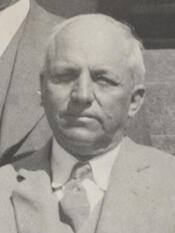
Here you will find contact information for Representative Sebastian Harrison White, including email address, phone number, and mailing address.
| Name | Sebastian Harrison White |
| Position | Representative |
| State | Colorado |
| District | 1 |
| Party | Democratic |
| Status | Former Representative |
| Term Start | December 5, 1927 |
| Term End | March 3, 1929 |
| Terms Served | 1 |
| Born | December 24, 1864 |
| Gender | Male |
| Bioguide ID | W000393 |
About Representative Sebastian Harrison White
Sebastian Harrison White (December 24, 1864 – December 21, 1945) was an American lawyer, jurist, and Democratic politician who served part of one term as a U.S. Representative from Colorado from 1927 to 1929 and also as a justice, and later chief justice, of the Colorado Supreme Court. His career spanned education, local and state public office, and national legislative service during a significant period in American history.
White was born on a farm near Maries County, Missouri, to Jonah William White, who was from Tennessee, and Cloa Ann (Reeder) White, who was from Virginia. He attended rural schools in Dallas County, Missouri, as well as private schools. At the age of ten he was, in his own description, “thrown upon his own resources” and set out on his own. By the age of sixteen he was working as a laborer and living in the home of a physician and his wife in Lincoln Township in Dallas County. He later pursued further education at the Marionville Collegiate Institute in Missouri—an institution that later became associated with Ozark Wesleyan College—located at Carthage, Missouri.
Before entering the legal profession, White worked in education and quickly assumed leadership roles. He taught school for several years in Missouri, and at nineteen years of age he was elected president of the Hickory County Teachers Institute in 1886. The following year, in 1887, at the age of twenty-three, he was elected superintendent of schools of Hickory County, Missouri. While engaged in teaching, he studied law, preparing for admission to the bar.
In 1889 White was admitted to the bar in both Colorado and Missouri and commenced the practice of law in Pueblo, Colorado. He became a partner in the firm of White & Dunbaugh with Charles P. Dunbaugh, a prominent Pueblo hotelier. White quickly became active in Democratic Party politics. He served as a delegate to the Democratic state convention in 1892 and was chairman of the Pueblo County Democratic central committee that same year. During this period he authored the minority report that precipitated a major intra-party fight over fusion with the Populists, leading to a split in the convention. In the ensuing division, he was elected secretary of the faction that became known as “The White Wings,” which opposed fusion and nominated a straight Democratic ticket. In municipal and county government, he served as city attorney of Pueblo from 1897 to 1899, as public trustee of Pueblo County from 1900 to 1903 and again from 1905 to 1909, and as district attorney of Colorado’s tenth judicial district from 1904 to 1908.
White’s judicial career began with his election in 1908 as a justice of the Colorado Supreme Court for a ten-year term running from 1909 to 1919. During his tenure on the state’s highest court he rose to the position of chief justice, serving in that capacity from 1917 until 1918, when he retired from the bench. After leaving the court, he moved to Denver and, beginning in 1919, engaged in the private practice of law there. His office was located in the Equitable Building in Denver. Beyond his legal work, he was active in professional and civic organizations, holding membership in the American Bar Association, the Benevolent and Protective Order of Elks, the Knights of Pythias, and the Denver Athletic Club. He also lectured across the United States as a member of the League to Enforce Peace, reflecting his engagement with national and international issues in the years surrounding and following World War I.
White entered national politics when he was elected as a Democrat to the Seventieth Congress to fill the vacancy caused by the death of Representative William N. Vaile. He served in the U.S. House of Representatives from November 15, 1927, to March 3, 1929, representing Colorado for one term. During this period he participated in the legislative process in Washington, D.C., and represented the interests of his Colorado constituents at a time of significant economic and political change in the United States. A member of the Democratic Party, he contributed to the deliberations of the House during the late 1920s. He was an unsuccessful candidate for reelection in 1928 to the Seventy-first Congress and thus concluded his brief tenure in federal office at the end of his term.
After leaving Congress, White resumed the practice of law in Denver, continuing the legal career that had framed much of his public life. He remained a well-known figure in Colorado’s legal and political circles and maintained his professional and fraternal affiliations. His long career reflected a steady progression from rural schoolteacher and county school superintendent in Missouri to lawyer, local official, state supreme court justice and chief justice, and finally member of the United States House of Representatives from Colorado.
In his personal life, White married Eva Dunbaugh of Pueblo, Colorado, in December 1893. She was the daughter of his law partner, Charles P. Dunbaugh, a hotelier in Pueblo. The couple had two children, Adrian Dunbaugh White and Gertrude Gloria White. In his later years, White’s health declined, and in 1942 he was admitted to a hospital in Colorado Springs, Colorado, where he remained until his death on December 21, 1945. His remains were cremated at Fairmount Cemetery in Denver, Colorado, and his ashes were scattered over the cemetery grounds.