Representative Seth Wallace Cobb
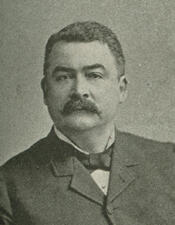
Here you will find contact information for Representative Seth Wallace Cobb, including email address, phone number, and mailing address.
| Name | Seth Wallace Cobb |
| Position | Representative |
| State | Missouri |
| District | 12 |
| Party | Democratic |
| Status | Former Representative |
| Term Start | December 7, 1891 |
| Term End | March 3, 1897 |
| Terms Served | 3 |
| Born | December 5, 1838 |
| Gender | Male |
| Bioguide ID | C000550 |
About Representative Seth Wallace Cobb
Seth Wallace Cobb (December 5, 1838 – May 22, 1909) was a U.S. Representative from Missouri and a prominent businessman and civic leader in St. Louis. Born near Petersburg, Virginia, he was raised in a rural setting and attended the common schools of his native area. His early life in Virginia, shaped by the antebellum South, preceded his military and commercial careers that would later link him closely with Missouri’s economic and political development.
At the outbreak of the American Civil War in 1861, Cobb joined a volunteer company from his native county and served throughout the conflict in the Army of Northern Virginia. His wartime service spanned the duration of the war, placing him in one of the Confederacy’s principal field armies during a period of intense and sustained military engagement. After the war’s end, he returned to civilian life and sought new opportunities in the rapidly expanding economy of the postwar Midwest.
In 1867, Cobb moved to St. Louis, Missouri, which was emerging as a major commercial hub along the Mississippi River. He first found employment as a clerk in a grain commission house, gaining experience in the grain trade that would form the basis of his later success. By 1870, he had established his own grain business, building a reputation as a capable and influential merchant. His leadership in the city’s commercial community was recognized when he was elected president of the St. Louis Merchants’ Exchange in 1886, an important institution in regional trade. He also served as president of the corporation that built the Merchants’ Bridge across the Mississippi River, a significant infrastructure project that enhanced transportation and commerce in St. Louis.
Cobb’s growing prominence in business and civic affairs led naturally into political life. A member of the Democratic Party, he became active in local and state politics in Missouri during a period of rapid industrialization and shifting national economic policy. Drawing on his business background and regional standing, he sought federal office as a representative of Missouri’s interests in Washington.
Cobb was elected as a Democrat to the Fifty-second, Fifty-third, and Fifty-fourth Congresses, serving three consecutive terms in the U.S. House of Representatives from March 4, 1891, to March 3, 1897. As a Representative from Missouri, he participated in the legislative process during a significant period in American history marked by debates over tariffs, monetary policy, and regulation of interstate commerce. During his six years in Congress, he represented the interests of his constituents and took part in the broader democratic process that shaped national policy in the late nineteenth century. He was not a candidate for renomination in 1896 and concluded his congressional service at the end of his third term.
After leaving Congress, Cobb returned to St. Louis and resumed his work in the grain commission business, reengaging with the commercial sector in which he had first made his name. He remained an influential civic figure, and in 1904 he served as a vice president of the Louisiana Purchase Exposition held in St. Louis, a world’s fair commemorating the centennial of the Louisiana Purchase and showcasing the city’s economic and cultural importance. His role in the exposition reflected his longstanding commitment to the growth and public profile of St. Louis.
In his personal life, Cobb married Zoe Cynthian Desloge, a noted St. Louis socialite and the daughter of prominent businessman Firmin René Desloge. The couple had one child, a daughter named Josephine. Through this marriage, Cobb was connected to one of the leading families in the region’s industrial and social circles, further anchoring his position in the civic and economic life of St. Louis.
Seth Wallace Cobb died in St. Louis, Missouri, on May 22, 1909. His life encompassed service in the Civil War, success in commerce, leadership in major civic and infrastructure projects, and three terms in the United States Congress representing Missouri during a transformative era in American political and economic history.