Senator Shelby Moore Cullom
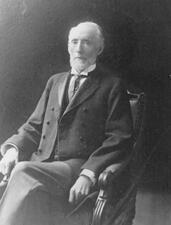
Here you will find contact information for Senator Shelby Moore Cullom, including email address, phone number, and mailing address.
| Name | Shelby Moore Cullom |
| Position | Senator |
| State | Illinois |
| Party | Republican |
| Status | Former Representative |
| Term Start | December 4, 1865 |
| Term End | March 3, 1913 |
| Terms Served | 8 |
| Born | November 22, 1829 |
| Gender | Male |
| Bioguide ID | C000973 |
About Senator Shelby Moore Cullom
Shelby Moore Cullom (November 22, 1829 – January 28, 1914) was an American politician who served in the United States House of Representatives, the United States Senate, and as the 17th Governor of Illinois. A member of the Republican Party and earlier a Whig, he became Illinois’s longest-serving United States senator and held public office for more than half a century, participating in the legislative process during eight terms in the Senate from 1865 to 1913 and guiding significant state and federal reforms.
Cullom was born on November 22, 1829, in Monticello, Wayne County, Kentucky, the son of Richard Northcraft Cullom and Elizabeth G. “Betsey” (Coffey) Cullom. In 1830, when he was about a year old, his family moved to Tazewell County, Illinois, where he grew up assisting his father with farm labor on the Illinois frontier. His father’s service as a Whig member of the Illinois state legislature exposed the younger Cullom early to political life and helped foster his interest in public affairs. Cullom attended local schools and later enrolled at Mount Morris Seminary in Mount Morris, Illinois, where he studied for two years. After leaving the seminary, he worked as a teacher before deciding to pursue a career in law.
In 1853, Cullom moved to Springfield, Illinois, then the state capital and a growing legal and political center. He read law in the office of the prominent firm Stuart & Edwards and was admitted to the bar in 1855. That same year he began practicing law in Springfield in partnership with Charles S. Zane and was elected city attorney, marking his formal entry into public office. In 1855 he married Hannah Fisher; the couple had three children, including daughters Ella Cullom Ridgely (1856–1902) and Catherine Cullom Hardie (1859–1894), as well as an infant who died at birth in 1861 and was not named. Hannah Fisher Cullom died in 1861, and in 1863 he married her sister, Julia Fisher. Shelby and Julia Cullom remained married until her death in 1909.
Cullom’s legislative career began in the Illinois House of Representatives, to which he was elected as a Whig in 1856, serving one term. As the Whig Party disintegrated in the 1850s, he aligned himself with both the emerging Republican Party and the American (Know-Nothing) Party; he was a candidate for presidential elector on the American Party ticket in the 1856 election. By 1860 he had firmly identified as a Republican and was re-elected to the Illinois House, where he served as Speaker. His growing prominence in state politics led to his election in 1864 to the United States House of Representatives as a Republican. He served in the Thirty-ninth, Fortieth, and Forty-first Congresses from March 4, 1865, to March 3, 1871, representing Illinois during the critical years of the Civil War’s aftermath and Reconstruction. In 1870 he narrowly lost renomination for a fourth term in the House, falling one vote short at a Republican party convention that extended over five days and 186 ballots.
After leaving the U.S. House, Cullom returned to state politics. He was again elected to the Illinois House of Representatives, serving from 1873 to 1874 and once more holding the position of Speaker. In 1876 he was elected the 17th Governor of Illinois, defeating Democrat Lewis Steward by 6,834 votes. He was re-elected in 1880, becoming the first Illinois governor to win re-election following a full four-year term. As governor, Cullom presided over a period of rapid industrialization and social change in the state. His administration commissioned the Southern Illinois Penitentiary, established the Illinois Appellate Court, and created the Illinois State Board of Health, reflecting his interest in institutional reform and public welfare. He also confronted the Great Railroad Strike of 1877, during which he played a role in quelling labor unrest and maintaining order in Illinois at a time of nationwide industrial conflict. Cullom resigned the governorship in 1883 to take his seat in the United States Senate; Lieutenant Governor John Marshall Hamilton succeeded him as governor.
Cullom was elected to the United States Senate in 1882 and took office on March 4, 1883. He was subsequently re-elected in 1888, 1894, 1900, and 1906, serving continuously until March 3, 1913. His three decades in the Senate coincided with the Gilded Age and the Progressive Era, and he became a key figure in federal regulatory policy and territorial administration. He was particularly noted for overseeing and championing the passage of the Interstate Commerce Act of 1887, landmark legislation that created the Interstate Commerce Commission to regulate railroad rates and practices. Cullom believed that only the federal government possessed sufficient authority to compel railroads to treat all customers—large corporations and small shippers alike—on a fair and equal basis. He argued that powerful corporations such as Standard Oil had corrupted railroad officials and secured preferential rebates, and that these companies were collectively more powerful than any individual state government, necessitating federal intervention.
In addition to his work on interstate commerce, Cullom played an important role in the governance of U.S. territories and in the federal response to polygamy in the Utah Territory. Along with Representative Isaac S. Struble, he sponsored the Cullom–Struble Bill, which proposed stringent sanctions against polygamy, including the continued exclusion of Utah from statehood. The bill was on the verge of passing Congress in 1890 when it was effectively preempted by the issuance of the 1890 Manifesto by the Church of Jesus Christ of Latter-day Saints, in which the church formally disavowed new plural marriages. Cullom also served on the commission created under the Newlands Resolution to establish a civil government in the Territory of Hawaii after its annexation by the United States; President William McKinley appointed him to this body in July 1898, underscoring his influence in shaping U.S. policy toward newly acquired territories.
In his later years, Cullom remained a respected elder statesman of the Republican Party and a prominent figure in Illinois public life. He was a close personal friend and associate of Illinois industrialists Jacob Bunn and John Whitfield Bunn, who were instrumental in building extensive business enterprises in the state by 1900. Cullom recorded his recollections of a half-century in public office in his 1911 memoir, “Fifty Years of Public Service: Personal Recollections of Shelby M. Cullom,” which provides insight into national and Illinois politics from the antebellum period through the early twentieth century. He died on January 28, 1914, in Washington, D.C., less than a year after leaving the Senate. Shelby Moore Cullom was buried in Oak Ridge Cemetery in Springfield, Illinois, a resting place he shares with many of the state’s leading figures. The village of Cullom, Illinois, was named in his honor, reflecting the enduring recognition of his long and influential career in state and national government.