Representative Shepard J. Crumpacker
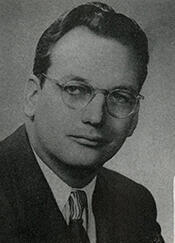
Here you will find contact information for Representative Shepard J. Crumpacker, including email address, phone number, and mailing address.
| Name | Shepard J. Crumpacker |
| Position | Representative |
| State | Indiana |
| District | 3 |
| Party | Republican |
| Status | Former Representative |
| Term Start | January 3, 1951 |
| Term End | January 3, 1957 |
| Terms Served | 3 |
| Born | February 13, 1917 |
| Gender | Male |
| Bioguide ID | C000960 |
About Representative Shepard J. Crumpacker
Shepard J. Crumpacker Jr. (February 13, 1917 – October 14, 1986) was an American lawyer, jurist, World War II veteran, and Republican politician who served three terms as a United States Representative from Indiana from 1951 to 1957. A member of a prominent political family, he was a cousin of Edgar D. Crumpacker and Maurice E. Crumpacker, both of whom also served in the U.S. House of Representatives. His career in public life spanned military service, elective office, and the judiciary, and unfolded during a significant period in mid‑twentieth‑century American history.
Crumpacker was born on February 13, 1917, in South Bend, St. Joseph County, Indiana. He grew up in northern Indiana in an environment that exposed him early to public affairs and the law, influenced in part by the example of his politically active relatives. Details of his early schooling are not extensively documented in public sources, but his subsequent academic and professional achievements indicate a strong educational foundation and an early interest in legal and governmental matters.
After completing his primary and secondary education in Indiana, Crumpacker pursued higher education and legal training, preparing for a career at the bar. He studied law and was admitted to the bar, beginning the practice of law in Indiana. His legal education and early professional work provided the grounding for his later roles as both legislator and jurist. By the time the United States entered World War II, he was a young attorney positioned to combine legal expertise with national service.
During World War II, Crumpacker served in the United States military, adding distinguished wartime service to his professional credentials. As a World War II veteran, he was part of the generation of Americans whose military experience shaped their outlook on national security, foreign policy, and the responsibilities of citizenship. This background informed his later work in Congress, where many of his contemporaries were also veterans of the conflict and shared a common frame of reference on postwar issues.
Following the war, Crumpacker resumed his legal career in Indiana and became increasingly active in Republican Party politics. Building on his family’s political legacy and his own professional reputation, he sought elective office at the federal level. In the 1950 election, he was elected as a Republican to the Eighty‑second Congress from Indiana, taking his seat in the U.S. House of Representatives on January 3, 1951. He was subsequently reelected to the Eighty‑third and Eighty‑fourth Congresses, serving continuously until January 3, 1957.
Crumpacker’s congressional service coincided with a pivotal era in American history, encompassing the early Cold War, the Korean War period, and the beginning of the modern civil rights movement. As a member of the House of Representatives, he participated in the democratic process and contributed to the legislative work of Congress, representing the interests of his Indiana constituents while aligning with the principles of the Republican Party. Over his three terms in office, he engaged in debates and votes on domestic and foreign policy issues characteristic of the early 1950s, helping to shape federal policy during a time of rapid change at home and abroad.
After leaving Congress in 1957, Crumpacker returned to Indiana and resumed the practice of law, continuing his involvement in public affairs. In keeping with his legal background, he later served in a judicial capacity, further extending his public service as a jurist. His combined experience as attorney, legislator, and judge reflected a career devoted to the law and to the institutions of American government at both the federal and state levels.
Shepard J. Crumpacker Jr. spent his later years in Indiana, remaining connected to the legal and civic life of his community. He died on October 14, 1986, leaving a record of service that encompassed military duty in World War II, three terms in the U.S. House of Representatives from 1951 to 1957, and subsequent judicial responsibilities. His life and career continued the Crumpacker family’s longstanding involvement in national politics and public service.