Senator Sheridan Downey
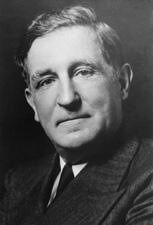
Here you will find contact information for Senator Sheridan Downey, including email address, phone number, and mailing address.
| Name | Sheridan Downey |
| Position | Senator |
| State | California |
| Party | Democratic |
| Status | Former Representative |
| Term Start | January 3, 1939 |
| Term End | January 3, 1951 |
| Terms Served | 2 |
| Born | March 11, 1884 |
| Gender | Male |
| Bioguide ID | D000469 |
About Senator Sheridan Downey
Sheridan Downey (March 11, 1884 – October 25, 1961) was an American lawyer and Democratic politician from Wyoming and California who served as a United States Senator from California from January 3, 1939, until his resignation on November 30, 1950. Over two terms in office, he participated actively in the legislative process during a significant period in American history, spanning the New Deal, World War II, and the early Cold War. His career traced a notable ideological journey from Progressive Republican and Bull Moose reformer to New Deal Democrat and, later, to a more conservative Democrat closely aligned with major oil and agribusiness interests.
Downey was born in Laramie, the seat of Albany County in southeastern Wyoming, the son of Evangeline Victoria (Owen) Downey and Stephen Wheeler Downey, a prominent Wyoming lawyer and politician. He was educated in the public schools of Laramie and attended the University of Wyoming before enrolling at the University of Michigan Law School. He was admitted to the bar in 1907, and in 1914 the law school formally awarded him his LL.B. degree as a member of the class of 1907. Returning to his hometown, he practiced law in Laramie and quickly entered public life. In 1908 he was elected prosecuting attorney of Albany County as a Republican. In 1910 he married Helen Symons; the couple had five children. In 1912 he led Wyoming’s “Bull Moose” revolt in support of former President Theodore Roosevelt, splitting the state’s Republican vote and contributing to a Democratic victory statewide, an early indication of his alignment with progressive causes.
In 1913 Downey moved to Sacramento, California, where he continued to practice law, joining his brother, Stephen Wheeler Downey Jr., in legal practice. During his first years in California he devoted most of his time to his law practice and to various real estate interests, gradually building a base in state political circles. He maintained his progressive orientation, supporting Senator Robert La Follette Sr.’s Progressive Party presidential campaign in 1924. By 1932 he had formally become a Democrat and campaigned for the election of Franklin D. Roosevelt, aligning himself with the emerging New Deal coalition. That same year he sought election to Congress from California’s 3rd congressional district, but lost the Democratic primary to businessman Frank H. Buck. In October 1933 he announced his candidacy for governor of California, but after a series of meetings with writer and reformer Upton Sinclair, who also sought the governorship, Downey agreed instead to run for lieutenant governor on a joint ticket with Sinclair.
Downey’s 1934 campaign for lieutenant governor as Upton Sinclair’s running mate was conducted under the banner of the “End Poverty in California” (EPIC) movement, a mass-based reform effort that called for an economic transformation to lift California out of the Great Depression. The EPIC platform advocated state-supported job creation, a large program of public works, an extensive system of state-sponsored pensions, and radical changes in the state tax structure. Opponents derisively labeled the ticket “Uppie and Downey.” More than 2,000 grassroots EPIC clubs sprang up across the state, and the movement even produced a phonograph record, “Campaign Chorus for Downey and Sinclair,” featuring Downey’s speaking voice, announcer Jerry Wilford, and a singing group known as the “Epic Trio.” Although the EPIC ticket was defeated by Republican Governor Frank Merriam in November 1934, Downey—who attracted 123,000 more votes than Sinclair and was subjected to less vitriol—emerged with a strong statewide reputation as a champion of progressive politics and social reform.
After the 1934 election, Downey became closely associated with Dr. Francis Townsend, the leading advocate of the Townsend Plan, a popular proposal for government-funded old-age pensions that commanded a large following in California, particularly among retirees. Downey’s support for the plan led him to write Why I Believe in the Townsend Plan (1936), one of several books he authored on economic and social policy. By 1936, however, he and Townsend parted ways politically when Townsend backed Union Party presidential nominee William Lemke, while Downey remained a loyal Democrat committed to President Roosevelt. During this period Downey continued to seek elective office; in 1936 he again ran for Congress against incumbent Democrat Frank H. Buck but was defeated in the primary by a margin of 60 percent to 40 percent. His writings of the 1930s, including Onward America (1933), Courage America (1933), and Pensions or Penury? (1939), reflected his advocacy of New Deal–style reforms, old-age security, and public investment as paths to economic recovery.
In 1938 Downey was elected to the United States Senate from California, beginning his congressional service the following year. Running as a Democrat and a supporter of the proposed “Ham and Eggs” government pension program, he challenged incumbent Senator William Gibbs McAdoo in the Democratic primary and defeated him by more than 135,000 votes, despite strong backing for McAdoo from the White House and a personal campaign appearance by President Roosevelt. Downey then won the general election over Republican Philip Bancroft by a margin of 54 percent to 46 percent. On October 24, 1938, he appeared on the cover of Time magazine, symbolizing his emergence as a major figure in California and national politics. He formally served in the Senate from January 3, 1939, to November 30, 1950, representing California’s interests during the late New Deal era, World War II, and the early postwar period.
During his early years in the Senate, Downey was widely regarded as a staunch liberal and one of California’s most significant progressive politicians. He introduced a series of pension bills and, in 1941, was named chairman of a special Senate committee on old-age insurance, reflecting his long-standing commitment to retirement security. He took an early stand in favor of a military draft as global tensions mounted, but he opposed Roosevelt administration plans to requisition private industries in time of war. During World War II he called for the creation of a committee to investigate the status of Black Americans and other minorities in the armed forces, and he advocated a robust postwar United Nations, international control of atomic energy, increased veterans’ benefits, and federal pay raises. He frequently represented the interests of California’s powerful motion picture industry in legislative matters. At the same time, his career illustrated a broader political transformation: like many former Republican progressives who had supported Theodore Roosevelt’s Bull Moose movement in 1912, he became a Democratic supporter of Franklin Roosevelt and the New Deal in the 1930s.
Downey was narrowly reelected to the Senate in 1944, defeating Republican Lieutenant Governor Frederick F. Houser by a vote of 52 percent to 48 percent. After this victory, his political orientation shifted markedly. Though once identified with liberal causes, he increasingly became a conservative Democrat and won the support of California’s major oil interests and large agribusiness concerns. He supported efforts by oil companies and agricultural interests to secure state, rather than federal, control over California’s oil resources, and he worked to exempt the California Central Valley from the Reclamation Act of 1902 in order to benefit large corporate farms. He championed the California Central Valley Project, a vast New Deal–era system of dams and irrigation works, and in his 1947 book They Would Rule the Valley he argued that farmers in the Central Valley, who controlled water rights under state law, would come into conflict with the federal Bureau of Reclamation. While acknowledging that these farmers were technically in violation of the Reclamation Act’s acreage limitations, he defended their position as necessary in the context of California agriculture and criticized what he portrayed as undue federal economic restrictions. His additional works, such as Highways to Prosperity (1940), further underscored his interest in infrastructure and economic development.
Downey’s conservative turn after his 1944 reelection made him increasingly vulnerable within the Democratic Party. His growing alignment with big business, large agribusiness, and the oil industry alienated many former supporters and overshadowed his earlier reputation as a liberal and progressive force in California politics. In 1950 he faced a primary challenge from Representative Helen Gahagan Douglas, a prominent New Deal liberal. Citing ill health, Downey withdrew from the race and endorsed Manchester Boddy, the conservative publisher of the Los Angeles Daily News, in the Democratic primary. He went so far as to indicate that if Douglas won the primary, he would support Republican Representative Richard M. Nixon in the general election. Douglas did win the Democratic nomination, and Nixon ultimately prevailed in the general election in a bitterly contested campaign that his critics later characterized as a smear campaign, from which Nixon emerged with the enduring nickname “Tricky Dick.” Downey resigned his Senate seat on November 30, 1950, enabling the governor of California to appoint Nixon to fill the vacancy and thereby give him a seniority advantage over other senators elected that year.
After leaving the Senate, Downey remained in public life as a lawyer and lobbyist. He practiced law in Washington, D.C., and represented the city of Long Beach, California, as well as major petroleum companies that leased its extensive waterfront, further cementing his association with the oil industry. He later returned to California, where he died in San Francisco on October 25, 1961. Upon his death he donated his body to the University of California Medical Center in San Francisco for medical research and education. His papers, documenting his long and complex political career, are preserved at the Bancroft Library at the University of California, Berkeley. During his years in the Senate he was often described as slight, grayish, and strikingly handsome, and his life story has been cited as emblematic of the broader political evolution of many early twentieth-century progressives who moved from Republican reform movements into the Democratic New Deal coalition, and in some cases, like Downey, later gravitated toward more conservative positions in the postwar era.