Representative Sherman Everett Burroughs
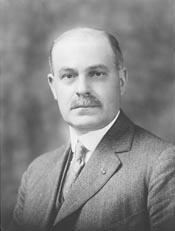
Here you will find contact information for Representative Sherman Everett Burroughs, including email address, phone number, and mailing address.
| Name | Sherman Everett Burroughs |
| Position | Representative |
| State | New Hampshire |
| District | 1 |
| Party | Republican |
| Status | Former Representative |
| Term Start | April 2, 1917 |
| Term End | March 3, 1923 |
| Terms Served | 3 |
| Born | February 6, 1870 |
| Gender | Male |
| Bioguide ID | B001138 |
About Representative Sherman Everett Burroughs
Sherman Everett Burroughs (February 6, 1870 – January 27, 1923) was an American politician and lawyer who served as a Republican Representative from New Hampshire in the United States Congress from 1917 to 1923. Over the course of three terms in the House of Representatives, he contributed to the legislative process during a significant period in American history, including the First World War and its aftermath, and represented the interests of his New Hampshire constituents in the federal government.
Burroughs was born on February 6, 1870, in Dunbarton, Merrimack County, New Hampshire, the son of John H. Burroughs and Helen M. Baker. He attended the public schools of his native state and pursued higher education at Dartmouth College in Hanover, New Hampshire. He was graduated from Dartmouth in 1894, laying the academic foundation for a career in law and public service that would span nearly three decades.
Immediately after college, Burroughs entered national political life as private secretary to Congressman Henry M. Baker, serving in that capacity from 1894 to 1897 in Washington, D.C. While working in the capital, he studied law at the law school of Columbian College (now George Washington University), from which he was graduated in 1896. That same year he was admitted to the bar of the District of Columbia, and in 1897 he was admitted to the New Hampshire bar. Burroughs then returned to his home state and commenced the practice of law in Manchester, New Hampshire, in 1897, establishing himself as a practicing attorney and community figure.
In addition to his legal practice, Burroughs became active in state and local government. He represented Bow, New Hampshire, in the New Hampshire House of Representatives, serving as a member of that body in 1901 and 1902. He also played a role in state oversight and regulatory functions, serving as a member of the New Hampshire State Board of Charities and Corrections from 1901 to 1907, where he was involved in the supervision of charitable and correctional institutions. In 1909 and 1910 he served on the State Board of Equalization, participating in the administration of tax and assessment matters for the state.
Burroughs’s congressional service began with his election as a Republican to the Sixty-fifth Congress in a special election held to fill the vacancy caused by the death of United States Representative Cyrus A. Sulloway. He took his seat in the U.S. House of Representatives on May 29, 1917. He was subsequently reelected to the Sixty-sixth and Sixty-seventh Congresses, serving continuously from May 29, 1917, until his death on January 27, 1923. During these three terms in office, he participated in the democratic process at the national level, contributing to legislation during World War I and the early postwar years. Although he did not run for reelection to the Sixty-eighth Congress in 1922, he remained in office through the end of his term and died while still serving as a member of Congress, placing him among the members of the United States Congress who died in office between 1900 and 1949.
In his personal life, Burroughs married Helen Sophie Phillips in 1898. The couple had four sons: Sherman Everett Burroughs Jr., John Hamilton Burroughs, Robert Phillips Burroughs, and Henry Baker Burroughs. His family life in New Hampshire paralleled his rising prominence in law and politics, and his connections to both Dunbarton and Manchester remained central to his identity and public service.
Sherman Everett Burroughs died in Washington, D.C., on January 27, 1923, ten days before his fifty-third birthday. His death was reportedly due to congestion of the lungs following an illness with the grippe. After his death in office, he was interred at Pine Grove Cemetery in Manchester, New Hampshire, returning to the state he had represented in both its legislature and in the Congress of the United States.