Representative Sidney Perham
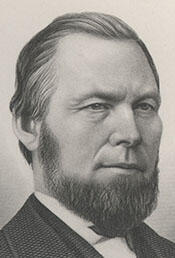
Here you will find contact information for Representative Sidney Perham, including email address, phone number, and mailing address.
| Name | Sidney Perham |
| Position | Representative |
| State | Maine |
| District | 2 |
| Party | Republican |
| Status | Former Representative |
| Term Start | December 7, 1863 |
| Term End | March 3, 1869 |
| Terms Served | 3 |
| Born | March 27, 1819 |
| Gender | Male |
| Bioguide ID | P000226 |
About Representative Sidney Perham
Sidney Perham (March 27, 1819 – April 10, 1907) was a United States Representative from Maine, the 33rd governor of Maine, and an activist in the temperance movement. He was born in Woodstock, in what is now the state of Maine but was then a part of Massachusetts, to Joel and Sophronia Bisbee Perham. Raised in a rural community, he attended the common schools of the area and early on engaged in agricultural pursuits, experiences that shaped his later interest in public policy related to farming and rural life.
Perham’s formal education was limited but significant. He briefly attended Bates College, then a young institution in Maine, but left to pursue his longstanding passion for agriculture. His practical experience as a farmer and his growing reputation in local affairs led to early responsibilities in public service. In 1853 he was elected a member of the Maine Board of Agriculture, reflecting both his expertise and his commitment to improving the condition of farmers in the state.
Perham’s political career began in earnest in the 1850s. In 1854 he was elected to the Maine House of Representatives, where he served for that year and was chosen Speaker of the House, a notable achievement for a relatively young legislator. He subsequently held a key judicial-administrative position as clerk of the courts of Oxford County, Maine, from 1859 to 1863. These roles established him as a prominent Republican figure in Maine at a time when the party was consolidating its influence in New England.
A member of the Republican Party, Sidney Perham was elected to the United States House of Representatives in 1862 and served as a Representative from Maine in the United States Congress from March 4, 1863, to March 3, 1869, completing three consecutive terms. His service in Congress occurred during a significant period in American history, spanning the Civil War and the beginning of Reconstruction. As a member of the House of Representatives, Perham contributed to the legislative process, participated in the democratic governance of the nation, and represented the interests of his Maine constituents. During his tenure he served as chairman of the Committee on Invalid Pensions from 1865 to 1869, overseeing legislation related to the welfare and compensation of disabled veterans and their families. He was not a candidate for renomination in 1868, bringing his congressional service to a close at the end of his third term.
While serving in national office and afterward, Perham was also active in educational and institutional governance. He served as president of the board of trustees of Westbrook Seminary in Deering, Maine, from 1865 to 1880, helping guide the institution’s development during a period of expansion in secondary and higher education in the state. He was a fellow of Bates College from 1871 to 1873, maintaining a formal connection to the college he had briefly attended and supporting its mission as a growing liberal arts institution.
Perham’s prominence in Maine politics continued after his congressional career. In September 1870 he was elected governor of Maine and served as the state’s 33rd governor from 1871 to 1874. He succeeded former Civil War general Joshua L. Chamberlain in that office. As governor, Perham was identified with Republican policies of the Reconstruction era and was known for his advocacy of temperance, reflecting his broader activism in the temperance movement. During this period he also became president of the board of trustees of the Maine Industrial School in Hallowell, Maine, serving in that capacity from 1873 to 1898, where he was involved in the oversight of an institution devoted to the care and reform of youth. In 1875 he briefly held statewide executive office as Secretary of State of Maine.
In the later stages of his public career, Perham continued to hold federal and denominational responsibilities. He served as appraiser in the United States Customhouse in Portland, Maine, from 1877 to 1885, a federal post concerned with the valuation of goods for customs purposes at one of the state’s principal ports. Beyond politics and administration, he was active in religious and philanthropic circles, particularly within the Universalist denomination. He was a member of the board of trustees of the Universalist General Convention for twenty-seven years and served for a time as its president, contributing to the governance and outreach of the church and aligning his religious commitments with his reform interests, including temperance.
Sidney Perham spent his final years remaining engaged in public and religious affairs, and his long career reflected the intertwined currents of Republican politics, agricultural advocacy, educational leadership, and moral reform in nineteenth-century New England. He died in Washington, D.C., on April 10, 1907. His remains were returned to his native region and he was interred in Lakeside Cemetery in Bryant Pond, Maine, marking the close of a life of extensive public service at the local, state, and national levels.