Representative Sidney Elmer Simpson
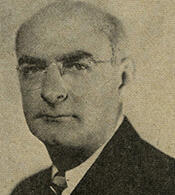
Here you will find contact information for Representative Sidney Elmer Simpson, including email address, phone number, and mailing address.
| Name | Sidney Elmer Simpson |
| Position | Representative |
| State | Illinois |
| District | 20 |
| Party | Republican |
| Status | Former Representative |
| Term Start | January 6, 1943 |
| Term End | January 3, 1959 |
| Terms Served | 8 |
| Born | September 20, 1894 |
| Gender | Male |
| Bioguide ID | S000437 |
About Representative Sidney Elmer Simpson
Sidney Elmer Simpson (September 20, 1894 – October 26, 1958) was an American politician and businessman who served as a Republican U.S. Representative from Illinois from 1943 until his death in 1958. Over eight consecutive terms in the House of Representatives, he participated actively in the legislative process during a period that spanned World War II, the early Cold War, and the beginnings of the modern civil rights era, representing the interests of his downstate Illinois constituents.
Simpson was born in Carrollton, Greene County, Illinois, on September 20, 1894. He was educated in the Carrollton public schools and graduated from Carrollton High School. Raised in a small Midwestern community, he developed early ties to local civic life that would later shape his political career. His formative years in Carrollton, a county-seat town in largely agricultural southwestern Illinois, grounded him in the concerns of rural and small-town voters that he would later represent in Congress.
During the First World War, Simpson served in the United States Army and saw overseas duty. His military service during World War I placed him among the generation of veterans whose experiences abroad informed their views on national defense and international affairs in the interwar and postwar periods. After returning from military service, he resumed civilian life in Carrollton, where he entered private enterprise and local politics.
In his postwar career, Simpson became a businessman, owning and operating the Simpson Motor Co. and the Simpson Bus Co. in Carrollton. Through these enterprises, he was involved in the growing automobile and transportation sectors that were transforming American life in the first half of the twentieth century. At the same time, he steadily built a base in local Republican politics. He served as chairman of the Greene County Republican Committee, and he was a member of the executive committee of the County Chairman’s Association of Illinois, roles that gave him influence in party organization and candidate selection at the county and state levels. He also held municipal and educational offices, serving one term as city treasurer of Carrollton and as a member of the Carrollton Board of Education, further strengthening his reputation as a community leader.
Simpson’s local and party service led to his election to Congress. He was elected as a Republican to the Seventy-eighth Congress and to the seven succeeding Congresses, serving from January 3, 1943, until his death on October 26, 1958. His tenure thus encompassed the 78th through the 85th Congresses. During these years he contributed to the legislative work of the House at a time marked by wartime mobilization, postwar reconversion, the onset of the Cold War, and domestic debates over economic policy and civil rights. As a member of the House of Representatives, Sidney Elmer Simpson participated in the democratic process and represented the interests of his Illinois constituents, who returned him to office repeatedly over a fifteen-year span.
Within the House, Simpson attained positions of responsibility. Notably, he served as chairman of the Committee on the District of Columbia during the Eighty-third Congress (1953–1955). In that capacity he played a role in overseeing federal legislation affecting the governance and administration of the nation’s capital. His voting record reflected the complexities of the era; on the Civil Rights Act of 1957, a landmark though limited measure in the emerging civil rights movement, Simpson voted “present,” neither supporting nor opposing the bill on final passage. By 1958 he had secured renomination to the Eighty-sixth Congress, indicating continued support from his party and constituents.
Simpson’s congressional service ended abruptly when he died of a heart attack in Pittsfield, Illinois, on October 26, 1958, before the commencement of the term to which he had been renominated. Following his death, he was succeeded in Congress by his wife, Edna O. Simpson, who was elected to complete the representation of the district, continuing the family’s role in public service. Sidney Elmer Simpson was interred in Carrollton City Cemetery in Carrollton, Illinois, returning to the community where he had been born, educated, and had first entered public life.