Representative Silvestre Reyes
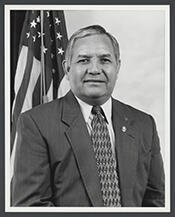
Here you will find contact information for Representative Silvestre Reyes, including email address, phone number, and mailing address.
| Name | Silvestre Reyes |
| Position | Representative |
| State | Texas |
| District | 16 |
| Party | Democratic |
| Status | Former Representative |
| Term Start | January 7, 1997 |
| Term End | January 3, 2013 |
| Terms Served | 8 |
| Born | November 10, 1944 |
| Gender | Male |
| Bioguide ID | R000170 |
About Representative Silvestre Reyes
Silvestre “Silver” Reyes (born November 10, 1944) is an American politician who represented Texas’s 16th congressional district in the United States House of Representatives from January 3, 1997, to January 3, 2013. A member of the Democratic Party, he served eight terms in Congress and became a prominent voice on national security, border policy, and Hispanic issues. During his tenure he chaired the House Permanent Select Committee on Intelligence from 2007 to 2011 and was a senior member of the House Armed Services Committee. He was the first Latino to represent the 16th District, a heavily Democratic, Latino-majority district centered on El Paso.
Reyes was born in Canutillo, an unincorporated suburban community west of El Paso, Texas, and was the oldest of ten children. He graduated from Canutillo High School and went on to receive an associate degree from El Paso Community College. He later attended the University of Texas at Austin before entering military service. In 1966 he joined the United States Army, and in 1967 he served as a helicopter crew chief in the Vietnam War. In 1968 he suffered complete hearing loss in his right ear when a mortar round landed near his foxhole during combat, an injury that marked his military service and underscored his later advocacy on veterans’ and defense issues.
In 1969, after returning from Vietnam, Reyes joined the United States Border Patrol, beginning a law enforcement career that would span more than 26 years. Rising steadily through the ranks, he served from 1984 to 1995 as Sector Chief for both the McAllen and El Paso Sectors of the Border Patrol. In 1993, as Chief Patrol Agent of the El Paso Sector, he led the development and implementation of a high-visibility border enforcement strategy that positioned agents directly on the border to deter illegal crossings, an initiative later termed “Operation Hold the Line.” The strategy, which became a model for a similar effort in Southern California known as “Operation Gatekeeper,” significantly reduced illegal immigration in urban areas such as El Paso and San Diego. It also generated controversy: agents in exposed positions faced increased risk from rock and firearms assaults from the Mexican side of the border, and immigrant-rights groups criticized the approach for pushing migrants into more remote and dangerous desert regions of the Southwest, including the Imperial Valley in California and the Sonoran Desert in Arizona. The perceived success of Operation Hold the Line, however, contributed to Reyes’s growing popularity in the 16th Congressional District. He retired from the Border Patrol in 1995.
That same year, Reyes announced his candidacy for Congress, initially challenging incumbent Democrat Ron Coleman in the primary; Coleman later retired, leaving an open seat. In the five-way 1996 Democratic primary, which was effectively the decisive contest in the strongly Democratic district, Reyes finished first and then defeated Jose Luis Sanchez in a runoff by just over 1,000 votes. He went on to win the general election with about 70 percent of the vote. Although the 16th District had long been a Latino-majority district, Reyes became its first Latino representative. He was reelected seven times, generally facing little or no serious Republican opposition; he encountered only Libertarian challengers in 1998 and 2008 and ran completely unopposed in 2000. His service in Congress spanned a significant period in American history, including the post–Cold War era, the September 11 attacks, the wars in Afghanistan and Iraq, and major debates over immigration and border security.
During his congressional career, Reyes emerged as a key figure on military, intelligence, and border issues. As a senior member of the House Armed Services Committee, he served on the Subcommittee on Tactical Air and Land Forces, where he was Ranking Member, and on the Subcommittee on Readiness. He also served on the House Permanent Select Committee on Intelligence, becoming its chair on December 1, 2006, when Speaker-designate Nancy Pelosi tapped him to lead the panel in the 110th Congress. In that role he played a central part in shaping intelligence policy, including debates over the Foreign Intelligence Surveillance Act (FISA) and the National Security Agency’s warrantless wiretapping program. Initially expressing support for retroactive immunity for telecommunications companies that had cooperated with the program—arguing that immunity was necessary and that the companies had not acted illegally—he later introduced legislation that omitted telecom immunity after sustained advocacy from outside pressure groups, despite Republican threats to block any bill lacking such provisions. On broader national security issues, he at one point indicated support for a temporary increase of 20,000 to 30,000 U.S. troops in Iraq for a limited period of several months, but subsequently stated, after President George W. Bush proposed sending approximately 21,500 additional troops, that the United States did not have the capability to escalate even to that “minimal” level.
Reyes’s background in immigration and border enforcement made him an influential participant in congressional debates over immigration policy, particularly in the 109th Congress. He was instrumental in leading opposition to H.R. 4437, the immigration bill sponsored by Representative James Sensenbrenner, which was criticized by many Democrats and immigrant advocates as overly punitive. Democratic Leader Nancy Pelosi selected Reyes to present and lead debate on a Democratic substitute proposal to replace the Sensenbrenner bill; the substitute was defeated on a party-line vote. Beyond immigration, Reyes was credited with playing a major role in securing the future of Fort Bliss in El Paso and the nearby White Sands Missile Range during Base Realignment and Closure (BRAC) deliberations, helping to expand their missions and presence. On March 27, 2009, Speaker Pelosi chose him to lead a high-level congressional delegation to Mexico to meet with President Felipe Calderón. Accompanied by Armed Services Committee Chairman Ike Skelton and Foreign Affairs Committee Chairman Howard Berman, Reyes participated in discussions on Mexico’s efforts to combat drug-related violence and on U.S. assistance under initiatives such as the Mérida program.
Within the House, Reyes held several leadership and caucus roles. He served as chairman of the Congressional Hispanic Caucus and was active in the Congressional Arts Caucus. Known on Capitol Hill for his humor, he became closely associated with the Congressional Hispanic Caucus Institute’s annual stand-up comedy fundraiser, which was named the “Reyes of Comedy” in 2000 in his honor; the event was designed to promote a positive image of Latinos while raising funds for CHCI’s educational and leadership development programs for Latino youth. In 2013, after he left office, the Institute selected him as the inaugural inductee into the Reyes of Comedy Hall of Fame. Reyes also co-founded the Congressional Diversity and Innovation Caucus, reflecting his interest in science, technology, engineering, and mathematics (STEM) education and diversity in those fields, and he established the Congressional USO Caucus to support the United Service Organizations and military families.
Reyes’s political activities extended beyond his own campaigns. In the 2008 presidential election cycle, he served as Southwest Co-Chairman for Senator Hillary Rodham Clinton’s presidential campaign, alongside Congresswoman Sheila Jackson Lee of Texas. Clinton described Reyes as “one of our wisest and most experienced leaders on national security and the particular issues that affect Americans living along the border and throughout the Southwest,” stating that she was proud to have his support and grateful for his advice. In 2002 he considered a campaign for the United States Senate from Texas but ultimately decided not to run. His congressional attendance record drew some attention in 2005, when he missed 94 House votes, the ninth-highest total among members that year.
Reyes’s long service brought him numerous awards and recognitions. In 2006, El Paso Inc. named him “El Pasoan of the Year” for his successful efforts in Congress to expand the role and mission of Fort Bliss. He received the League of United Latin American Citizens’ “Lucy G. Acosta Humanitarian Award” and the U.S. Hispanic Chamber of Commerce “President’s Lifetime Achievement Award.” In 2008, the Association of the United States Army presented him with its “Outstanding Legislator Award,” calling him a great friend of the Army and a strong supporter of soldiers and their families. That same year, the American Society of Mechanical Engineers (ASME) honored him with the ASME President’s Award, presented by ASME President Sam Zamrik in recognition of Reyes’s “outstanding contributions in promoting diversity in the science, technology, engineering, and math fields” through his work as co-founder of the Congressional Diversity and Innovation Caucus. In 2010, the Frontera Land Alliance presented him with its “Rock Award” for his efforts to preserve Castner Range, a 7,000-acre tract of undeveloped desert, foothills, and mountains in Northeast El Paso; as a senior member of the Armed Services Committee, he worked to transfer ownership of Castner Range from the Department of Defense for conservation purposes. In 2012, the Minority Business Development Agency honored him with the Venable Legacy Award for Lifetime Achievement during National Minority Enterprise Week.
Reyes’s congressional career concluded following the 2012 Democratic primary. On May 29, 2012, he was defeated by former El Paso City Council member Beto O’Rourke, losing by a margin large enough to avoid a runoff. Reyes received 44.4 percent of the vote, falling just a few hundred votes short of forcing a second round. His campaign had been endorsed by President Barack Obama and former President Bill Clinton, with Clinton appearing at a rally on his behalf. After leaving Congress in January 2013, Reyes remained a respected figure in his home community. On October 29, 2012, the Canutillo Independent School District Board of Trustees voted unanimously to name a pre-kindergarten-through-eighth-grade school after Reyes and his wife, Carolina; the school was scheduled to open in the 2014–2015 school year. His long tenure in public service, spanning combat duty in Vietnam, decades in the U.S. Border Patrol, and eight terms in the House of Representatives, left a lasting imprint on border security policy, military affairs, and Hispanic representation in Congress.