Senator Simeon Davison Fess
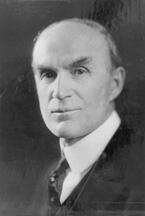
Here you will find contact information for Senator Simeon Davison Fess, including email address, phone number, and mailing address.
| Name | Simeon Davison Fess |
| Position | Senator |
| State | Ohio |
| Party | Republican |
| Status | Former Representative |
| Term Start | April 7, 1913 |
| Term End | January 3, 1935 |
| Terms Served | 7 |
| Born | December 11, 1861 |
| Gender | Male |
| Bioguide ID | F000096 |
About Senator Simeon Davison Fess
Simeon Davison Fess (December 11, 1861 – December 23, 1936) was a Republican politician and educator from Ohio who served in the United States House of Representatives from 1915 to 1923 and in the United States Senate from 1923 to 1935. Over the course of seven terms in Congress, he contributed to the legislative process during a significant period in American history, participating in the democratic process and representing the interests of his Ohio constituents.
Fess was born on a farm near Harrod, Allen County, Ohio, to Henry and Barbara (Herring) Fess. He was educated in local country schools before enrolling at Ohio Northern University (then Ohio Normal University) in Ada, from which he graduated in 1889. In 1890 he married Eva C. Thomas. Rooted in the rural Midwest and the Methodist faith, he developed early an interest in education, civic affairs, and public speaking that would shape his later career in academia and politics.
After his graduation in 1889, Fess remained at Ohio Northern University, where he taught history and law and worked in the university administration from 1889 to 1896. While teaching, he pursued legal studies and graduated from the law department of Ohio Northern University in 1894. He advanced rapidly in academic leadership, serving as dean of the law department from 1896 to 1900 and then as vice president of the university from 1900 to 1902. In 1902 he left Ohio for Illinois to become a graduate student and lecturer at the University of Chicago, a position he held until 1907. That year he returned to Ohio to assume the presidency of Antioch College in Yellow Springs, serving as president from 1907 to 1917 and gaining a statewide reputation as an educator and public intellectual.
Fess’s transition into public office began while he was still at Antioch College. In 1912 he served as a delegate to the Ohio state constitutional convention, participating in the revision of the state’s fundamental law. In the same year he was elected as a Republican to the United States House of Representatives. He entered Congress on March 4, 1913, representing Ohio’s 6th congressional district from 1913 to 1915 and, following redistricting, the 7th congressional district from 1915 to 1923. During his decade in the House, he served as chairman of the Committee on Education in the Sixty-sixth and Sixty-seventh Congresses, reflecting his long-standing commitment to educational policy. He also emerged as a party strategist, serving as chairman of the Republican National Congressional Committee from 1918 to 1922, where he helped direct Republican campaign efforts during and immediately after World War I.
In 1922 Fess declined to seek re-election to the House and instead ran successfully for the United States Senate from Ohio. He served in the Senate from March 4, 1923, to January 3, 1935, as a member of the Republican Party. In the Senate he held several influential positions, including chairman of the Committee on the Library during the Sixty-ninth through Seventy-second Congresses, overseeing matters related to the Library of Congress and the preservation of the nation’s documentary heritage. From 1929 to 1933 he served as Republican Whip, playing a key role in party discipline and legislative strategy during the late 1920s and the onset of the Great Depression. His Senate tenure coincided with major national developments, including the prosperity of the 1920s, Prohibition, and the economic crisis of the 1930s, and he was recognized as a staunch defender of Republican administrations.
Beyond his formal congressional roles, Fess was deeply involved in national party leadership. He served as chairman of the Republican National Committee from 1930 to 1932, at a time when the party faced mounting public dissatisfaction amid the Great Depression. The Cincinnati Enquirer described him as a “party wheelhouse and stand patter of the most approved type,” noting that his “proven ability not only to defend, but to eulogize, the acts of Republican administrations, no matter how unpopular they may be,” led to his selection as national chairman. During the 1932 presidential campaign he vigorously supported President Herbert Hoover’s bid for reelection, famously calling Hoover “the country’s greatest peacetime leader.” The difficulty of that message in the depths of the Depression was evident when a major campaign speech he delivered a month before the election drew only about 150 listeners, underscoring the challenges facing the Republican Party. In 1934 Fess was an unsuccessful candidate for a third term in the Senate, bringing his congressional service to a close in January 1935.
Outside of politics and academia, Fess was active in religious and fraternal life and in the world of letters. A committed Methodist, he was also an editor and author, contributing to public discourse through his writings on history, civics, and government. He was a member of the Freemasons and the Knights of Pythias, reflecting his engagement with civic and fraternal organizations that were influential in American public life during his era.
Simeon Davison Fess died in Washington, D.C., on December 23, 1936, at the age of 75. He was interred at Glen Forest Cemetery in Yellow Springs, Ohio, near the community where he had led Antioch College and from which he had launched his national career.