Senator Simon Guggenheim
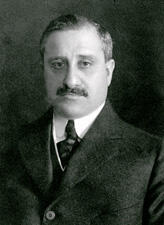
Here you will find contact information for Senator Simon Guggenheim, including email address, phone number, and mailing address.
| Name | Simon Guggenheim |
| Position | Senator |
| State | Colorado |
| Party | Republican |
| Status | Former Representative |
| Term Start | December 2, 1907 |
| Term End | March 3, 1913 |
| Terms Served | 1 |
| Born | December 30, 1867 |
| Gender | Male |
| Bioguide ID | G000520 |
About Senator Simon Guggenheim
John Simon Guggenheim (December 30, 1867 – November 2, 1941) was an American businessman, politician, philanthropist, and United States Senator from Colorado. He was born in Philadelphia, Pennsylvania, on December 30, 1867, of Jewish descent, the son of Meyer Guggenheim and Barbara Guggenheim. He was the younger brother of Daniel Guggenheim and Solomon R. Guggenheim, members of a prominent family whose wealth and influence were rooted in mining, smelting, and later philanthropy in the arts and sciences. Growing up in this entrepreneurial household, Guggenheim was introduced early to the commercial and industrial pursuits that would shape his later career in business and public life.
Guggenheim received his early education in Philadelphia, attending Central High School, one of the city’s leading public secondary schools. He then enrolled at the Peirce School of Business Administration, also in Philadelphia, where he received training in business practices and administration. This formal education prepared him for a role in the expanding Guggenheim family enterprises, equipping him with the commercial and managerial skills necessary to operate in the mining and smelting industries that were central to his family’s fortune.
After graduating from the Peirce School of Business Administration, Guggenheim relocated to Pueblo, Colorado, where he worked as the chief ore buyer for M. Guggenheim’s Sons, his father’s mining and smelting company. By 1892 he had moved to Denver, Colorado, further consolidating his ties to the state that he would later represent in the United States Senate. His prominence in business and his family’s influence soon drew him into politics. In 1898, he became the Republican candidate for Governor of Colorado, but he withdrew from the race after riots broke out at the state convention in Colorado Springs, during which one man was killed and several others were injured. Remaining active in Republican politics, he later served as a presidential elector in 1904, reflecting his growing stature within the party.
Guggenheim’s personal life was closely intertwined with his public and philanthropic activities. After moving to Denver, he married Olga Hirsch on November 24, 1898, at the Waldorf Astoria New York in Manhattan. To celebrate their marriage, the couple provided a Thanksgiving dinner to 5,000 poor children in Manhattan, an early indication of their interest in charitable work. Their first child, John Simon Guggenheim, was born in 1905. To commemorate his son’s birth, Guggenheim made an $80,000 donation to the Colorado School of Mines to construct Simon Guggenheim Hall, at the time the largest private grant ever made to a state institution. In 1907, their second son, George Denver Guggenheim, was born. Guggenheim’s philanthropy in Colorado continued; in 1909 he donated funds for a law school building at the University of Colorado, reinforcing his commitment to higher education in the state.
In 1907, Simon Guggenheim was elected as a Republican to the United States Senate, representing Colorado from 1907 to 1913. A member of the Republican Party, he served one term in office and contributed to the legislative process during a significant period in American history. As a United States Senator, Guggenheim participated in the democratic process and represented the interests of his Colorado constituents at the national level. During his term in the Senate, he chaired the Committee to Establish a University of the United States, reflecting his ongoing interest in education, and the Committee on the Philippines, which dealt with issues related to American governance and policy in the Philippine Islands. His years in Congress coincided with major national and international developments in the early twentieth century, and during his service one of his older brothers, Benjamin Guggenheim, perished in the sinking of the RMS Titanic in April 1912, a personal tragedy that occurred while he was still in office.
When Guggenheim’s Senate term expired in 1913, he did not return to elective office. He and his wife Olga moved back to New York City, where he resumed and expanded his business career. He joined the board of the American Smelting and Refining Company, a key enterprise in the nation’s industrial and mining sectors, and was later appointed chairman of the board. From 1919 until his death in 1941, he served as president of the company, overseeing its operations during a period of substantial growth and change in American industry. His leadership in this role further solidified his position as a major figure in American business, particularly in the fields of mining and metallurgy.
Guggenheim’s later life was marked by both significant philanthropy and profound personal loss. In 1922, his elder son, John, died of mastoiditis just before leaving for college. In 1925, in memory of their son, Simon and Olga Guggenheim established the John Simon Guggenheim Memorial Foundation, which became one of the most influential grant-making institutions supporting scholars, artists, and researchers. The foundation reflected Guggenheim’s long-standing interest in education and intellectual advancement. Tragedy struck again in 1939 when their younger son, George Denver Guggenheim, died by suicide in a Manhattan hotel at the age of 32. Despite these personal losses, Guggenheim continued his business and philanthropic activities until his final years.
John Simon Guggenheim died in New York City on November 2, 1941, at the age of 73. He was interred in Woodlawn Cemetery in The Bronx, New York. His life and career linked the industrial expansion of the late nineteenth and early twentieth centuries with the political and philanthropic currents of his time. As a businessman, United States Senator from Colorado, and benefactor of educational and cultural institutions, he left a legacy that included not only his contributions to American industry and public life, but also enduring support for higher education and the arts through institutions such as the Colorado School of Mines, the University of Colorado, and the John Simon Guggenheim Memorial Foundation.