Senator Smith Wildman Brookhart
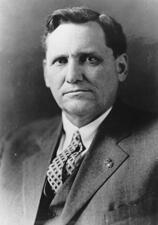
Here you will find contact information for Senator Smith Wildman Brookhart, including email address, phone number, and mailing address.
| Name | Smith Wildman Brookhart |
| Position | Senator |
| State | Iowa |
| Party | Republican |
| Status | Former Representative |
| Term Start | November 8, 1922 |
| Term End | March 3, 1933 |
| Terms Served | 3 |
| Born | February 2, 1869 |
| Gender | Male |
| Bioguide ID | B000873 |
About Senator Smith Wildman Brookhart
Smith Wildman Brookhart (February 2, 1869 – November 15, 1944) was an American lawyer, soldier, and politician who twice represented Iowa in the United States Senate as a Republican between 1922 and 1933. Widely regarded as an “insurgent” within his party, he became known for his fierce criticism of the Harding and Coolidge administrations and of powerful business interests, positions that alienated many in the Republican caucus and ultimately contributed to his removal from the Senate following an election challenge. A strong supporter of Prohibition and its strict enforcement, he saw his political fortunes decline as public sentiment turned against the “dry” cause.
Brookhart was born in a cabin on a farm in Scotland County, Missouri, the son of Abram C. and Cynthia (Wildman) Brookhart. His family moved to Iowa while he was young, and he was educated in country schools before graduating from Bloomfield High School in Bloomfield, Iowa. He then attended Southern Iowa Normal School, also in Bloomfield, where he completed his studies in 1889 with an emphasis in scientific courses. For five years after graduation he taught in country schools and high school while reading law in offices in Bloomfield and Keosauqua, Iowa. He was admitted to the bar in 1892 and began practicing law in Washington, Iowa. Four years later, his brother, J. L. Brookhart, joined the firm, and Smith Brookhart went on to serve for six years as Washington County Attorney, establishing himself as a prominent local lawyer and public official.
On June 22, 1897, Brookhart married Jennie Hearne. The couple had four sons and two daughters: Charles Edward Brookhart, John Roberts Brookhart, Samuel Colar Brookhart, Smith W. Brookhart Jr., Florence Hearne Brookhart Yount, and Edith A. Brookhart Millard. Alongside his legal and family life, Brookhart pursued a military career. He served in the United States Army during the Spanish–American War and again during World War I, rising to the rank of lieutenant colonel. Renowned for his marksmanship with a rifle, he became a leading figure in the national shooting community and served as president of the National Rifle Association of America from 1921 to 1925. His experience as a rifle instructor for the Iowa National Guard shaped his views on alcohol; he concluded that alcohol and firearms were incompatible and claimed that even mild beer reduced shooting accuracy by 7 percent, a statistic he used to persuade the governor of Iowa to declare the state rifle range “bone dry.”
Brookhart’s statewide political ambitions emerged in the early 1920s. In early 1920 he announced his candidacy for the Republican nomination for the U.S. Senate seat held since 1908 by Senator Albert B. Cummins, a progressive of an earlier generation who distrusted both corporate interests and organized labor. Brookhart built his challenge around opposition to the Esch–Cummins Act, railroad legislation co-authored by Cummins, which Brookhart argued did too little to wrest control of the railroads from Wall Street interests. He sought to attract rank-and-file blue-collar workers into the Republican primary electorate, prompting Cummins to associate him with radical labor movements such as the Socialists, “reds,” and the Industrial Workers of the World. Although Cummins was sidelined by illness in the weeks before the primary, he ultimately defeated Brookhart in that first contest.
Brookhart’s breakthrough came two years later. In 1922, following the resignation of Iowa Senator William S. Kenyon to accept a federal judgeship, a special election was called to fill the vacancy. Brookhart entered a six-way Republican primary and, after receiving over 41 percent of the vote, secured the nomination with the backing of the national Republican Party. In the general election he defeated Democrat Clyde L. Herring, a future governor and U.S. senator, and took his seat in the United States Senate. He served as a Senator from Iowa from 1922 to 1933, contributing to the legislative process during three terms in office. Almost immediately, he drew national attention for his refusal to adopt the customary dress and demeanor of a senator. In its inaugural issue of March 3, 1923, Time magazine quoted him as saying that if invited to the White House or any state occasion, he would attend “with cowhide shoes and the clothes I wear on the farm,” and that he would even don overalls if his constituents desired. Time later remarked that his “pugnacious cowhide radicalism nettled patrician Senators,” capturing his reputation as a populist outsider within the chamber.
In the 1924 election, Brookhart sought a full six-year term. Running again as the Republican nominee, he appeared to have narrowly defeated Democratic challenger Daniel F. Steck, receiving 447,594 votes to Steck’s 446,840. Brookhart took office on March 4, 1925, but Steck contested the result before the Senate Committee on Privileges and Elections. In a remarkable turn, the Iowa Republican Party sided with Steck, filing a brief sharply critical of Brookhart and accusing him of disloyalty to the Republican presidential ticket in 1924 because of his support for Progressive Party presidential candidate Robert M. La Follette of Wisconsin. After extended hearings, the Republican-controlled Senate voted on April 12, 1926, by a margin of 45–41 to unseat Brookhart and seat Steck in his place for the remainder of the term. The action was historically unusual: while the Senate had previously resolved election disputes before a senator was seated, this was the only instance in which the body overturned an election after a senator had already taken office. Historian George William McDaniel later concluded that between 1924 and 1926, party leaders and other political elites united to defeat Brookhart, partly out of fear that his program would lead to socialism or worse, and partly out of resentment that he had won office without relying on traditional party machinery.
Brookhart’s absence from the Senate was brief. Immediately after his ouster in April 1926, he announced his candidacy for Iowa’s other Senate seat, still held by Albert B. Cummins. In a stunning upset in the Republican primary, he decisively defeated Cummins, prompting Idaho Senator William Edgar Borah to observe that “only a real political revolution could have defeated him.” In the general election, Brookhart defeated conservative Democrat Claude R. Porter, a former U.S. Attorney under President Woodrow Wilson, and returned to the Senate. Although he settled into a tense coexistence with the Republican establishment, he continued to espouse insurgent views, particularly his harsh criticism of the Federal Reserve, which he described as “a more sinister or evil device [that] could not be arranged for using the people’s savings to their own injury and the destruction of their property values.” He remained a fervent advocate of Prohibition, favoring a dramatic increase in enforcement appropriations by $240 million, a stance that became increasingly unpopular amid the economic hardships of the Great Depression, when many Americans favored repeal as a means of stimulating the economy and generating tax revenue.
During his Senate service, Brookhart was a prominent national spokesman for the “dry” cause. He embarked on a nationwide tour in a last-ditch effort to stem the growing movement for repeal of Prohibition, engaging in public debates with leading “wets,” including Representative Fiorello LaGuardia of New York, famed attorney Clarence Darrow, and other prominent opponents of Prohibition. As public support for Prohibition waned, so too did Brookhart’s political support. He served a full six-year term after his 1926 return, but in the 1932 Republican primary he was defeated by Henry Field, a Shenandoah, Iowa nurseryman. Field criticized Brookhart’s frequent absences from the Senate for speaking tours and the number of Brookhart’s relatives holding federal positions. Brookhart then ran in the 1932 general election as a “progressive” candidate but received fewer than 33,000 votes out of more than 890,000 cast, effectively ending his Senate career.
After leaving the Senate, Brookhart remained active in public affairs. From 1932 until 1935 he served as a special advisor to the federal government on Soviet trade, in which capacity he was an early advocate of United States recognition of the Soviet Union. He resigned that position in 1935 and returned to Iowa, where he made one final attempt to regain a Senate seat. In 1936 he entered an already crowded Republican primary for the Senate but finished a distant second to the incumbent, L. J. Dickinson. Brookhart then proposed a plan to unite diverse progressive elements under a new political banner, declined an offer to run for the Senate on a Farmer–Labor Party ticket, and instead endorsed President Franklin D. Roosevelt’s reelection in 1936. After the election he opened a law office in Washington, D.C., where he practiced until 1943, when he moved to Arizona for health reasons.
Brookhart died in Prescott, Arizona, on November 15, 1944. His family continued to have a public profile: one of his sons, U.S. Army Lieutenant Colonel Smith W. Brookhart Jr., served as an assistant trial counsel for the prosecution at the Nuremberg war crimes trials after World War II. The family home, the Smith Wildman and Jennie (Hearne) Brookhart House in Washington, Iowa, is listed on the National Register of Historic Places, reflecting both his prominence in Iowa political life and the enduring historical interest in his career as one of the most notable insurgent Republicans of his era.